KATHLEEN DORAN
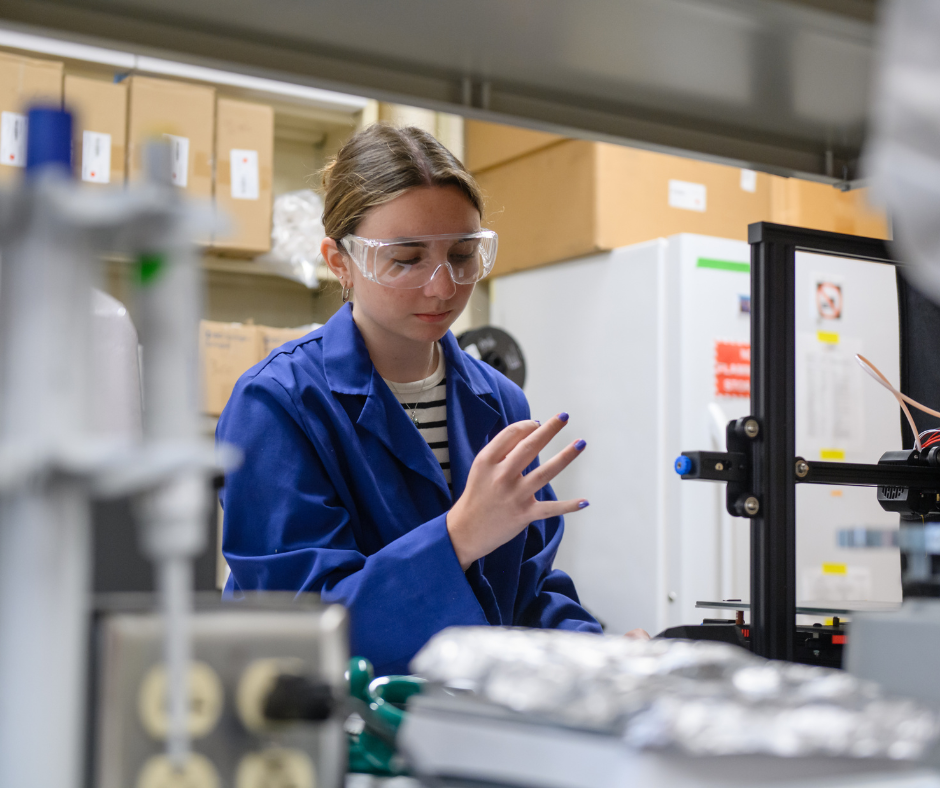
Kathleen Doran, junior biochemistry and genetics major from Stephentown, NY, stayed on campus this summer in working on Creative Inquiry (CI) project in Dr. Adam Melvin’s MicroLab titled “Biophysical analysis of the chemotactic response of different cell types exposed to various stimuli spanning the breast tumor.”
Coming into Clemson, Kathleen knew she wanted to be involved in research. She began searching for labs and came across Dr. Melvin’s lab and joined in the Spring of 2024.
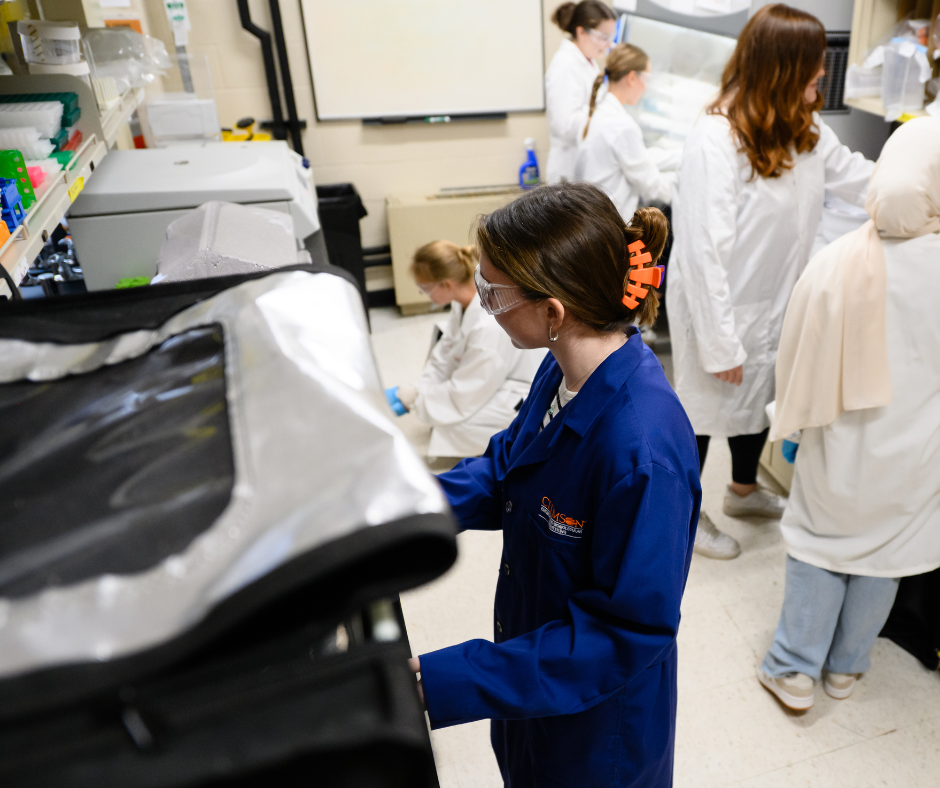
“During the academic year I am a member of Melvin MicroLab, in the Department of Chemical and Biomolecular Engineering. My project focuses on the chemotaxis of breast cancer cells in response to bacterial presence.”
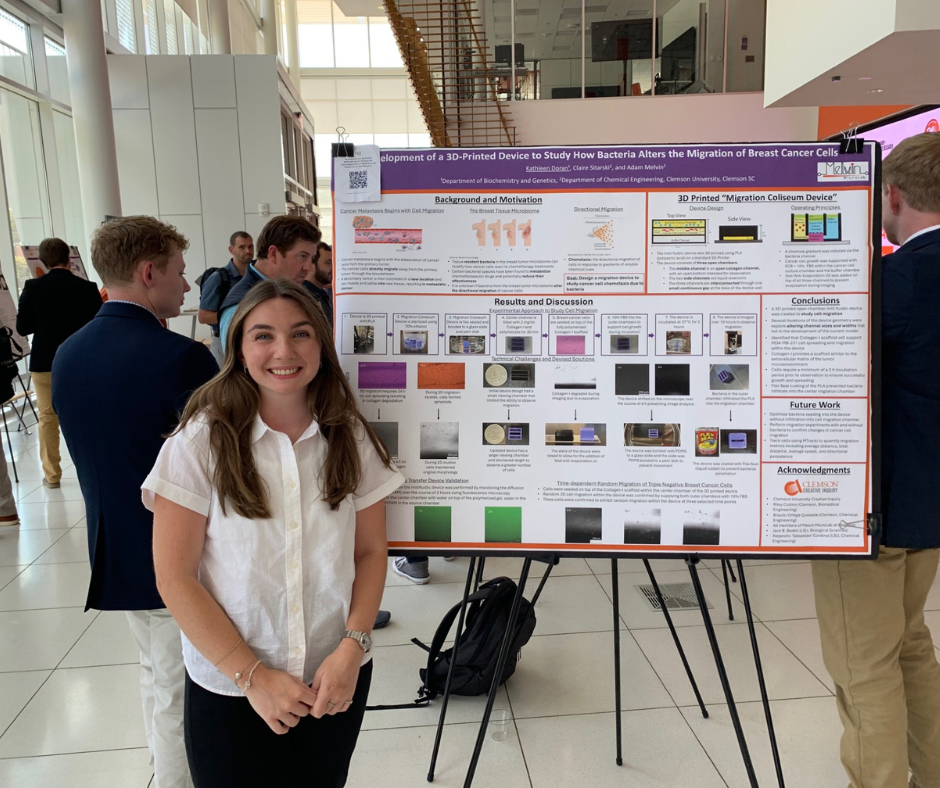
In the fall of her freshman year, Kathleen took Careers in Biochemistry and Genetics, which is where she learned about the Creative Inquiry Program. Kathleen’s Summer CI project focused on the development of a 3D printed device to study how bacteria alters the migration of breast cancer cells.
“Currently, there are few studies that have been able to identify if bacteria from the breast tumor microbiome alters the directional migration of cancer cells. Our work hopes to visualize cancer cell chemotaxis due to bacteria.”
Kathleen notes that the Summer CI Program has been a wonderful experience to continue her ongoing research and get to know more about the work being done by others within the Melvin lab.
“I loved getting to know what other people are working on, and having the opportunity to discuss issues that other teams may have struggled with and sharing different approaches to address complications. Working in the Melvin Lab has been one of the defining experiences of my time here at Clemson.”
SOFIA BUFANO
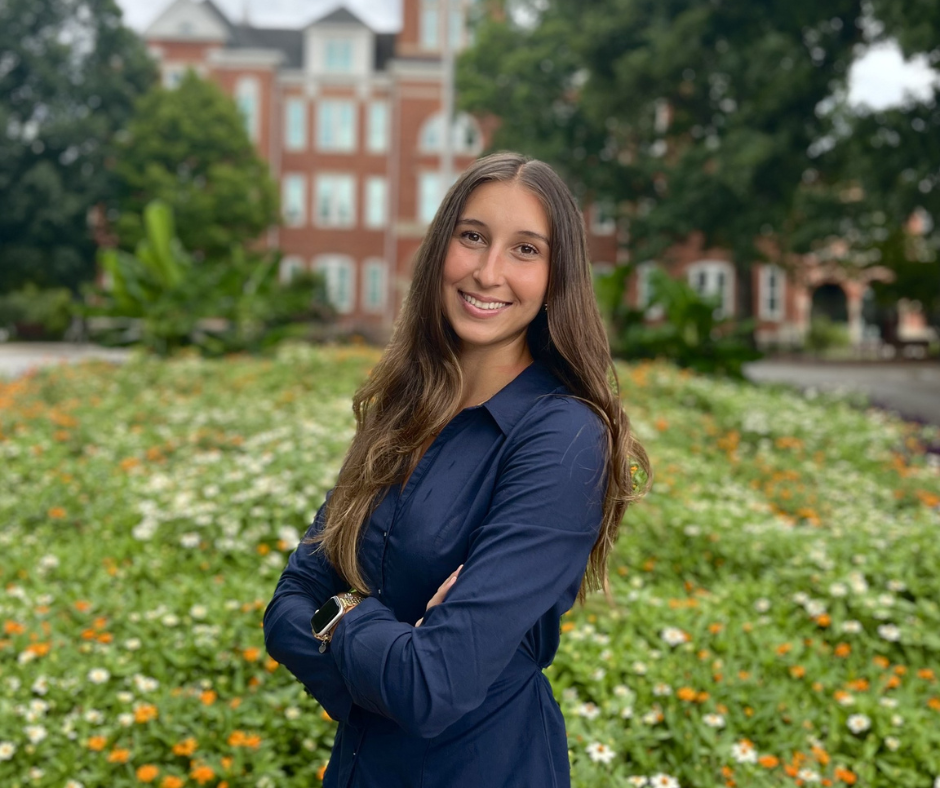
Senior international biochemistry student Sofia Bufano always knew she wanted to participate in a research lab during her academic career at Clemson and found the perfect fit in the Research and Education in Disease Diagnosis and Intervention Laboratory (REDDI Lab).
“I stumbled across Dr. Congyue Peng’s lab in the REDDI lab, and I liked her publications and her current research in the pathology field. I joined the lab spring semester of freshman year, and I’ve been an undergraduate researcher there ever since.”
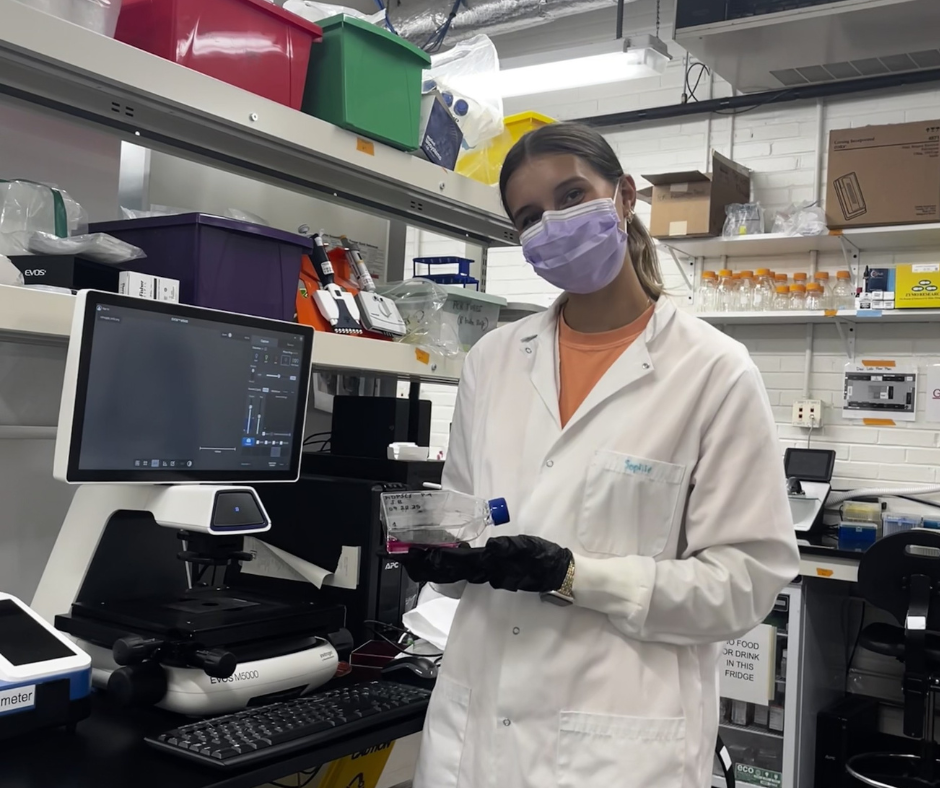
This summer Sofia participated in a Creative Inquiry (CI) within the REDDI lab working on a project with the ultimate goal of differentiating human Dental Pulp Stem Cells into Motor Neuron Cells.
“So far, I have been taking care of my hDPSCs (passaging and changing media), and I performed RNA extraction, RNA to cDNA conversion, and qPCR to characterize the hDPSCs for specific primers we have selected, which will also be used to characterize Neuron Cells after differentiation.”
Sofia was nervous this summer to be in the lab and working on her own research project with new protocols and without any other lab partners. However, once she got used to it, Sofia felt beyond satisfied with her progress and research.
“The summer CI research was a life-changing experience on so many levels! Prior to this summer internship, I had in mind to pursue a Ph.D. in science after college, and this experience was the confirmation I needed that this path is the right choice for me.”

When Sofia was not in the lab, she used her free time to travel and spend time with friends and family, some of her closest friends staying in Clemson participating in CIs as well.
“We often got together after lab to chat about our experiments and watch TV. I also traveled quite a bit: I went horseback riding in the Dominican Republic, snorkeling in Curaçao, sightseeing in Aruba, and I spent some time in Hilton Head with friends and family.”

Sofia is Italian and officially became an American citizen in April and experienced her first American 4th of July this year!

CATLY NGUYEN

When Dr. Jim Morris was the guest speaker at a Biochemistry and Genetics Club meeting, senior biochemistry major Catly (Cat) Nguyen became interested in his research, leading to a position as an undergraduate researcher in the Morris Labs. This summer, Cat is participating in the Undergraduate Research + Creative Inquiry (CI) program, while continuing her research with Dr. Morris.
“Hearing Dr. Morris talk about his journey into research/molecular biology and his work was so insightful and interesting. It gave me the courage to email him and ask to join his lab as an undergraduate researcher.”
In the Morris Lab, Cat’s research focuses on identifying and localizing potential drug targets and understanding drug uptake in Trypanosoma brucei, a protozoan parasite that causes African sleeping sickness. Trypanosomes are so complex because their cellular mechanisms, like glucose metabolism, are not yet fully understood.
“Our goal here is expand our understanding of their cellular biology so that we can exploit it for drug targets.”

This summer, for her CI, Cat is specifically investigating how drugs and inhibitors are trafficked to glycosomes, which are specialized peroxisomes that house essential glycolytic enzymes.
“To do this, I’ve been working on purifying PTS-tagged (peroxisomal targeting sequence) eYFP proteins, which will help us characterize how these proteins are delivered to the glycosomes and potentially co-delivered with drugs.”
Another part of Cat’s research is working on another side cloning project where the goal is to find the origin of replication within a plasmid by dividing it into smaller fragments and amplifying them using specific designed primer pairs. Once one is discovered, they can clone EYFP into it, allowing N. fowleri to replicate the fluorescent protein independently and establish long-term expression of EYFP once it is transfected into the parasite.
“So far, I’ve had such an amazing experience in Dr. Morris’ lab during the summer. I’ve gotten to spend more time in lab, getting more work done, being able to see positive results, and most importantly expanding my understanding of molecular biology and biochemistry.”

Cat has been able to apply this experience to her lecture courses and has been able to interact with and learn from graduate students, whom she notes as great mentors. Cat knows this experience in the Morris lab will help her reach her future ambitions.
“From this experience, I hope to better prepare myself for a future in research. I am pursuing pharmacy school after undergrad and am planning on going into biochemical pharmaceutical research where I focus on drug discovery/delivery. So, working with Dr. Morris this summer has be extremely valuable to my future goals.”
Outside of her CI, Cat has been spending her summer planting, spending time with friends and families, cooking and baking, going to concerts, reading and traveling.

ALEXANDRA HARRINGTON

Currently working in the Creative Inquiry (CI) project Investigating the role of the TMLH (CNAG_05675) gene and the gBB (CNAG_00403) gene in the carnitine biosynthesis pathway in Cryptococcus neoformans, senior genetics and biochemistry major Alexandra Harrington strives to contribute and make a difference in the scientific community.
Alexandra is researching the carnitine biosynthesis pathway in the Eukaryotic Pathogens Innovation Center (EPIC) with its director Dr. Kerry Smith and plans to continue her research throughout the Fall semester as she pursues a Departmental Honors.

“I was very interested in the EPIC here at Clemson because it combines my majors in biochemistry and genetics and my minor in microbiology.”
For her CI, Alexandra is investigating the role of the TMLH (CNAG_05675) gene and the gBB (CNAG_00403) gene in the carnitine biosynthesis pathway in Cryptococcus neoformans, a fungal pathogen responsible for diseases like meningitis and pneumonia. Alexandra’s project aims to completely characterize the carnitine biosynthesis pathway, specifically genes TMLH and gBB, as it pertains to acetate metabolism and amino acid biosynthesis in the virulence of fungal pathogen C. neoformans.

“I have spent these past several weeks especially focusing on the TMLH gene, in which I have grown my C. neoformans wild-type in media and isolated its DNA, isolated my target DNA (TMLH), used PCR to amplify the TMLH gene and I am currently working to clone my TMLH gene into a plasmid and further confirm that transformation occurred using PCR and sequencing. I am working towards having all elements necessary to perform complementation using a gene-editing method called Transient CRISPR-Cas9 Coupled with Electroporation (TRACE).”
Through her summer CI Alexandra hopes to strengthen her critical thinking and problem-solving skills and deepen understanding of what she is learning in her classroom lectures and labs, particularly the techniques, processes and pathways, and apply them to real-world experiments.

“Through this project, I want a greater understanding of fungal metabolism and virulence. I have been able to isolate DNA, conduct many PCR procedures, interpret gel electrophoresis results, and I have learned the importance of designing primers as well as cloning target DNA into plasmid DNA.”
She was especially excited to work with the gene editing technology CRISPR-Cas9 that is becoming increasingly effective and vital in the fields of biochemistry, genetics and biomedicine to discover gene therapies.

“My project has already taught me how to learn by asking meaningful questions and how important it is to step back and find another route to a solution. In addition, I have thoroughly enjoyed being a part of a team, both developing connections with and learning from lab mates.”
Alexandra finds excitement in knowing that one day she may help discover something truly important to healthcare that makes a difference in someone’s life and sees this program as an experience that will help her get closer to achieving her career and life goals.

“It is rewarding knowing that this project has the potential to better understand pathogen virulence and to use this pathway as a target for antifungal drug treatments in the future.”
During the academic year, Alexandra participates in Dr. Kimberly Métris’ lab, Beta Beta Beta Biological Sciences Fraternity, the women’s lacrosse team, Clemson Hope, Kappa Delta, Clemson’s Sigma Delta Pi Hispanic National Honor Society and the Spanish club, Hablemos. When not in the lab this summer, she spends her time studying for the MCAT, attending baseball games, both Clemson and the Phillies, enjoying lake days with friends, golfing, walking on the dikes and reading.

