Nicole Goodman Horticulture Agent Spartanburg County
For the first time since 2023, Spartanburg County proudly offered the Master Gardener Volunteer Training once again—and it would not have been possible without the dedication, curiosity, and generosity of our Master Gardener Volunteer community.
Between August and December 2025, fifteen enthusiastic students completed the 16-week training focused on growing better, healthier gardens. Coursework covered a wide range of topics, including lawn care, native plant identification, hands-on invasive plant removal, and soil health for a more bountiful harvest. Their commitment culminated in a rigorous four-hour final exam in early December, which they passed with flying colors, demonstrating both knowledge and determination.
Graduation, however, is just the beginning. Each new Master Gardener Volunteer now contributes 40 hours of educational service, sharing science-based gardening practices throughout the county. Many are already actively serving—offering lectures at local libraries, teaching garden club classes, introducing young visitors to the beauty of Hatcher Garden, or guiding community members during monthly workdays at St. Luke’s Free Medical Clinic in downtown Spartanburg.
Our Master Gardener Volunteers are more than educators; they are stewards of growth, connection, and care. Through their service, they leave a lasting mark on Spartanburg County—one garden, one lesson, and one shared moment at a time.
Christopher LeMaster, Jr. Area Livestock & Forage Agent Cherokee, Spartanburg, & Union Counties
For the past three years, our regional spring and fall workshop series has brought together the livestock producers of Cherokee, Spartanburg, and Union counties. These sessions are designed to provide local producers with practical, science-based information to navigate an ever-changing industry. This spring, we are continuing that tradition on March 12 at 6:00 PM at the Institute of Innovation in Gaffney with a focused panel discussion on selling beef directly to consumers.
According to a Clemson Extension study, 47% of South Carolina livestock producers now sell at least some of their animals through direct-to-consumer methods. While the bare meat counter during the COVID-19 pandemic spiked local demand, this trend has held. Many producers have made direct sales an increasing part of their farm income.
While selling beef directly to the public can be a great way to add value to a farm, it comes with its own set of technical hurdles. From understanding carcass finishing to navigating South Carolina’s meat-handling regulations, there is a lot to consider before fattening the calf.
To help break down these complexities, we’ve assembled a panel of experts to provide an objective look at the process. Travis Howard of Knockout Butchery will join us to discuss the processor’s perspective, while specialists from Clemson Extension will provide insight into the economics, regulation, meat science, nutrition, and marketing involved in direct sales.
We also recognize that many of our local farms are truly family affairs. To support that dynamic, we’ve included a youth-focused educational track for the evening. While the adults participate in the panel, kids ages 15 and under will head to the Animal Science Lab for a hands-on livestock activity led by Clemson 4-H and Cherokee County FFA. It’s a great way to involve the next generation in our industry.
The evening will begin with a dinner, providing a chance for producers from across our three counties to connect and talk shop. Whether you are a seasoned producer or just considering your first direct sale, we hope you’ll join us for this regional workshop.
MARCH 12 6PM
Institute of Innovation 175 Campus Way Gaffney, SC
Chris LeMaster Livestock & Forage Agent Cherokee, Spartanburg, & Union Counties
Over 97% of US farms are family-owned, and less than one-third have a formal succession plan.
Let’s try to imagine a business that is worth over a million dollars in assets and holdings. A new investor/partner has started with the company and scheduled a meeting with the CEO/Founder to discuss the transition plan. The CEO obliges, but instead of meeting in an office, they meet at the CEO’s kitchen table. The table is covered with invoices, receipts, seed, parts list and so forth. During the meeting, the CEO’s phone constantly rings with calls about fences, hay, and other “urgencies.” Both parties are beginning to wonder if this is a waste of time; unfortunately, the meeting gets cut short by an issue with a hay baler in the field. No progress was made.
This is a common scene in our family-run farms. Everyone would agree that developing a succession plan is a high-value task for our farm families. Still, the small, less valuable task often takes precedence due to its perceived urgency.
On September 21st, there were over 75 farmers at the succession planning workshop in Pacolet, South Carolina. Speakers from FSA, SC land, and Clemson Extension gave farm families the tools necessary to get started with this vital task. We covered much ground but only scratched the surface of these critical topics. We are working on suggestions and feedback for the next installment of this workshop series. There were farmers from several counties in our region, and we had a great deal of support from our sponsors.
We look forward to equipping farmers now so these farms will still be in farmland tomorrow. Farms are businesses, and successful businesses need a good plan for carrying on to the next generation.
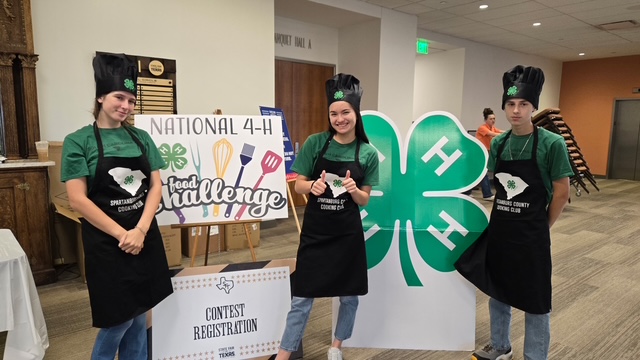
Three talented teen members of Spartanburg County 4-H recently took their cooking skills—and their 4-H journey—to the next level. They earned a coveted spot at the National 4-H Food Challenge Competition, held at the State Fair of Texas!
Ada Jarrett, John Jarrett, and Anna Vidrine have been active in Spartanburg County 4-H since their Cloverbud years. Over the past two years, this dynamic trio has sharpened their culinary skills by attending the South Carolina 4-H Cooking Like a Chef Summit and leading the Spartanburg County 4-H Cooking Like a Chef Camp.
In April, the team, joined by fellow member Micah Marsh, competed in the South Carolina Team Cooking Challenge and placed third statewide. That strong finish opened the door for Ada, John, and Anna to represent South Carolina on the national stage.
All summer long, the team met weekly to practice preparing appetizers, main dishes, and side dishes. Their dedication paid off. While they did not place in the top three, they proudly represented both our county and our state—making history as the first Spartanburg County 4-H Cooking Team to compete nationally!
We are incredibly proud of these youth and excited to see where their skills and leadership take them next. Their success marks just the beginning of a growing 4-H Cooking Program in Spartanburg County.
If you would like to support opportunities like this—whether by volunteering to lead a club or sponsoring the cost of ingredients for monthly meetings—please contact Spartanburg County 4-H Agent, Laura Haddon. Together, we can help even more young people discover their potential through 4-H.
As we approach the one-year anniversary of Hurricane Helene, many of us are reflecting on – or still recovering from – the damage it caused. One lesson is the importance of being prepared before the next storm arrives.
If your home relies on a private well for drinking water, it’s especially important to know how to disinfect your well after flooding. Floodwater can contaminate private wells with bacteria, sewage, fuel, and other pollutants. If this happens, shock chlorination is the standard way to disinfect it to remove the bacteria. If your well is contaminated with fuel or other pollutants, this method will not be effective.
Supplies needed:
Regular, unscented bleach (5-6% sodium hypochlorite) – about 1 gallon (Do NOT use: scented, no- or low-splash, or color-safe bleach)
Waterproof gloves, eye protection
Small funnel or 5-gallon bucket (optional)
Tools to open well (if needed)
The Shock Chlorination Process
Below is a simplified overview of the steps. For detailed instructions, see these helpful resources:
Confirm electrical wiring to well has not been damaged and is turned off.
If wiring is damaged, do not proceed until it has been repaired and is safe to operate.
STEP 2: INSPECT THE WELL
Inspect well for damage (examples: cracked casing, missing cap, broken seal)
Inspect well and surrounding area for ongoing contamination (ex: sewer line break, dirty stormwater, oil/gas leaks)
The well must be repaired, with no active contamination, for disinfection to provide lasting results.
STEP 3: RUN WATER UNTIL CLEAR
Turn power on to well. Use caution!
If well is intact and there is no active contamination > run water from outside spigots until it appears clear.
Disinfection methods are less effective if water is not clear.
NOTE: If needed, collect water now for use during waiting period.
STEP 4: ADD BLEACH
Open well access (ex: plug, air vent, or lift entire well cover)
Pour bleach into the well casing. A funnel may help to direct bleach into the well.
See Disinfecting Your Water Well (https://dnr.mo.gov/document-search/disinfecting-your-water-well-pub2733/pub2733 ) for instructions on calculating the correct amount of bleach for your well. If you cannot perform the calculations, one (1) gallon bleach is usually (more than) enough per residential well.
STEP 5: CIRCULATE CHLORINE
Run water from outside hose into the well casing until you smell chlorine coming from the hose. Turn off outside hose.
Turn on all water faucets, inside and outside, until you smell chlorine at each. Then turn off all faucets.
STEP 6: WAIT
Do not use any water during the waiting period. Chlorine requires contact to disinfect.
Wait 8-18 hours before turning faucets back on. The high chlorine level will help disinfect the pipes but can be corrosive if left too long (24 hours maximum). *Use caution while any chlorine smell is present – bleach can burn eyes and irritate skin.
STEP 7: FLUSH THE SYSTEM
After the waiting period, turn on outside spigot and run water into an area where it will minimize damage (away from septic tanks, streams, etc.). This water contains high levels of chlorine and is not safe for human consumption or contact. The water may be used for cleaning (reminder – bleach may damage fabrics, clothes, etc.).
Run water until you no longer smell chlorine odor. Turn the water off.
Run water from inside faucets until you no longer smell chlorine odor. Turn the water off.
NOTE: The water should now be disinfected.
STEP 8: TEST THE WATER
After 3-7 days, the chlorine smell should be completely gone, and the well water should be tested for bacteria.
If available, have water tested professionally.
Otherwise, use DIY test kit to indicate presence of bacteria.
For additional resources on well care and water testing, try Clemson Extension’s Be Well Informed online class. It’s free and available anytime. (https://www.clemson.edu/extension/water/programs/be-well-informed.html )
Preparing now helps ensure that you’ll be ready to keep your drinking water safe if the next storm impacts your private residential well.
Andy Rollins Commercial Horticulture Agent Spartanburg County
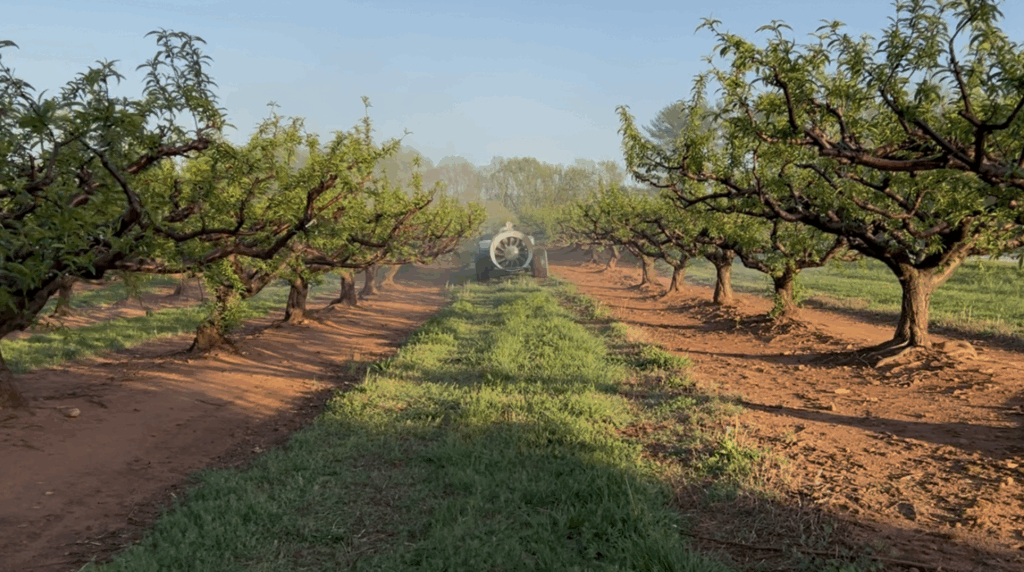
Andy Rollins has made significant progress in chemically thinning peaches using ethylene. Ethylene is a naturally occurring gas that increases as many fruits ripen. A common example of its use is placing a ripe banana peel in a paper bag with an unripe tomato, which helps accelerate the tomato’s ripening process.
In commercial peach production, thinning is typically done by hand after the risk of the last frost has passed—generally around April 15th, although this can vary. However, the rapidly rising cost of legal H2A labor, combined with widespread inflation across other farm inputs, has severely eroded profit margins. Many farms are now uncertain whether they can remain operational even for another year.
Rollins has applied ethylene in liquid form to young peach flowers and fruit, which causes the trees to naturally abort a portion of the developing fruit. This spring, he was able to thin 50–60% of the fruit from multiple peach varieties at a cost of just $1.67 per acre (approximately 150 trees), excluding labor for application. In contrast, traditional hand thinning can cost $8–10 per tree. While he encountered some challenges thinning certain varieties, he plans to continue refining the process next year, believing it to be a critical step forward for the future of peach production.
In addition to his work with ethylene, Rollins is also exploring the use of a new biological fumigant applied through an innovative method. Fumigants are essential in commercial agriculture to combat soil-borne diseases, weeds, and pests that can severely damage crops. These substances are highly dangerous, but by using inline injection through irrigation drip tape, exposure to harmful gases is reduced and the fumigant remains concentrated in the soil, where it can effectively target plant pathogens and pests.
This method has gained popularity since Rollins began working with it. He is scheduled to demonstrate the technique at the NC Strawberry Growers Association meeting on November 11, 2025. During the demonstration, he will use blue dye through the irrigation system to simulate the fumigant, highlighting the importance of saturating the entire root zone to ensure maximum efficacy.
Further educational meetings on these practices are currently being planned for early next year.
Nicole Goodman Horticulture Agent Spartanburg County
Nicole Goodman has fully stepped into her role as the Urban Horticulture Agent in our county. In addition to offering regular workshops on gardening topics (announced through our Facebook Page) and assisting residents daily, Nicole is dedicated to fostering broader community impact through the work of the local Master Gardener Volunteers.
One project particularly close to her heart is the Teaching Garden at St. Luke’s Free Medical Clinic in Downtown Spartanburg. This initiative is designed to educate the community on growing nutritious food, practicing safe food handling, and promoting both mental and physical well-being.
Through collaboration with the clinic’s dietitian, JuliSu, and director Ms. Smith, the garden has become a thriving partnership. Monthly volunteer workdays continue to transform the property into a fully functioning edible and teaching garden.
Project Highlight This season’s major milestone has been the beginning of terracing the steep east hillside of the property. Thanks to the enthusiasm of this year’s Master Gardener Volunteer students, the project is progressing smoothly. Volunteers—both experienced gardeners and community members new to the field—are not only learning about plants, but also about safe building practices that turn unusable slopes into productive spaces.
While tremendous progress has been made, the garden still requires the removal of several large trees to improve sunlight access and support the continued success of edible plantings. For ongoing updates, follow the Teaching Garden’s Facebook page: Teaching Garden of St. Luke’s Free Medical Clinic (green logo with three hands).
Margaret Estridge Rural Health & Nutrition Agent Cherokee, Spartanburg, & Union Counties
Hello! My name is Margaret Estridge and I am excited to be able to work with the Spartanburg, Union and Cherokee communities as a Rural Health & Nutrition agent. As a Clemson graduate, I am thrilled to return after working in health education and coaching in both health systems and corporate wellness. My passion lies in empowering individuals and communities to take charge of their health through nutrition and prevention. When not working, I love to hike and ride my bike so I hope to see you out on the trails of this beautiful region!
Christopher LeMaster, Area Livestock & Forage Agent Cherokee, Spartanburg, & Union Counties
Loss of Farmland is a top concern among our stakeholders as South Carolina continues to grow at an unprecedented rate. Last year, over 90,000 people moved to our state (which is more than the population of the city of Greenville). Additionally, Industry is quickly relocating to the Sunbelt states. Even in Cherokee County, we are experiencing development pressure compounded by the rising average age of farmers. I don’t have to explain the importance of farmland to this group, but without farms and farmland, we increase our dependency on something we need at least 3 times a day. I appreciate the opportunities that come with this growth, but I think we are justified in our concerns about this rapid loss of farmland. There’s no simple solution; it involves advocacy, education, zoning, regulation, and, most importantly, profitable farms. Yes, farms need to be profitable and enjoyable to survive. Farming is hard work, both physically and mentally, and many of our farmers are aging out. Nothing ages you faster than hard, unpleasant work for no money.
My goal for 2025 is to offer classes focusing on profitability and ways to bring another farming generation on board. The classes I have planned for this year will challenge farmers to look at their farms as businesses and break their operations down into enterprises to assess profitability and viability and hopefully identify solutions for some of the drudgery of farming. I invite you to attend the Beef Market Outlook and Profitability Workshop on 3/20 and the Succession Planning for Farm Families and Conservation Easements Workshop on 8/21. Both programs will be in Pacolet for a central location to my counties (Cherokee, Union, and Spartanburg). Additionally, we have teamed up with a few like-minded organizations to form the Broad River Conservation Partnership to offer field days to assist landowners with conservation practices such as prescribed fire, native grass establishment, and conservation easements.
I hope to see you at one of these programs this spring. Here are a few other workshops to look forward to.
3/11
3/20
3/21-22
3/25
3/28
3/28
4/5
4/11-12
4/18
4/29
5/9
5/27
6/24
7/29
Wheat/Soybean Production Meeting
Beef Market Outlook & How to Assess Your Operation’s Profitability
Peach Country Livestock Show
Home Gardening Series: Beekeeping for Beginners
Backyard Poultry Processing
Down on the Farm Day
Urban Homesteading Poultry
Union Livestock Rodeo
Small Ruminants Field Day
Home Gardening Series: Sustainable Pest Management