Clemson Extension Upstate District

Midlands Canning Workshops

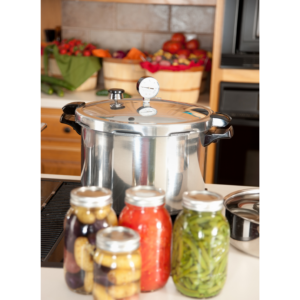
Come join us and learn the basics of canning fruits and vegetables from local farms and home gardens through a unique canning workshop. Participants will engage in hands-on activities using current recommended techniques for preserving foods for home use. Those with or without experience are encouraged to attend. Participants will receive the item(s) they prepare in class, resource book, other printed materials, and knowledge of safe home canning methods.

Cost: $35 per workshop. Participants should bring their lunch and wear closed-toe shoes.

Class Size: Class is limited to 10 participants, with a minimum of 5.

Midlands Canning Workshops

Dates:

  • Friday, September 29th Salsa
  • Saturday, September 30th Salsa
  • Thursday, October 19th Pressure Canning
  • Friday, October 20th Pressure Canning
  • Friday, November 10th Pressure Canning
  • Saturday, November 11th Pressure Canning
  • Friday, December 14th Jams, Jellies & Soft Spreads
  • Saturday, December 15th Jams, Jellies & Soft Spreads

Location: FCL Homemakers Building 634 Dekalb St. Camden, SC 29020

Time: 10:00 am – 2:00 pm

Registration Required to join a workshop.

Upcoming York County Horticulture Events

First Friday Garden Talks

First Fridays
York County Master Gardeners host garden talks that are presented on the first Friday of every month at Glencairn Garden Learning Center in Rock Hill from 11 am to noon. The 2023 topics are available here: https://www.yorkmg.org/programs/first-friday

First Fridays in the Garden Expands
Starting February 3rd, the talks will also be offered at the Clover Library from 2:00 to 3:00 pm.

Woody Plant Identification Class

Woody Plant Identification is a 12-week class from April 12th through June 28th at Bartlett Tree Research Lab arboretum. It will be on Wednesday evenings from 6:00 to 8:00 pm.
This class is for the commercial horticulture industry to prepare them for a Certified Nursery Professional exam administered by the SC Green Industry Association.
We will cover approximately 25 plants per week as we walk the property.
Contact Paul Thompson at (803) 639-9101 for more information.

2023 Master Gardener Class

The 2023 class starts August 2 and ends November 8. It will be held at the Glencairn Garden Learning Center at 825 Edgemont Avenue in Rock Hill.
Classes are each Wednesday from 9:00 am to 12:30 pm.

Contact Paul Thompson via email at pthmpsn@clemson.edu for an application that needs to be remitted by June 1, 2023.

Mud Management for Livestock Producers

Chris LeMaster, Livestock & Forage Agent

Mud is a universal issue among all species of livestock, and South Carolina’s mild winters and heavy rainfall contribute to its abundance. While mud is not unique to winter, it is usually a greater concern during periods of heavy feeding. Join us on March 18th from 12 to 12:45 to discuss the challenges of mud as it relates to animal health and nutrition, as well as issues with pasture and soil damage. You must register to attend this free, virtual event.

Animals use more energy standing and moving across soft muddy ground than hardened or dry surfaces. The increased difficulty of traveling through the mud for feed and water has a compounding effect by decreasing intake and increasing energy requirements, which can decrease animal performance up to 25%. This can affect the profitability of production animals such as cattle. The Alberta Feedlot Management guide reports cattle standing in four to eight inches of mud can experience an 8% to 15% decrease in feed intake and a 14% decrease in daily gains. In hock-deep mud of twelve to twenty-four inches, expect a reduction of 30% in feed intake and a 25% decrease in daily gains. Muddy conditions also reduce the animal’s ability to maintain critical body temperature. Mud-caked coats reduce insulation and thereby increase energy demands to maintain core body temperatures, which have negative effects both in summer and winter. These environmental stressors can decrease the animal’s immune response and predispose it to infections such as foot rot. Additionally, muddy conditions can lead to abscesses, poor udder hygiene, increased calf sickness, and calving problems. For equine, slick conditions can increase the risk of injury.

Congregation and high traffic areas around gates, feeding, or watering areas are the most difficult areas to keep free of mud. These heavy-use areas are often over-grazed, exposing bare ground that is further devastated by hoof traffic and feeding machinery. Furthermore, the standing pressure of cattle and horses, at 27 pounds per square inch (psi), is twice that of a human at 14 psi, whereas tractors place 175 psi on the soil. Many South Carolina soils can withstand pressures up to 28 psi when dry but will quickly weaken when wet.

Allowing livestock to graze wet pastures can crush and bruise plants while damaging soil structure. Treading damage from grazing livestock exposes bare soil, increases compaction, and reduces soil infiltration rates. Compaction in the soil further reduces plant and root growth, the water-holding capacity of the soil, and infiltration rates compounding the poor drainage issues in the pasture. Bare soil also increases the risk of erosion and nutrient run-off. Research in New Zealand documented a 50% to 64% reduction in spring pasture productivity following wet winter treading damage.

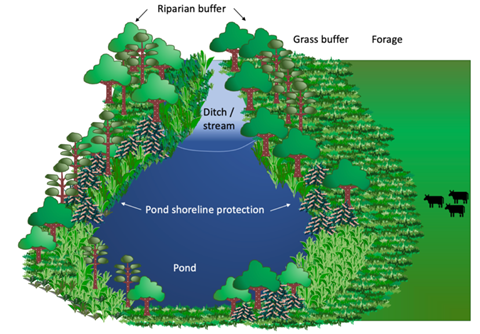
Unfortunately, there is no “silver bullet” solution to managing mud; however, there is a systems approach requiring many small changes to your operation and feeding practices. View Clemson’s Land-Grant Press article for more information, references for data in this blog, and mitigation recommendations.  Some of these recommendations can (and should be) implemented immediately, however many require dry weather and time to get satisfactory results.