Department of Languages

Why Clemson students should help build a healthier community in Las Malvinas

This article originally appeared in The Tiger.

Kevin J. Burke III, Marisol Miranda and Lauren Cvitkovic

As Clemson students, our primary goal is to walk across that stage at graduation knowing that we have made a positive impact on this university, and world, in some capacity. It is an instilled sense of camaraderie and pride that drives this objective into implementation. We live on this third rock from the sun knowing that life, at the present, is finite; it is, therefore, our responsibility to leave this world better for not only our own posterity but for all the children of this world who will come to inherit it. Whether this means aiding developing nations to refine their current infrastructure or establishing economic or healthcare reforms in order to promote growth and safety, every project has the potential to help make the global community better as a whole.

At Clemson, students have the opportunity to serve on research teams through the Creative Inquiry (CI) program. This program is utilized to promote not only research skills among students, but also allowing certain groups get the opportunity to make a difference in the lives of others. One such CI is “Building Healthier Communities in Las Malvinas”. In this project, a group of Clemson students acts as liaisons for the university in the country of the Dominican Republic, specifically in the Las Malvinas community.
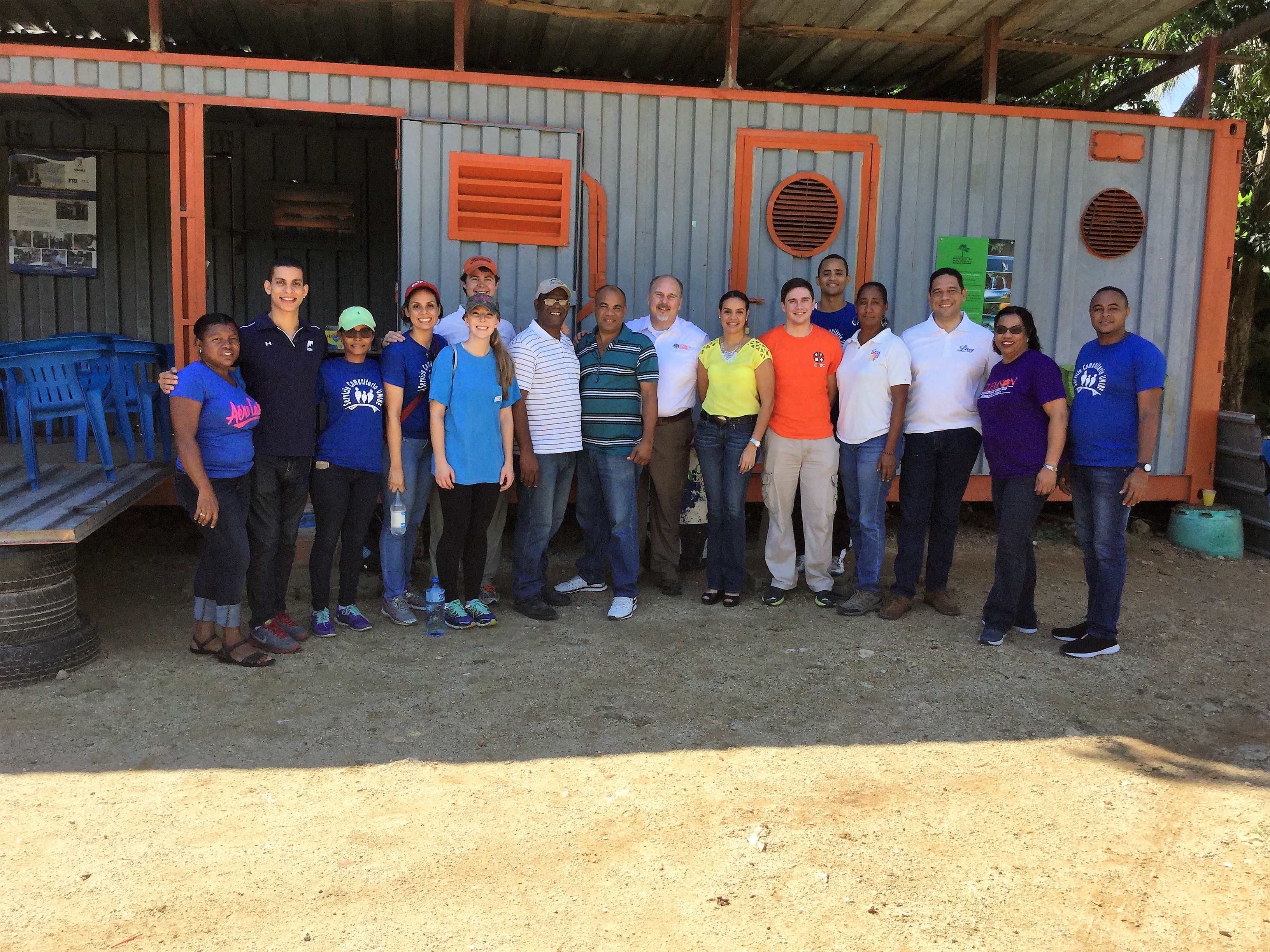
Building Healthy Communities in the Dominican Republic fall trip 2016. Photo courtesy of Arelis Moore de Peralta.

The objective of this project is to promote healthier living in the community, recording observational measures to ensure that the community is living under health standards based on “CDC evidence-based protocols.” Students can either serve solely on the research team or have the added opportunity of traveling to the Dominican Republic to aid in the on-the-ground operations behind the project. The students that have represented this project come from a variety of different majors and paths in life, all in the name of trying to bolster the Las Malvinas community in this developing nation.

Ask yourself these questions: Do you want to make a difference in the lives of others? Do you wish to leave a worldly impact while earning three credits towards your degree? Do you want to study abroad while at Clemson? If you answered yes to at least to one of these questions, this is the opportunity for you to accomplish all three. If you are interested in this project, there is both the CI with” Building Healthier Communities in Las Malvinas” in addition to an extracurricular club that has been formed in order to fundraise to further our service efforts. For more information relating to this project opportunity, please contact Dr. Arelis Moore de Peralta at ared@clemson.edu.
Faculty member wins Creative Inquiry mentoring award

Congratulations to Arelis Moore de Peralta, assistant professor of Spanish and Health and the winner of the 2018 Phil and Mary Bradley Award for Mentoring in Creative Inquiry. This award is given to a faculty member in recognition of their outstanding work with undergraduate students. Students participating in Creative Inquiry projects are the nominators for this award.

One of Moore de Peralta’s nominators wrote: “She has taught our CI that anything is possible with the support of each other, and through her support to us, has encouraged and helped her students to present research all across the nation… Dr. Moore has made a significant impact on my personal life. She has taught me how to go into third world countries, and to use community health tools to create a healthier, sustainable, and long-lasting community. She taught me the value of partnership, and that only by creating strong partnerships can a community become long-lasting and flourish. She truly cares about each of her students in a unique and loving way. She provides leadership opportunities for every single one of her students, by making each student in charge of a smaller project, fostering communication and organizational skills in each person. She encourages outreach and the building of partnerships with different organizations on campus, and promotes countless public speaking opportunities by allowing each student to present at conferences locally and nationally. She takes no
credit for her work, but allows each student to shine in their own way.”

Moore de Peralta will be honored at a ceremony on May 8 and receive a monetary award. Read more about her Creative Inquiry project here.

Creative Inquiry students present research at poster forum and conference

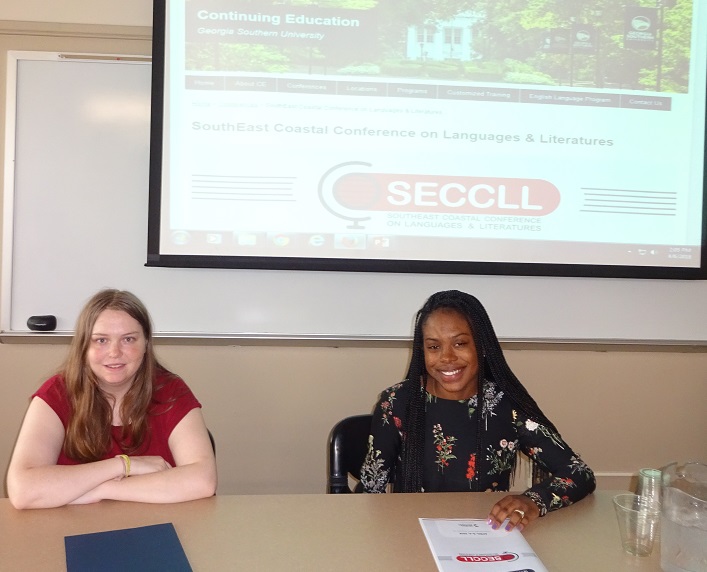
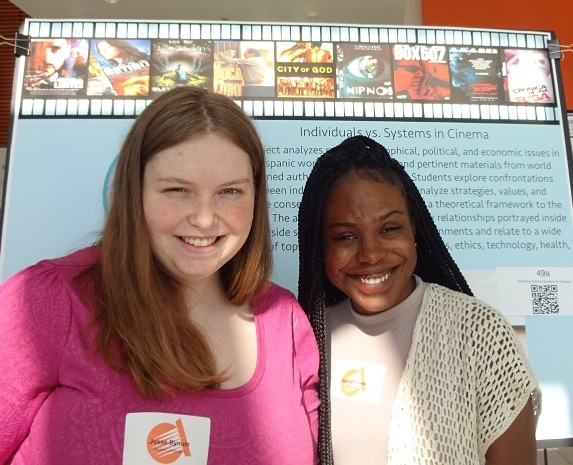
Jesse Bynum (L) and Hannah Cheeks (R) at the Focus on Creative Inquiry Poster Forum. Photo courtesy of Graciela Tissera.

Jesse Bynum (Modern Languages-Spanish major with English minor) and Hannah Cheeks (Psychology and Modern Languages-Spanish major) participated in the Creative Inquiry project offered by Dr. Graciela Tissera: The Hispanic world through film, literature and media. This project analyzes social, philosophical, political, and economic issues in the Hispanic world through videos and pertinent materials from world-renowned authors and film directors. Jesse and Hannah presented their research at the Focus on Creative Inquiry Poster Forum at Clemson (April 3, 2018) and also participated in the session “Individuals versus Systems in Cinema” at the SouthEast Coastal Conference on Languages & Literatures (April 5-6, 2018) organized by Georgia Southern University.

Jesse Bynum (L) and Hannah Cheeks (R) at the SouthEast Coastal Conference on Languages & Literatures. Photo courtesy of Graciela Tissera.

They explored confrontations between individuals and systems to analyze strategies, values, and ultimate consequences while establishing a theoretical framework to the research. The analyses focused on the complex relationships portrayed inside and outside systems in multicultural environments and relate to a wide diversity of topics: psychoanalysis, metaphysics, ethics, technology, health, business, and gender. Jesse Bynum’s research paper “Systematic Defensive Memory and Psychological Trauma in David Carreras’ Hipnos (2004)” discussed dissociative identity disorders as coping mechanisms and experimental treatments for severely emotionally disturbed patients. Hannah Cheeks’s research paper “Exploring the Treacherous Systems of the Mind: Sergi Vizcaíno’s Paranormal Xperience (2011)” centered on altered perceptions and symbols created by the unconscious mind as representations of systems influencing human behavior. The professional presentations were made possible through the Creative Inquiry Program and the Department of Languages travel grants.

Faculty member wins national Japanese teaching award

Jae Takeuchi, assistant professor of Japanese, who has been awarded the Hamako Ito Chaplin Memorial Award for excellence in Japanese language teaching at the college level. The national award, administered through the Association for Asian Studies, is given to only one or two instructors of Japanese each year.

Department hosts annual L&IT Conference

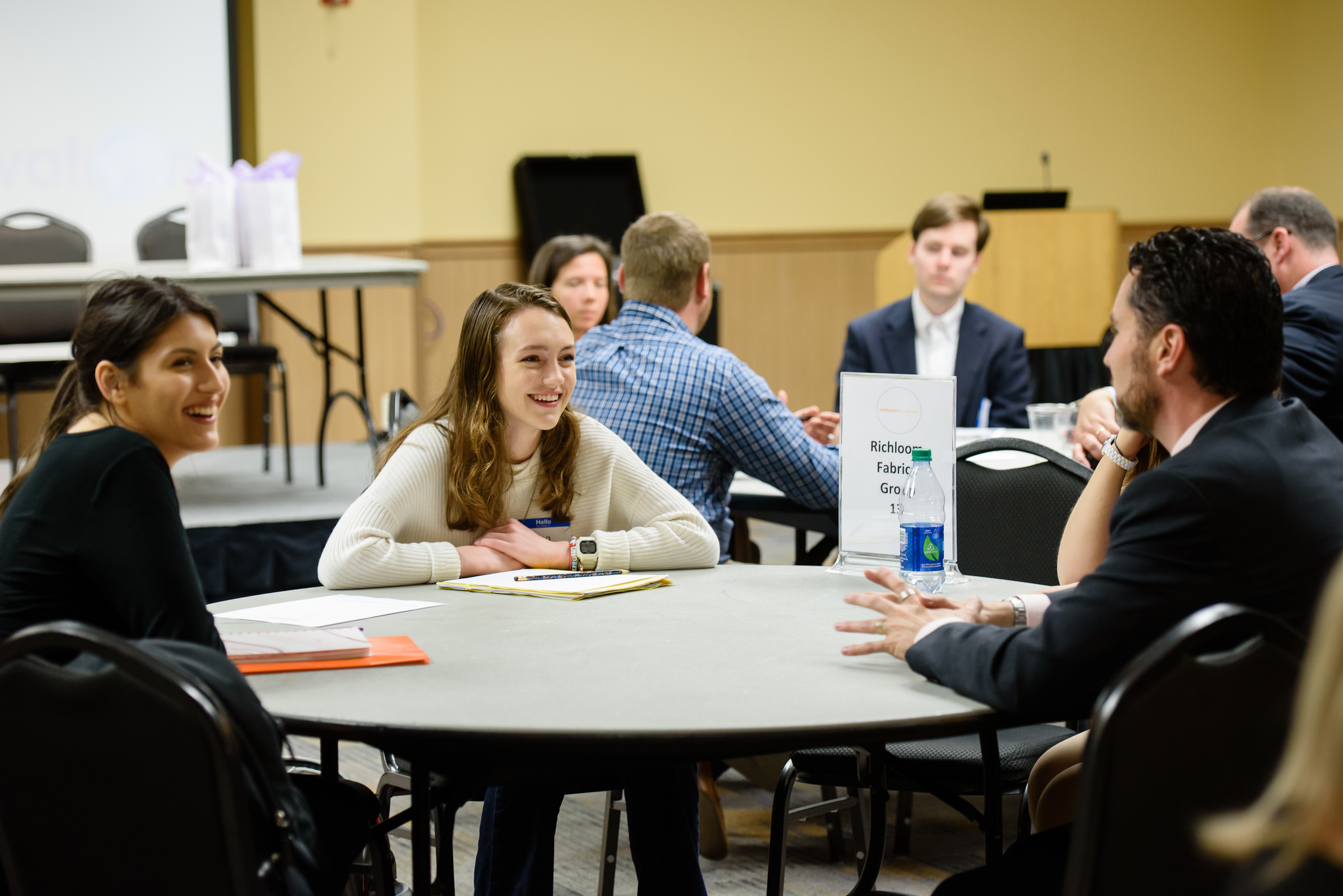
Students participate in roundtable sessions at the 2018 L&IT Conference. Photo courtesy of Clemson University.

The Department of Languages hosted the annual Language and International Trade (L&IT) Conference on February 28 in the Hendrix Student Center ballrooms. The theme of this year’s event was self-marketing and recognizing success signals. Donna Murphy of Michelin gave the keynote speech titled “Understanding Yourself: Strengths, Weaknesses, Interests, Ambitions, Values,” in which she counseled students to consider how to best market themselves to potential employers. The event also featured a panel of Clemson alumni who are now working at international companies, roundtable sessions with representatives from such companies, and a job fair.

Students selected as 2018 Christopher J. Duckenfield Scholars

Two students in the Department of Languages have been selected as the 2018 Christopher J. Duckenfield Scholars. Congratulations to Jessica Harris, an Economics and Philosophy major with a French Studies minor, and Hannah Pearson, a Modern Languages-ASL and English major with a concentration in Writing and Public Studies. Both are juniors in the Calhoun Honors College.

The program provides Jessica and Hannah the opportunity to study at St. Peter’s Summer School at Magdalen College at the University of Oxford in England. The cost of their room, board and tuition will be covered by the scholarship. They will select a course in English literature, Medieval studies, or environmental studies to complete during the summer. When they return to Clemson in the fall, Jessica and Hannah will give a presentation to the university community on their experiences.

The Christopher J. Duckenfield Scholars Program was established by the family and friends of Chris Duckenfield, who was Clemson’s vice provost for computing and information technology. He was also an alumnus of St. Peter’s College of the University of Oxford. The program enables one or two members of the Calhoun Honors College who demonstrate extraordinary talent, motivation, commitment, and ability to attend St. Peter’s College. Duckenfield Scholars also are expected to demonstrate the ability to adapt to the tutorial style of learning that exemplifies university education at Oxford and elsewhere in the United Kingdom.

Faculty news, Fall 2017

Stephen Fitzmaurice, assistant professor of ASL, published “Best Practices for Educational Interpreters in South Carolina,” a technical assistance resource for the South Carolina Department of Education Office of Special Education Services. He was also featured in the Member Spotlight of the national Registry of Interpreters for the Deaf.

Alma García-Rodríguez, lecturer of Spanish, received her Ph.D. in Spanish literature from the University of Florida. Her dissertation focused on the representation of the city in six novels from the Hispanic Caribbean: Santo Domingo, La Habana and San Juan. She took a Neo-Baroque perspective to study these cities as elements that stand against an established order and authority in order to create a new identity that governs itself. She plans to continue researching Caribbean literature.

Daniel Holcombe, lecturer of Spanish, published the essay “Salvador Dali’s Everyman: Renaissance and Baroque Classicism in ‘Don Quixote and the Windmills (1946)’” in Cervantes: Bulletin of the Cervantes Society of America. Here he traced Dali’s classical trajectory through art historical analyses of the third watercolor illustration from the artist’s first illustrated edition of “Don Quixote.” He also published “Salvador Dalí’s “Don Quixote: High Art or Kitsch?” in Laberinto Journal. He was recently named an editor of this online peer-reviewed journal published by the Arizona Center for Medieval and Renaissance Studies. His article in Laberinto defines Dalí’s role as an illustrator of the 1946 text. It also reveals how Dalí achieved what critics have deemed impossible: the rendering of both fantasy and reality in the same pictorial composition. Holcombe presented related research at the South Atlantic Modern Language Association conference in Atlanta in November 2017. He also published a book chapter, “Marco Berger: Homoaffective Edging and Cinematic Queered Continuums,” in Intimate Relationships in Cinema, Literature, and Visual Culture, edited by Gilad Padva and Nurit Buchweitz for Palgrave Macmillan. In the chapter, Holcombe combines queer theory with Jacques Lacan’s psychoanalytical theory l’objet petit a to analyze the spectator gaze and cinematic techniques in two films by Argentinian director Marco Berger.

Jason Hurdich, lecturer of ASL, was named the Marie Griffin Interpreter of the Year. The award, given by the Southeast Regional Institute on Deafness, recognizes his outstanding service to the deaf, hard of hearing and deaf-blind communities of Alabama, Florida, Georgia, Kentucky, Mississippi, Tennessee and the Carolinas. Read more about his award here.

Salvador Oropesa, professor of Spanish and Department Chair, published the article “‘El Quijote’ en la trilogía de la frontera de Cormac McCarthy: Neobarroco del Southwest” in the Colombia-based journal Lingüística y Literatura 72 (2017): pp. 135-55. In his abstract, Oropesa said: “We read Cormac McCarthy as a novelist of the Baroque of the Southwest paying special attention to syntax, vocabulary, and intertextuality. The bulk of the critical attention on McCarthy is anglocentric. We cover the influence of Spanish literature, mainly Cervantes, in the Border Trilogy.” He also presented the paper “La Trilogía del Baztán de Dolores Redondo como guía de liderazgo en el contexto de la novela policiaca contemporánea española” at the XXVII annual congress of the International Association of Female Hispanic Literature and Culture November 8 in Santo Domingo, Dominican Republic.

Kelly Peebles, associate professor of French, published the article “The Head, the Heart, and Hysteria in Jeanne Flore’s ‘Tales and Trials of Love’ (c. 1542)” in the Journal of Medical Humanities. She presented the paper “Mothering in the Shadow of the Crown: Royal cousins, religious refugees, and the nurturing influence of Renée de France” at the Royal Studies Network’s Kings & Queens 6 conference, which was held in Madrid, Spain, September 12-15.

Graciela Tissera, associate professor of Spanish, presented her research on armed conflicts and historical memory in film, “Paco Cabezas y Gilles Paquet-Brenner: intersecciones de la memoria histórica en el cine,” at the IX Congreso de Análisis Textual Trama y Fondo (University of Valladolid, Spain) in October. Tissera also attended the II Congreso Internacional Figuraciones de lo Insólito en las Literaturas Española e Hispanoamericana organized by the University of León, Spain in October to present her research paper “Jorge Luis Borges y David Roas: percepciones de múltiples universos y seres soñados.” The research focused on the perception of time, space, and personal identity related to supernatural dreams and idealist philosophy in the fiction of Borges and Roas.

Eric Touya, associate professor of French, gave the lecture “Make Civil Rights and the Humanities Happen at Your Library” on October 12 at the 2017 South Carolina Library Association Conference in Columbia. He also read the paper “Humanizing Economics: Pedagogical Approaches to Transforming the Homo Economicus” at the 32nd Annual Interdisciplinary Conference in the Humanities held October 27 at the University of West Georgia in Carrollton.

New lecturer of Spanish joins faculty in Spring 2018

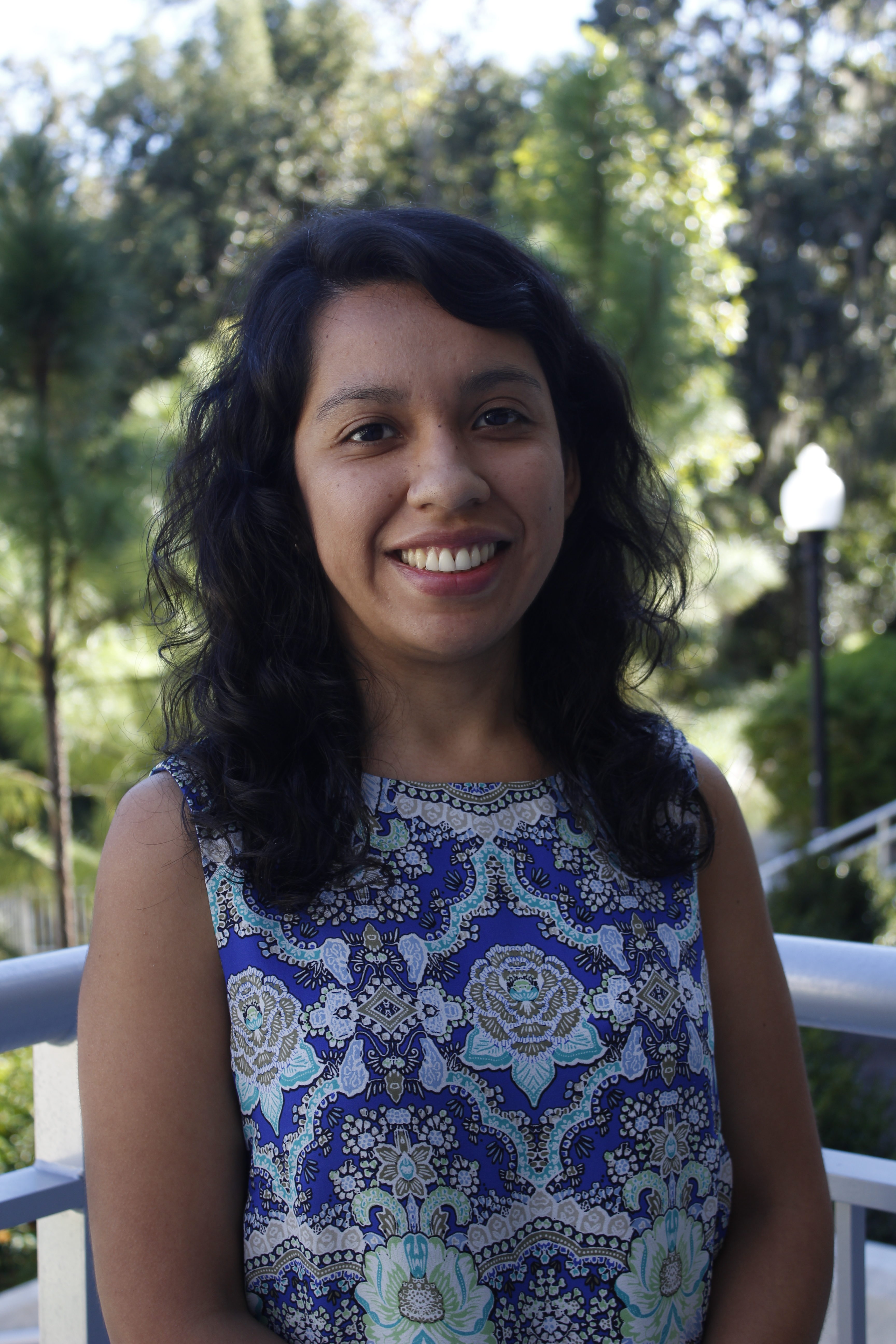
Rosa PillcurimaRosa M. Pillcurima, originally from Quito, Ecuador, joined the faculty in January 2018 as a new Lecturer of Spanish. She earned her B.A. in Spanish from the State University of New York at Geneseo and her M.A. in Foreign Languages and Literatures with a concentration in Spanish from Iona College. Prior to coming to Clemson, she taught Spanish at SUNY Geneseo and at the University of Florida. In her free time, Rosa enjoys traveling, cooking, reading and visiting museums.

French track of Language and International Health major begins in Spring 2018

One of the signature offerings in the Department of Languages is the Language and International Health B.S. for those students interested in pursuing health-related careers. This program is jointly administered with the Department of Public Health Sciences in the College of Behavioral, Social and Health Sciences.

The L&IH major pairs a modern language concentration with coursework in public health theory and practice. The language component emphasizes linguistic and cultural proficiency in the target language by studying specific peoples, cultures, literatures, technical language, health environments, and multicultural issues. The public health component includes the history and philosophy of public health and medicine; the organization, management, and financing of health services; and the social and behavioral aspects of health, epidemiology, health evaluation methods, and health communications. Students choose an emphasis area in either Health Administration or Community Development.

Spring 2018 marks the first semester that a French track is available in addition to the Spanish and Chinese tracks. As with the other tracks, L&IH-French students must study abroad for at least one semester and complete an internship in a French-speaking health-care setting. However, any student who has completed intermediate French can also enroll in L&IH-French courses even if they are not pursuing the major.

Lecturer of French Anne-Carole Salces y Nedeo teaches the new French for Health Professionals courses. “Learning a foreign language is not only beneficial to those who want to work abroad,” she says. “Learning a foreign language is opening one’s mind to something new; it’s seeing the world through somebody else’s eyes. This is a priceless skill which has become increasingly necessary to acquire in our modern world. I am glad to see Clemson University taking steps in that direction, by trying to become more internationally oriented, and I am proud to be part of it! I hope to see more and more students seize this opportunity which, without a doubt, will make them better healthcare providers and administrators.”

Longtime faculty member Scott Harris retires

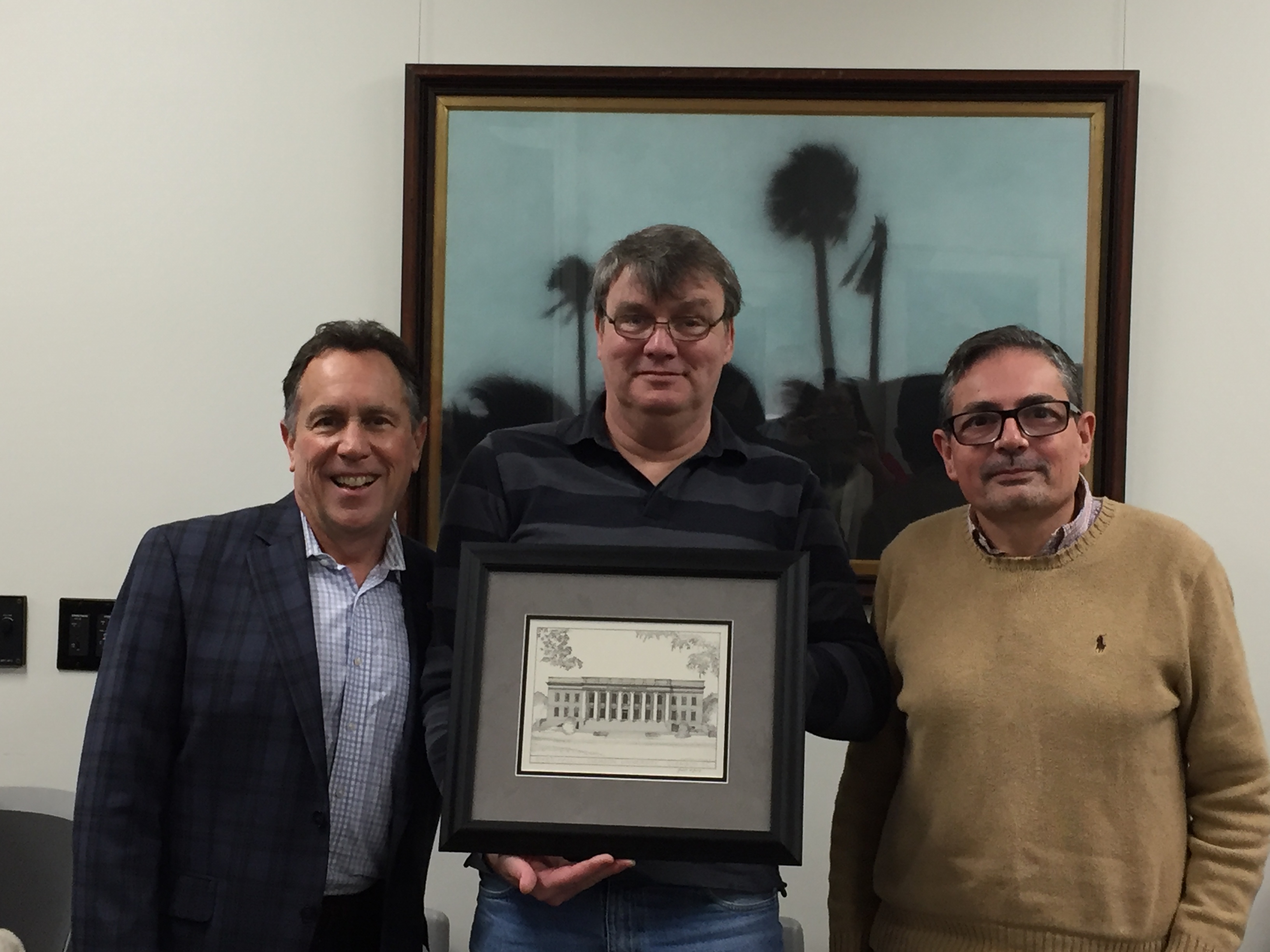
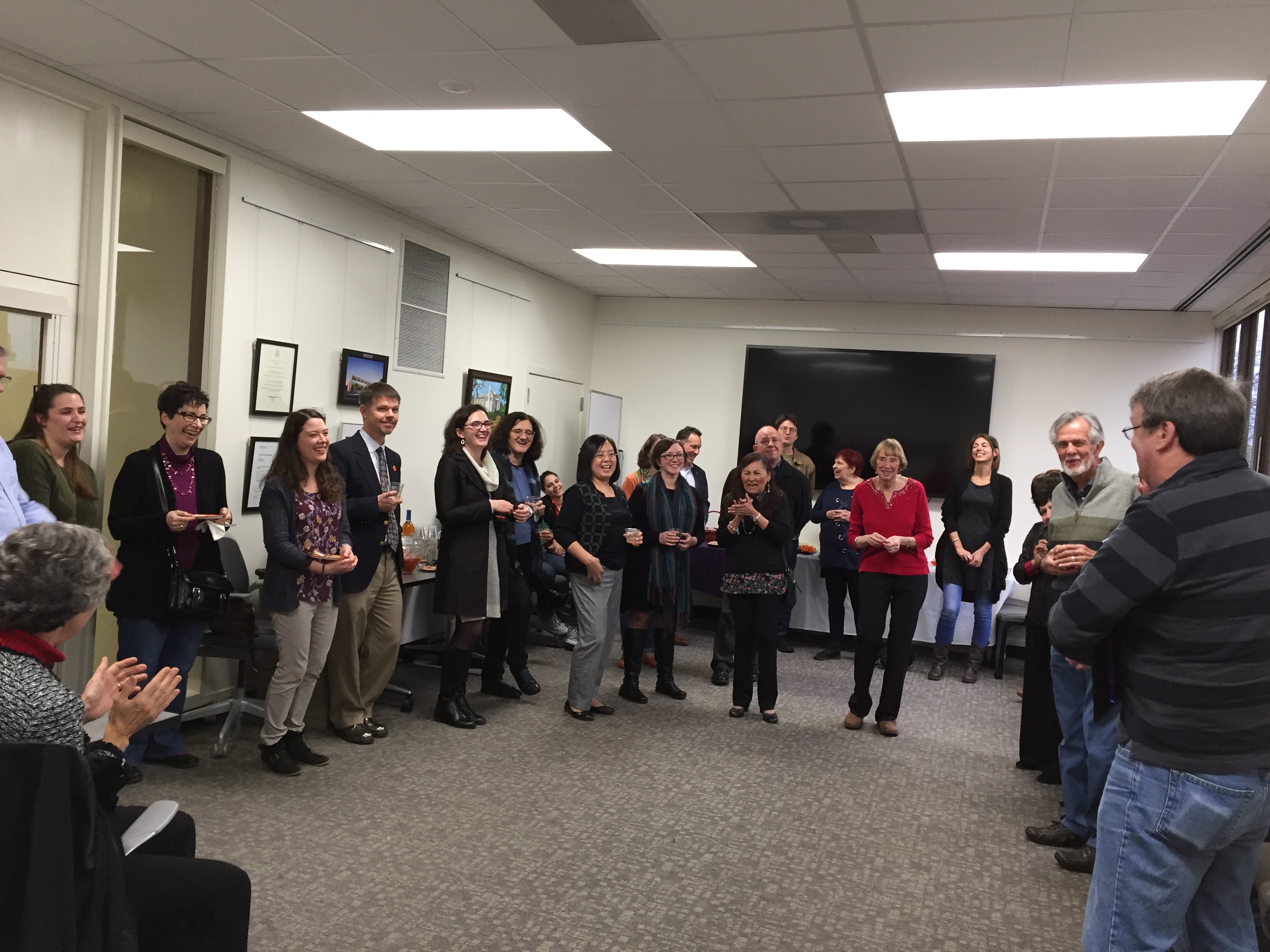
(L-R) Dean Richard Goodstein, Scott Harris, and Department Chair Salvador Oropesa at the retirement party. (Photo courtesy of Su-I Chen.)

Senior Lecturer of Spanish Scott Harris retired in December 2017. His retirement marks the end of a 30-year career in the Department of Languages, where he began teaching in January 1988.

Harris earned his B.A. in Spanish and his M.A.T. in Secondary Education in Spanish from the University of South Carolina. Although he was trained to teach high school, he enjoyed teaching college much more. After graduating, he taught at Furman University for two years before coming to Clemson.

At Clemson, Harris taught elementary and intermediate levels of Spanish and served on various committees, including the President’s Council for Community and Diversity and the Declamation Committee. He also served as the Scheduler and Registration Coordinator for the department for many years.

Members of the department at the retirement party. (Photo courtesy of Su-I Chen.)

Of his most memorable activities at Clemson, Harris said, “Over the years I enjoyed the Southern Circuit Film showings and have greatly missed that program since its recent departure. I was also proud to be involved in the founding of the Lambda Society, the first gay-straight alliance organization, back in the early 90s here at Clemson.”

Harris will be greatly missed by his colleagues in the department, who feted him at a retirement party in December. Department Chair Salvador Oropesa described Harris as the “electricity” of the department, while CAAH Dean Richard Goodstein called him the “glue.” Other attendees reminisced about their time working with Harris.

Congratulations, Scott!