Clemson Extension Upstate District

Rural Health in Union County

Julia Newsome, Rural Health & Nutrition Extension Agent
Union & Cherokee Counties

I have promoted extension programs and recruited participants at various events/health fairs across Union County this summer. If you see me at a local event, feel free to stop by and ask any questions regarding Clemson Cooperative Extension programing!

I started two “Health Extension for Diabetes (HED)” cohorts for Union residents: one online and one in-person. Registration is open for the in-person cohort until Tuesday 09/19/23, please contact me if you are interested in HED programing.

  • HED is a free diabetes support program recognized by the ADA as a practice-tested diabetes support program. The main goal of this program is to help participants better manage diabetes to prevent or delay complications. HED is 4 months long and includes a series of 8 education sessions and intermittent support sessions; Each session is designed to help participants learn more about diabetes and provide them with necessary skills and support to successfully self-manage diabetes. Participants will receive bi-weekly materials and weekly follow-up to help navigate resources and reach healthy lifestyle goals; A Type 1 or Type 2 diabetes diagnosis is required for enrollment.

In July, I spoke at the Union County School District’s (UCSD) Opening Day Professional Development event for UCSD staff. I provided “Know Diabetes By Heart (KDBH)”. If there is an upcoming event or group meeting that you would be interested in me speaking at, I would love to attend. Please feel free to contact me if you have any opportunities or questions.

  • KDBH is sponsored by the American Diabetes Association (ADA) and American Heart Association (AHA). It is a free education session offered in-person or online. The program aims to help participants better understand the link between diabetes and heart disease. By participating in this one-hour session, you will learn more about risks related to diabetes and heart disease, how to take control of your risks, and learn about community and clinical resources.

It is important for me to be a part of the Union community, so I became a member of the Union County Rotary Club this April. I’m looking forward to upholding the Clemson Extension standard of service!

Julia’s Contact Information:
Office – 864-424-8275
Email – Janewso@clemson.edu

FORGED IN 4-H

Mark Cathcart, Union County 4-H Agent

Being a 4-H agent is the most rewarding, frustrating, difficult, and easiest job I have ever had.  4-H agents do everything at once while everyone thinks you are doing nothing, or just playing with kids. 

As a blacksmith, I have a desire to pass the love of this trade on to a younger generation. The blacksmithing “tools of the trade” are always two things, heavy and expensive.  With that in mind, I piloted a blacksmithing program with a homeschool group with “makeshift” equipment and some of my own personal tools to see what would happen. The enthusiasm was overwhelming!  At this point I realized that with a dedicated set of equipment their learning curve would steepen, and the love of this trade would deepen. After receiving the Extension Innovation Award, I was able to leverage the City of Union to give some more money to buy the proper equipment.  This equipment has allowed me to accelerate the home school, club, and day camp students’ knowledge and technique.  We even gave the program a name, “Forged In 4-H”.

“Forged In 4-H” is designed to teach metallurgy and blacksmithing skills, as well as provide school enrichment through demonstrations, in a safe manner, with the use of chemistry, geometry, physics, math, and hands on projects. This program and equipment are being used to teach 4-H youth of all ages and any student through school enrichment, including homeschool groups. The equipment is housed in Union County, where the principal teaching location is. The equipment is kept mobile so that it can be moved to any county in the state to conduct short term projects, demonstrations, day camps, and school enrichment.

The use of hands-on learning techniques allows students to experience and learn the trade of blacksmithing. With a resurgence of interest in blacksmithing, this is a need that begs to be met. This program is unique for several reasons. First, we are leading the way in offering blacksmithing in 4-H in the southeast. Only a few counties in the nation offer a 4-H program similar to this one. This may be due to lack of agents and volunteers who do not have the knowledge or funding. The interest in just my county has been overwhelming. Second, blacksmithing is an ancient art, but we will be teaching it in a new, modern, and exciting way. We will be teaching the life skills of blacksmithing to the younger generation, instilling an appreciation for an ancient art form, and preserving skills that we do not need to lose as a society. Third, we will be providing hands-on knowledge and skills in a field that may become a career for some 4-H’ers. Forging, welding, metal working, and fabricating are not going away any time soon. In a world filled with technology, all too often we do not teach youth how to make something real and tangible. With young people spending an exorbitant amount of time on computers and cell phones, real world skills fall to the wayside. Putting simple math and geometry skills to work, seeing chemistry and physics in action, and developing simple hand eye coordination can easily be overlooked.

As youth development agents, it is our job to help young people choose a life path. If we can help these 4-H’ers become productive citizens, then we have done our job.

September, 2023

Area Forestry Agent Report-Jeff Fellers

In January, I always look forward to judging the 4-H Wildlife Food Plots that were planted by 4-H’ers in the fall of the year.  This year I visited Newberry, Laurens, and Saluda Counties to judge six different food plots.  The 4-H Wildlife Food Plot Project gives participants a bag of seed to plant a certain size food plot.  The participants then monitor that food plot through a specified time frame and complete a record book with their findings.  Many participants set up game cameras, bird houses, and blinds to monitor the wildlife that visit their plot.  They also monitor rainfall and document nutrients added to soil to help the pot grow.    If you know of youth between the ages of 5 and 19 that maybe interested in the 4-H Wildlife Food Plot Project have them contact their local 4-H Agent at Clemson Extension.
The Laurens Forest Landowners Association and the Newberry Forestry Association both hosted meetings in November of 2022.

Laurens Forest Landowners meeting
Laurens Forest Landowners Association Meeting

The Laurens Forest Landowners Association meeting focused on vegetation management for the landowner, while the Newberry Forestry Association learned how to calculate and measure seedling survival on a newly planted stand. 
Wood Magic Forest Fair is a program hosted by the South Carolina Forestry Commission.  This is a great program that teaches fifth graders from across the state about forestry.  This year I had the opportunity to present at the gifts stations during the Harbison Wood Magic Forest Fair. For more information this program please visit: https://www.scfc.gov/education/wood-magic/

October is always a busy time in Union, because the Clemson Extension Office is actively involved in the local fair.  We manage the livestock shows, home economics department, agronomy department and the poultry department.  On Thursday of the fair, we invite all the 5K classes throughout the county to visit the fair and to come learn about agriculture in Union County.  Through this field trip, the students get a tour through the barn and learn about crops, bees, horses, dairy cows, beef cows, pigs, and chickens.

Area Livestock and Forages Agent Update

This past December, I had the opportunity through South Carolina Farm Bureau to travel to Washington DC with a few other Young Farmer and Ranchers from across our state to meet with our legislators, government ag agencies, and Farm Bureau staff. It was eye-opening and humbling to see how policy for our country is made. We had the privilege to sit down with policymakers and tell them exactly what we do as well as the challenges we face as farmers.  They were eager to listen and provide feedback on legislation that will keep Agriculture the number one industry in our state. Many of the discussions led back to farmland loss as we learned that South Carolina is 8th for the fastest loss of farmland. That was statistic was alarming. I work with many multi-generational farmers that have no succession plans. I also work with first-generation farms that are clawing to get access to land. Both are affected by the increased urban sprawl in our state. This trip was a reminder to help my producers to be able to tell their stories and communicate with people who don’t understand farming. Also, this sparked a renewed interest in promoting ways to keep the farm viable to keep farmers on their land. This past December, I hosted a workshop on Farm Successional Planning that presented information on how to strategically transfer the business and the land. We also discussed conservation easements and other strategies to keep farmland affordable for new farmers as well as veteran farmers. As we look forward to the Spring, we will continue with programs that focus on the business aspect of farming because we know that profitable farms with good succession plans don’t give way to strip malls and townhomes nearly as easily.

Back Yard Poultry Processing Grant Update:
We had a very successful first workshop with our mobile processing grant. Despite the hurricane-force wind and rain, we harvested 100 broilers. Participants were able to grow the birds for 7 weeks and then learned safe and humane practices for harvesting the chickens. We teamed up with the 4H and the Food Safety team to offer a day-long program on harvesting techniques, food safety, and the economics of raising boilers. Our next program is scheduled for May. We look forward to a productive Spring, thank you for continued support of our programs.

Chris LeMaster, Area Livestock and Forages Agent

4-H and Blacksmithing

Hands on trades and hard work seem to be going out of style.  Although blacksmithing is both of these, it has grown in popularity over the past few years.  As a blacksmith, it is my desire to pass the love of this trade on to a younger generation. Out of this desire was birthed “Forged in 4-H”.  This program is designed to teach metallurgy and blacksmithing skills, as well as provide school enrichment through demonstrations, in a safe manner with the use of chemistry, geometry, physics, math, and hands on projects.

The equipment is housed in Union County which is the principal teaching location. The equipment is mobile so that it can be moved to any county in the state to conduct short term projects, demonstrations, day camps, and school enrichment. This program and equipment is being used to teach 4-H youth of all ages, as well as homeschool groups.

The use of hands-on learning techniques will allow students to experience and learn the trade of blacksmithing.  This program is “cutting edge” for several reasons.  First, we are leading the way in offering this in 4-H.  Only a few counties in the nation offer a 4-H program similar to this one.  This may be due to lack of agents and volunteers who do not have the knowledge or funding.  The interest in just my county has been overwhelming.  Second, blacksmithing is an ancient art, but we are teaching it in a new, modern and exciting way. We will be teaching the life skills of blacksmithing to the younger generation, instilling an appreciation for an ancient art form, and preserving skills that we do not need to lose as a society.  Third, we are providing hands-on knowledge and skills in a field that may become a career for some 4-H’ers.  Forging, welding, metal  working, and fabricating are not going away any time soon. As a youth development agent it is my job to help young people choose a life path.  If I can help these 4-H’ers become productive citizens, then I have done my job.

This program will impact the citizens of South Carolina by teaching an old trade and art form in a modern way to our younger generation. As a 4-H agent and team player I will provide this equipment, along with my knowledge and help, to any county in South Carolina for trainings, workshops, or day camps as requested.  In a world filled with technology, all too often we do not teach youth how to make something real and tangible. With young people spending an exorbitant amount of time on computers and cell phones, real world skills fall to the wayside.  Putting simple math and geometry skills to work, seeing chemistry and physics in action, and developing simple hand-eye coordination can easily be overlooked.  Blacksmithing puts all these skills and knowledge together in a fun and interesting way.  Keeping participants engaged and wanting to learn more has not been a problem

Area Livestock Agent Assigned To Union County

A note from Chris LeMaster:

I’m happy to begin a new adventure serving the livestock and forage producers of Union County.  I’ve been the Livestock Agent in Cherokee, Spartanburg, and York since 2014. I live on my family’s farm in the Grassy Pond Community of Cherokee with my wife and son. Along with my family, we background calves as well as raise horses and hay. I look forward to meeting the farmers of Union County.                   clemast@clemson.edu

Union County Welcomes A New Rural Health & Nutrition Agent

Hello Everyone,

My name is Julia Newsome, and I am the new Rural Health & Nutrition Agent for Union and Cherokee Counties. I moved from Upstate New York to Upstate South Carolina in June 2022, and in November 2022 I became part of the Clemson Extension team. 
Two programs I’ll work on are the “Know Diabetes by Heart (KDBH)” and “Health Extension for Diabetes (HED)” programs.

  • KDBH is sponsored by the American Diabetes Association (ADA) and American Heart Association (AHA). It is a free education session offered in-person or online. The program aims to help participants better understand the link between diabetes and heart disease. By participating in this one-hour session, you will learn more about risks related to diabetes and heart disease, how to take control of your risks, and learn about community and clinical resources.
  • HED is a free diabetes support program recognized by the ADA as a practice-tested diabetes support program. The main goal of this program is to help participants better manage diabetes to prevent or delay complications. HED is 4 months long and includes a series of 8 education sessions and intermittent support sessions; Each session is designed to help participants learn more about diabetes and provide them with necessary skills and support to successfully self-manage diabetes. Participants will receive bi-weekly materials and weekly follow-up to help navigate resources and reach healthy lifestyle goals; A Type 1 or Type 2 diabetes diagnosis is required for enrollment.

The goal of the Rural Health and Nutrition Extension Team is to help all South Carolinians prevent and self-manage chronic disease. Our programs are valuable because they are free, mobile, and can be held virtually, in-person, or hybrid (delivery is program specific). Please feel free to email me if there is something you think I can help you with. Overall, I’m looking forward to serving Union and Cherokee counties, while maintaining the Clemson Extension standard of service.

Julia’s Contact Information:
Office – 864-424-8275
Email – Janewso@clemson.edu

Forged In 4-H in Union County

Forged In 4-H

Mark Cathcart

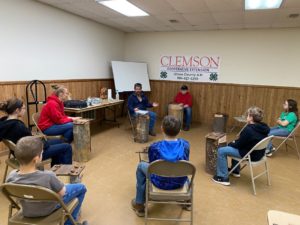
Forged in 4-H classroom
Union County, Forged In 4-H classroom time.

Being a 4-H agent is the most rewarding, frustrating, difficult, and easiest job I have ever had.  4-H agents do everything at once while everyone thinks you are doing nothing or just playing with kids.  On top of that, we must figure out how to pay for it all. It is often difficult to obtain proper funding to conduct programs at the desired level. Every now and then an opportunity comes along that can help with funding our programs.  The Extension Innovation Award is one of these opportunities.

As a blacksmith, I have a desire to pass the love of this trade on to a younger generation. The blacksmithing “tools of the trade” are always two things, heavy and expensive.  With that in mind, I piloted a blacksmithing program with a homeschool group with “makeshift” equipment and some of my own personal tools to see what would happen.  The enthusiasm was overwhelming!  At this point I realized that with a dedicated set of equipment their learning curve would steepen, and the love of this trade would deepen.  Now I had a new problem, MONEY.  After receiving the Extension Innovation Award, I was able to leverage the City of Union to give some more money to buy the proper equipment.  This equipment has allowed me to accelerate the home school group’s knowledge and technique as well as conduct two summer day camps.  We even gave the program a name, “Forged In 4-H”.

“Forged In 4-H” is designed to teach metallurgy and blacksmithing skills, as well as provide school enrichment through demonstrations, in a safe manner, with the use of chemistry, geometry, physics, math, and hands on projects. This program and equipment are being used to teach 4-H youth of all ages and any student through school enrichment including homeschool groups. The equipment will be housed in Union County, where the principal teaching location will be. The equipment will be kept mobile so that it can be moved to any county in the state to conduct short term projects, demonstrations, day camps, and school enrichment.

The use of hands-on learning techniques will allow students to experience and learn the trade of blacksmithing. With a resurgence of interest in blacksmithing, this is a need that begs to be met. This program is innovative for several reasons. First, we are leading the way in offering blacksmithing in 4-H. Only a few counties in the nation offer a 4-H program similar to this one. This may be due to lack of agents and volunteers who do not have the knowledge or funding. The interest in just my county has been overwhelming. Second, blacksmithing is an ancient art, but we will be teaching it in a new, modern, and exciting way. We will be teaching the life skills of blacksmithing to the younger generation, instilling an appreciation for an ancient art form, and preserving skills that we do not need to lose as a society. Third, we will be providing hands on knowledge and skills in a field that may become a career for some 4-H’ers. Forging, welding, metal working, and fabricating are not going away any time soon. In a world filled with technology, all too often we do not teach youth how to make something real and tangible. With young people spending an exorbitant amount of time on computers and cell phones, real world skills fall to the wayside. Putting simple math and geometry skills to work, seeing chemistry and physics in action, and developing simple hand eye coordination can easily be overlooked.

As youth development agents, it is our job to help young people choose a life path. If we can help these 4-H’ers become productive citizens, then we have done our job.

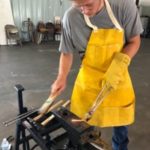
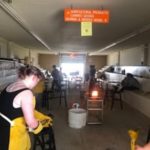
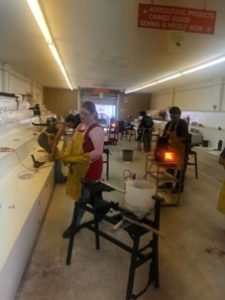
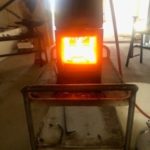
forging studentforging students workingforging students workinghot forge

Area Forestry and Natural Resources Report

Area Forestry and Natural Resources Report

Jeff Fellers

Summer is nearing an end and now is the time to get ready to make our way into the fall and winter.  We have had a busy summer in Extension as operations have returned to normal after the Covid outbreak.  This summer I have hosted two forestry association meetings, hosted a Hardwood Regeneration Workshop, wrapped up Master Tree Farmer with three different field tours across the state and made numerous direct contacts through field visits, office visits, and phone calls.

In May, I hosted a Hardwood Regeneration Workshop in McConnells, South Carolina.  In a state where pine is the number one timber crop, many times our hardwood stands get ignored.  This program was geared towards both landowners and professionals.  The program offered continuing education credits for professional foresters and those that needed pesticide credits.  This was an eight-hour program that went in-depth about how to convert an existing hardwood stand into a hardwood stand with favorable species for timber and wildlife.  The program had a classroom session and field tour that occurred at a demonstration site at Draper Wildlife Management Area.  Participants learned about herbicide prescriptions to control and kill existing timber, the basal area that needed to be left to maintain an existing canopy, and planting techniques for species that would be desirable in this situation.  We had 16 people attend this program, which included both landowners and professionals.  We had seven surveys completed on the program.  Of those seven, five were professionals and two were landowners.  The survey participants represented 903 acres owned and 131,000 acres managed.   Dr. Stephen Peairs (Clemson) and Dr. David Clabo (Georgia) provided the presentation based off of Dr. Peairs research and demonstration on the Draper WMA.  This workshop provided a good example of how research from Clemson University can help our local landowners better manage their hardwood stands.

May was a busy month, as I also hosted a meeting for the Newberry Forestry Association and the Laurens Forest Landowners Association.  The Newberry Forestry Association met for the first time since the Covid outbreak.  We had 29 people in attendance and had a program on Chronic Wasting Disease in Deer presented by Charles Ruth from SC Department of Natural Resources.  The Laurens Forest Landowners Association had 35 people in attendance and had a program on cost share available to landowners.  This program was presented by Chisolm Beckham with the SC Forestry Commission and Lisa Good with the Natural Resource Conservation Service.

Both of these Association also met in August.  The Newberry Forestry Association had 33 in attendance, and the Laurens Forest Landowners Association had 36 in attendance.  Carla Carlos from the SC Forestry Commission presented at both of these meeting on pine genetics.  These groups meet on a quarterly basis with their meetings typically being held in February, May, August, and November.  If you would be interested in attending any of these meetings, please contact me, at fellers@clemson.edu.

Master Tree Farmer was offered this year as a hybrid course.  The majority of the course was virtual with presentations online for participants.  Field tours at the end of the course were optional. We had 180 participants take the class, and roughly 130 participants took part in the field tours.  Field tours were hosted in the Upstate, Midlands, and Coastal area to help reduce travel for the participants.  Field tours were held on private lands where property owners were actively managing their timber.  The property owners provided details on how they managed their property, mistakes they had made, and things that they had done right to help better educate participants in timber management.

I also serve on the Indian Creek Quail Restoration Committee.  This committee puts out two newsletters a year.  One was published in March, and the next will be published in September.  These newsletters are great tools to get more information on managing for Quail.  This committee also hosts two workshops a year.  Our previous workshop was hosted in May, at the Belfast plantation owned by the SC Department of Natural Resources.  Attendees were able to see how the staff at the Belfast Plantation manages the property for Quail.  Participants visited sites that demonstrated timber thinning, beneficial native plant species, prescribed burn areas, and chemically treated areas to benefit habitat for Quail.

Lastly, I always enjoy the one-on-one site visits, phone calls, and office visits.   One-on-one visits provide a personal education experience where landowners learn how to better manage their specific property or natural resources.  This summer I have had 82 direct contacts that touched on subjects from timber management, wildlife management, invasive weed control, pond management and general horticultural/garden questions just to name a few.  Through these methods of direct contact, I have reached at least 100 people and 725 acres of owned property.

It has been a busy summer, with many programs offered for forestry and natural resource education.  If you would like more information on programs available for forestry and natural resource, please contact me, at fellers@clemson.edu.

Upcoming Events in Union SC

UPCOMING PROGRAMS & EVENTS
In Union County SC
September 9-10, 2022: Carolina Smoke-N-Grass Festival(SCBA)
Union County Fairgrounds, Union SC
September 17, 2022: 20th Annual Union County Farm Show
Union County Fairgrounds, Union SC
9:00am to 3:30pm  **Free Admission**
September 16-18, 2022: Uniquely Union Festival
Downtown Union SC
Starts 4:00pm on the 16th
Sept. 29-Oct.1, 2022: Upstate Livestock Show
Union County Fairgrounds, Union SC
October 18-22, 2022: Union County Agricultural Fair
Union County Fairgrounds, Union SC
4-H Club Meeting Schedule:
Woodsrunners —    1st Thursday of the month @ 7pm
Shooting Sports —  2nd Thursday (BB) of the month @ 7pm
4th Thursday (archery) of the month @ 7pm
Poultry Club —         3rd Thursday of the month @ 7pm
Baking Buddies —   2nd Tuesday of the month @ 3:30 pm
Recycling Club —     4th Tuesday of the month @ 3:30 pm
Union County FCL Club Schedule:
(Union County Extension Office meeting room.)
Twisted Stitches Crochet – 1st and 3rd Monday of the month @ 9:30amPatchwork Quilters – Every Wednesday of the month @ 9:00am