Clemson Extension Upstate District

Farmers are Hard to Replace

Chris LeMaster
Livestock & Forages Agent
Cherokee, Spartanburg, & Union Counties

Safety data (2019) by the U.S. Bureau of Labor Statistics indicates that the agriculture sector continues to be the most dangerous in America with 573 fatalities, or an equivalent of 23.1 deaths per 100,000 workers. Even in Cherokee County, we have had two ag-related fatalities less than a year apart. As we prepare for the busyness of fall hay harvest, a reminder about farm safety is much needed.

On August 1st we held a farm safety workshop tailored for cattle and hay producers. Typically, safety talks bring about a glazed and yawning audience. However, our speaker, Marion Barnes, used many real-life examples from around our state. He shared startling facts about the dangers of youth around farms. One point that shapes the deadly youth statistics is that on most farms, there is no separation between the barnyard and the children’s play area . This leads to complacency around dangerous equipment for both the youth and the parents.

Aside from the loss of limb or life, accidents on the farm are very costly and, in many cases, can bankrupt a farm. If you want to see your farm passed down another generation, you had better make good decisions on your “calculated” risks around equipment and livestock.

After the presentation, many stories were shared with the audience about ag-related deaths and injuries in our county from the past couple of decades. I received several calls after the workshop from farmers stating they appreciated the safety talk and planned to implement changes in their operations.
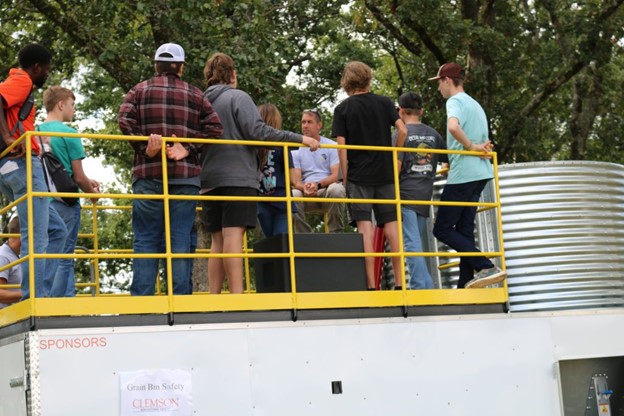
Grain Bin Safety Trailer

This program stemmed from an in-service training held on June 3rd at the Sandhills Experiment Station. Agents and specialists from across the state received presentations and demonstrations on farm safety topics. The demonstrations included legally transporting equipment, Rollover protection systems, and grain bin rescue. The grain bin rescue simulator was the most impressive demonstration. It was designed and constructed by the Ag Mechanization department to fit a small grain bin on top of an enclosed trailer that houses specialized equipment for the extraction demonstration. This trailer has been all over the state to help rescue teams train for grain bin entrapment. We plan to have this trailer visit some local fire departments in our farming communities.

Farmers are hard to replace, and so many people count on us. Please slow down and think about any avoidable risks. We need our farmers, and your families need you. For more information on farm safety and mental health for farmers, visit the links below:

http://blogs.clemson.edu/agsafety/

https://www.clemson.edu/extension/agribusiness/resources/farm-stress.html
 

Successful First Health Extension for Diabetes in Cherokee County

Julia Newsome
Rural Health & Nutrition Agent
Cherokee & Union Counties

“The first Health Extension for Diabetes (HED) cohort in Cherokee county was a community success! The cohort started in August 2023 and graduated in December 2023, with approximately a 90% graduation rate (adjusted)! We are recruiting for a second Health Extension for Diabetes cohort in partnership with the Cherokee County Family YMCA for HED in-person programing. Registration is open from 01/24/24-02/21/24, please contact me if you are interested in participating!

  • HED is a free diabetes support program recognized by the ADA as a practice-tested diabetes support program. The main goal of this program is to help participants better manage diabetes to prevent or delay complications. HED is 4 months long and includes a series of 8 education sessions and intermittent support sessions. Each session is designed to help participants learn more about diabetes and provide them with necessary skills and support to successfully self-manage diabetes. Participants will receive bi-weekly materials and weekly follow-up to help navigate resources and reach healthy lifestyle goals. A Type 1 or Type 2 diabetes diagnosis is required for enrollment.

February is American Heart Month; If there is an upcoming event or group meeting that you are looking for a guest speaker and a timely topic, I would love to attend and hold the Know Diabetes by Heart (KDBH) program. Please feel free to contact me if you have any opportunities or questions.

  • KDBH is sponsored by the American Diabetes Association (ADA) and American Heart Association (AHA). It is a free education session offered in-person or online. The program aims to help participants better understand the link between diabetes and heart disease. By participating in this one-hour session, you will learn more about risks related to diabetes and heart disease, how to take control of your risks, and learn about community and clinical resources.

Julia’s Contact Information:
864.424.8275
Janewso@clemson.edu

What to Know about Mistletoe

Carolyn Dawson
Area Extension Forestry Agent
Anderson, Cherokee, Greenville, Oconee, Pickens, & Spartanburg Counties

Now that deep winter is upon us, and the trees are bare of leaves, it is extremely easy to see the round, green balls of leaves scattered throughout the tree canopies. This is mistletoe.

“Mistletoe “roots” may extend up to a foot on either side of the point of attachment. Bob Polomski, ©2018, Clemson Extension”

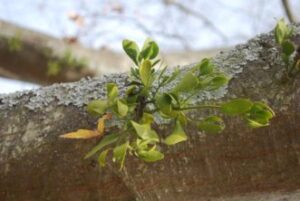
Is it harmful to trees? Well, kind of. It is considered a parasite, a hemiparasite, to be exact. A hemiparasite makes some of its own food through photosynthesis but takes water and most of its nutrients from the host tree. American or Oak Mistletoe (Phoradendron serotinum) is commonly found on deciduous trees such as pecans, oaks, elms, hackberries, maples, and wild cherries. In the fall, it produces white berries that contain toxic chemicals poisonous to people and domestic animals.

Where did it come from? Birds are the most common culprit. They consume the sticky, white berries, and then transport the seeds to other trees where the seeds can germinate and begin their parasitic journey.

Mistletoe uses specialized roots called haustoria, which penetrate the host tree’s bark, allowing them to embed themselves in the vascular tissue. Through this connection, mistletoe siphons off nutrients from its host, sustaining itself.

What should you do if you have mistletoe? The primary method of management involves pruning out the infected branches. Prune the affected branch at least 18 inches beyond the point of attachment. Simply removing the mistletoe plant, without removal of the infected branch, will provide some protection from spreading. However, if you remove only the mistletoe, it will probably regrow.

For more extensive infestations higher in the tree, it’s advisable to enlist the services of a professional Certified Arborist. For some older, larger, heavily infested trees, it may not be feasible to remove such large portions of the canopy, and best just to let the tree live out its natural life or have it removed.

If you’d like to learn more about tree insects, diseases, and issues, or perhaps invite Carolyn Dawson, Clemson Extension Forestry Agent, to speak at your event, please contact her at dawson4@clemson.edu.

Be Well Informed

Heather Nix
Water Resource Agent
Abbeville, Anderson, Cherokee, Greenville, Greenwood, Laurens, McCormick, Oconee, Pickens, & Spartanburg Counties

Be Well Informed logo
New Online Course! Be Well Informed
If you rely on a private well to provide drinking water for your home, the Be Well Informed course is for you! There is no cost and it’s available anytime.
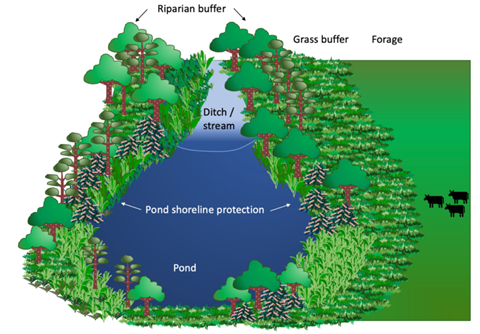
Diagram showing a healthy riparian buffer with livestock-safe plants
Figure 1. Example of a healthy riparian buffer with livestock-safe plants. Image credit: Sarah White

Prepare your pond for spring!

The winter is a great time to start preparing for a healthier pond when warm weather arrives! Here are some actions to consider.

  • Consider adding plants to the shoreline of streams and ponds. Riparian buffers with healthy, native vegetation support clean water and help prevent erosion along the shoreline. If the waterbody is in a pasture, see our new Land Grant Press article on Livestock-Safe Buffers!
  • When vegetation decays in ponds, the nutrients from the plant tissue are returned to the water – and can spur future plant growth. Remove decaying vegetation and compost in an upland area to help reduce in-pond nutrients.
  • Consider installing an aerator in ponds that stratify (or, to simplify, that develop layers of different temperature water) and in areas with slow or stagnant water. Pumping air to the bottom of a pond and letting it bubble to the service can increase dissolved oxygen levels and support healthy fish populations.
  • For more information on these, and other suggestions, please read our Pond Weeds: Causes, Prevention, and Treatment Options article on Clemson’s Land Grant Press website.

Upcoming events: Want to install a rain garden? Sign up now for the Master Rain Gardener online course (Register by 2/4/24). Please keep an eye on the Clemson Extension Events Calendar for information on additional events.

Cherokee County 4-H Clovers in the Kitchen Club

Haven Blackwell
4-H Agent
Cherokee County

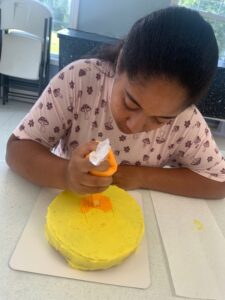
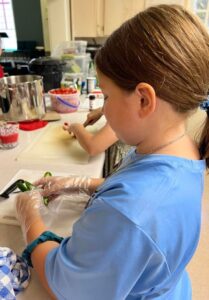
4-Her decorating a cakeThe Cherokee County 4-H Clovers in the Kitchen Club provides a program once a month for kids ages 9 to 18. We want to inspire the youth in our community to learn to cook healthy and nutritious meals for their families. The Clovers in the Kitchen Club has been cooking through the seasons since September. They have learned various valuable skills such as chopping, seasoning, baking, etc. In September, they learned to make nutritious items that can be packed in their lunch boxes. October was full of delicious tailgate food and of course November and December were Thanksgiving and Christmas inspired. We look forward to continuing 4-Her cutting up peppersthe year and learning new skills to enhance our confidence in the kitchen. Other clubs that Cherokee County 4-H has to offer are Cloverbuds (ages 5-8), Bits and Pieces Horse Club (ages 9-18), Cherokee Charter Academy 4-H Club (students of Cherokee Charter Academy), and Teen Council (ages 14-18). In the months ahead we will have our Peach Country 4-H Livestock Show in March for any youth interested in showing beef, poultry, market hog, or rabbit and Down on the Farm Day in April for second  grade classes across Cherokee County. Also, be on the lookout for 4-H summer day camps!
If any of the youth in your life would like to be a part of Cherokee County 4-H, please contact Haven Blackwell by email at daynab@clemson.edu or by phone at (864) 649-8252.

Is Your Farm a Hobby or a Business?

Christopher LeMaster, Jr.
Livestock & Forage Agent
Cherokee, Spartanburg, & Union Counties

Many may answer “Yes” to the above question, but nonetheless, that is an insightful question to ask yourself. Hopefully, you are intentional in your record-keeping, accounting, and tax preparation so that the IRS isn’t asking you the same question.  Whether you identify as a hobbyist or businessman, all will agree that it requires real work to answer this question successfully. Besides the work, there are fundamental business concepts that cannot be ignored if you wish to keep your farm around for future generations. A team of agribusiness agents and specialists and I have worked to develop the workshop series Farm Business Concepts. This course is designed to dive deep into the foundations of a well-run farm business. Participants will learn about business structures, labor forms, record keeping, accounting (managerial, tax), and tax management.  The workshop also includes a session on enterprise budgets and some case studies tailored to the cow/calf and hay producer. We are excited to help our farmers run their farms like businesses. There’s nothing wrong with being a hobby farmer, and truthfully, most of us would not endure the long hours and labor if we weren’t truly passionate about farming. We hope this program will help farmers identify ways to keep their farms profitable so that they may survive the ups and downs of the market and, most importantly, be around for another generation of farmers.

South Carolina Youth Dairy Heifer Project

The South Carolina Dairy Heifer Project began in 1974 and is one of the oldest 4-H projects of its kind in the Nation. This project was designed to provide youth in South Carolina an opportunity to raise a dairy heifer and experience the dairy industry, and then sell their heifer at the South Carolina Dairy Heifer Project Bred Heifer Sale. Throughout the years, thousands of South Carolina youth have taken part in 4-H dairy work. These 4-H and Dairy Heifer Project alumni can be found in all “walks of life.” Many are outstanding farmers and leaders of the dairy industry, while others are doctors, veterinarians, and teachers. In nearly every case, these people look back on this 4-H dairy experience as an outstanding part of their youth.

As the dairy industry has changed and evolved over the years, so has the South Carolina Dairy Heifer Project. Due to COVID restrictions, the 2020 Bred Heifer Sale was held online for the first time with great success. Due to that success, the sale has been permanently moved to an online format and the event dates have been adjusted to better suit the needs of the dairy industry. Through all the changes, the South Carolina Dairy Heifer Project has continued to thrive and reach youth across the state. Thirty-seven heifers are currently in project and under the care of 4-H youth and eighteen of those youth are from York County.

The 4-H and FFA dairy project members exhibit their dairy project animals at fairs, shows, and events in nearly every region of the state. Millions of people have seen or learned about 4-H and FFA through these youth dairy exhibits at the many fairs and events in South Carolina. This offers a tremendous opportunity for 4-H, FFA, Clemson Cooperative Extension, and the dairy industry to educate and inform the public about the dairy industry and youth dairy programs. Many thanks go out to the industry for the support of the program. Heifers for the project come from project alumni and producers across the Southeast who have seen the impact the project has had and is continuing to have on our youth.

York County Agribusiness

Clemson Extension Agent and SCNBFP Director Ben Boyles shares information about extension programming at the 2023 SC Farmer Resource Rodeo.

SC Farmer Resource Rodeo Connects Farmers and Resource Providers

The SC Farmer Resource Rodeo returned in 2023 as part of the annual South Carolina Local Food Summit. Sponsored by Clemson University Cooperative Extension’s South Carolina New and Beginning Farmer Program (SCNBFP), the rodeo showcased over 40 organizations that provide farmer support, including education and Extension staff, lenders, granting organizations, land and production resources, state and federal agencies, regulatory bodies, non-profit assistance and more. Participating farmers were able to learn about these organizations and connect one-on-one.

“We are so pleased to have had the opportunity to bring back the Resource Rodeo,” says Ben Boyles, SCNBFP director. “Farming can often seem like a solitary occupation, and farmers are not always aware of.  The vast number of resources available to them,” he continued. “Through this event, we are not only able to introduce farmers to invaluable sources of assistance but give them the opportunity to connect directly with resource representatives.”

All Aboard! Agritourism Workshop Coming to York County
Interested in adding an exciting revenue stream for your farm business? Agritourism might be for you! Hop aboard a charted bus as we learn all about agritourism trends and resources while touring 3 unique agritourism farms in York County, SC.

Topics will include on-farm sales, u-pick operations, tour logistics, hosting workshops and events, school tours, farm dinners, food sales, and more! Get your questions answered by experienced agritourism providers!

Workshop Tour Stops
• Tatanka Bison Ranch
• Black’s Peaches
• Five Blossoms Farm

Thursday, September 28, 2023 | In-person | 9:30 AM – 4:30 PM
Meet at Clemson Extension – York County
120 N. Congress Street
York, SC 29745
Workshop Contact: Ben Boyles http://boyles2@clemson.edu

SC New and Beginning Farmer Program Launches Level 3 Program

Now in its 13th year, the Clemson Extension SC New and Beginning Farmer Program (SCNBFP) has graduated over 500 new and aspiring farmers from its basic, beginning-level cohort program. The SCNBFP is excited to launch a new Advanced Level 3 Program in 2023 to offer a higher level of instruction for those who are still relatively new to farming but are looking to further their education in key areas of agribusiness and production. The SCNBFP Advanced Level 3 Program offers 20 full-day workshops and is designed so that qualified participants may choose whatever SCNBFP Advanced Workshops best suit their individual needs. These curated training events are the product of strategic collaborations within Clemson University as well as additional agricultural support organizations such as Soil & Water Conservations Districts, the Small Business Development Center, and farmer educators throughout the state.

“While our established core curriculum provides comprehensive training at a basic level, there is a need in South Carolina for continued new farmer education at a higher level,” says SCNBFP Director and York County Clemson Extension Agribusiness Agent Ben Boyles. “Our new Advanced Program provides a deeper dive into critical and/or niche topics appropriate for the experienced but still growing new farmer audience.”

The SCNBFP Advanced Level 3 Program runs from September 2023 through March 2024 with a series of full-day workshops hosted throughout the state, many at on-farm locations and several through online platforms. All workshops are also available on an individual basis to the general public not enrolled in the full program. More information about these workshops can be found here: 

https://www.clemson.edu/extension/newfarmer/workshops.html

Rural Health in Union County

Julia Newsome, Rural Health & Nutrition Extension Agent
Union & Cherokee Counties

I have promoted extension programs and recruited participants at various events/health fairs across Union County this summer. If you see me at a local event, feel free to stop by and ask any questions regarding Clemson Cooperative Extension programing!

I started two “Health Extension for Diabetes (HED)” cohorts for Union residents: one online and one in-person. Registration is open for the in-person cohort until Tuesday 09/19/23, please contact me if you are interested in HED programing.

  • HED is a free diabetes support program recognized by the ADA as a practice-tested diabetes support program. The main goal of this program is to help participants better manage diabetes to prevent or delay complications. HED is 4 months long and includes a series of 8 education sessions and intermittent support sessions; Each session is designed to help participants learn more about diabetes and provide them with necessary skills and support to successfully self-manage diabetes. Participants will receive bi-weekly materials and weekly follow-up to help navigate resources and reach healthy lifestyle goals; A Type 1 or Type 2 diabetes diagnosis is required for enrollment.

In July, I spoke at the Union County School District’s (UCSD) Opening Day Professional Development event for UCSD staff. I provided “Know Diabetes By Heart (KDBH)”. If there is an upcoming event or group meeting that you would be interested in me speaking at, I would love to attend. Please feel free to contact me if you have any opportunities or questions.

  • KDBH is sponsored by the American Diabetes Association (ADA) and American Heart Association (AHA). It is a free education session offered in-person or online. The program aims to help participants better understand the link between diabetes and heart disease. By participating in this one-hour session, you will learn more about risks related to diabetes and heart disease, how to take control of your risks, and learn about community and clinical resources.

It is important for me to be a part of the Union community, so I became a member of the Union County Rotary Club this April. I’m looking forward to upholding the Clemson Extension standard of service!

Julia’s Contact Information:
Office – 864-424-8275
Email – Janewso@clemson.edu

Pulling Together for Something Bigger

Christopher LeMaster
Livestock & Forage Agent
Cherokee, Spartanburg, & Union Counties

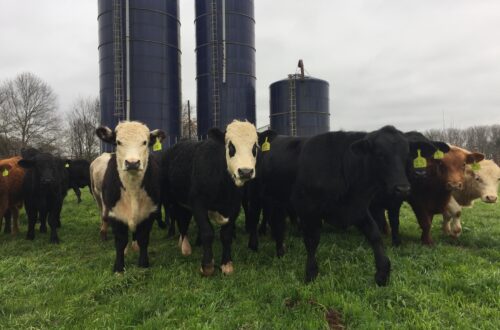
Cattle at LeMaster Grain & Cattle Co.

Like most industries, quality, uniformity, and volume rule the market. With over 7800 cattle farms in our state, marketing for uniformity can be challenging. This challenge is further compounded by the lack of scale caused by the State’s average herd size being around 25 head. Most cattlemen do not produce enough calves to take advantage of load-lot prices. In the economics of scale, cattle are traded on loads of 50,000 lbs. These loads can be comprised in many different ways but are often made up of groups of 60 to 80 calves. Many of our producers will not raise that many calves in 5 years. Clemson Extension, with numerous other organizations, have helped our producers pull together similar calves from different farms to take advantage of the higher prices for load lots. In addition to adding scale, most of these organizations will require some form of value-added marketing. This usually includes weaned, dehorned, castrated, vaccinated, dewormed, graded, and fed for at least 60 days. These practices make for much healthier cattle that will perform well in their next stage of life in the feed yard. Cattle buyers recognize this and gladly pay for it. In addition to the economic incentive, these programs have provided excellent educational opportunities for agents to help farmers prepare their cattle for these programs. Please contact me if you would like to discuss ways to add value to your calf crop. These opportunities are all over our state. 

Chris LeMaster
clemast@clemson.edu
864.649.8251