Situation:
The onset of the COVID19 pandemic in March 2020 presented pragmatic and logistic challenges to conduct traditional face to face, hands-on and interactive Expanded Food and Nutrition Education Program (EFNEP) workforce training. In order to reduce the spread of COVID19 and overcome the hinderance of social distance, the EFNEP management team developed a creative and strategic plan to transition face to face training to virtual learning to our EFNEP staff and EFNEP participants. Since 1969, EFNEP remains devoted to reaching low-income citizens where there are and embracing best practices for (virtual) learning. The Clemson University’s EFNEP team utilized the EFNEP National Guidelines for Social Media and best practices for effective online teaching to develop EFNEP virtual online learning workforce development training.
Educational Response:
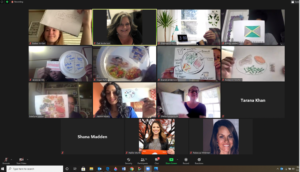
From March to present, Marlyne Walker, Registered Dietitian and EFNEP Training Coordinator / State Specialist has conducted and facilitated 5 different virtual workforce development trainings. Some of the trainings consist of multiple days and totaling over 40 hours. The EFNEP workforce trainings are designed for EFNEP nutrition educators to teach EFNEP participants- youth and adults. All the EFNEP interactive trainings were held on ZOOM. The initial training consisted of Tips to Reach and Teach EFNEP Participants/ Classes Online. It was a collaborating effort conducted with the EFNEP management team and an EFNEP agent. Also, Walker trained 9 newly hired EFNEP nutrition educators on the adult curriculum and middle/ high school curriculum. In addition, Walker planned quarterly EFNEP Check-In. She has facilitated two EFNEP Check-In for all EFNEP team members. The purpose of the EFNEP Check- In is to promote team building, review nutrition concepts and/or demonstrate ways to engage and interact with EFNEP participants online.
Outcome/ Impact:
After attending the EFNEP training, 100% EFNEP nutrition educators reported to be able to use some, most or all the content/ strategies in their county program. EFNEP nutrition educators were able to reach 306 adults with 100% graduation (completing series of 9 lessons) and changes in decrease consumption of solid fat and added sugar (SoFAS) and 81% improvement in food resource management. In addition, EFNEP nutrition educators reached 2326 youth (130 groups) with 82% graduation that is completing a series of 6 lessons. The end of year report revealed 82% of youth improved diet quality and 57% improved physical activity.
 The Health Extension for Diabetes program is a free diabetes self-management and support group. The program has been recognized by the American Diabetes Association as a practice-tested diabetes self-management and support program. The main goal of this program is to help you to better manage your diabetes so that you prevent or delay complications. The program includes 7 education sessions and 7 support sessions designed to help you learn more about diabetes and provide you with the necessary skills and support that you need to successfully self-manage your diabetes.


 South Carolina, as the rest of the world, since March-2020, is facing unprecedented circumstances due to the world pandemic for COVID-19. The Clemson EFNEP statewide family as every South Carolinian, learned to live a new lifestyle. We acquired new hygiene routines, social distancing routines, etc. Clemson EFNEP canceled all in person classes statewide and stopped teaching in the schools as these, also closed their doors to the public.
 a Nutrition Educator with EFNEP (Expanded Food Nutrition Education Program) and Clemson University Extension in Greenwood County. Gina delivers nutrition education to youth & adults with limited resources in four core areas: diet quality and physical activity, food resource management, food safety and food security. She believes that education empowers people to live healthier and more gratifying lives and she is passionate to share her knowledge and skill set with others.

