Hunters descend upon the woods every deer season with dreams of a full freezer and itchy trigger fingers. While they wait for their quarry, they may encounter a less welcome hoofed mammal that has been rooting its way through the United States – the wild hog. The resentment felt towards these animals may lead a hunter to aim their rifle at them and pull the trigger. At first, this dead hog may represent a decrease in the population and a step towards managing the problem.
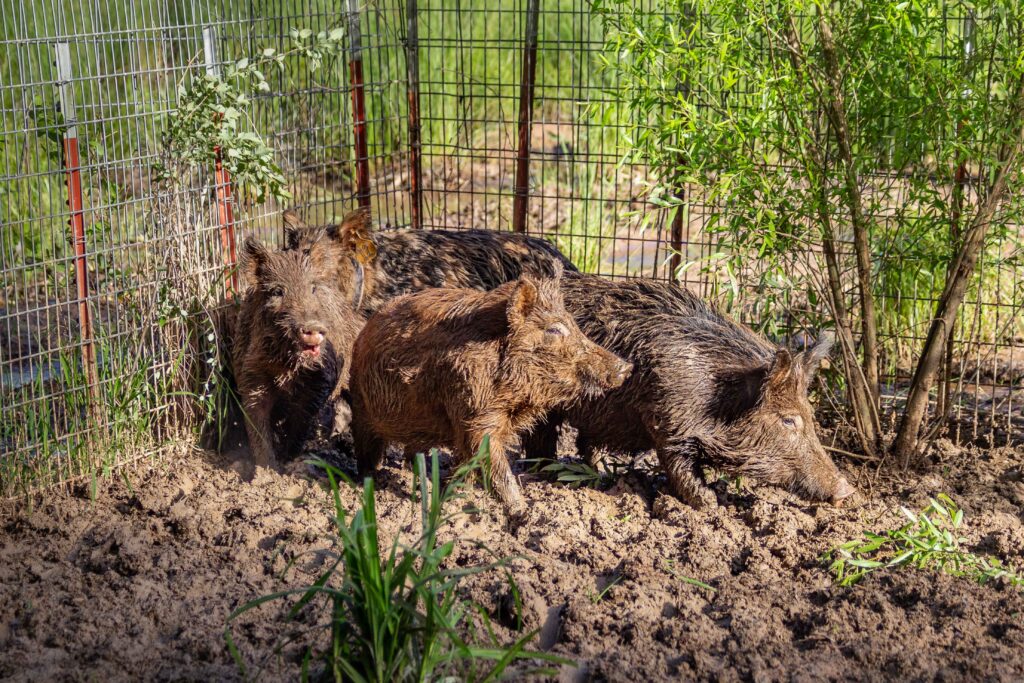
However, hogs have the biological advantage of rapid reproduction, allowing them to quickly replace fallen kin in just a few months. Worse still, any hogs present at the time that avoided a similar fate may become more skittish. A skittish hog is a hard hog to trap. That is not to say that shooting them has no value; shooting is an appropriate method of removal in some cases. Shooting may be necessary or more practical depending on the situation. For example, a lone boar may not warrant the effort of setting up a trap. Hogs that are trap-shy may also need to be deterred by shooting; just know that shooting at hogs won’t be enough to make a dent in their numbers overall.
When the goal is managing hog populations, trapping is the most effective strategy. Trapping with the goal of whole sounder removal is even better. Whole-sounder removal requires patience and an understanding of the hogs present in an area to ensure all hogs in a sounder are removed. The key is removing every hog in a sounder to prevent them from rearing their offspring. While there are some serious marksmen in the woods, shooting every single member of a sounder in areas where they can disappear into thick brush is not realistic. Trapping them ensures they are all removed and reduces the risk of missing any. Consider trapping them to avoid seeing them during deer season next year.
Author
Andrew Jamison, Wildlife Damage Management Associate, Clemson University
Clemson University Cooperative Extension Service offers its programs to people of all ages, regardless of race, color, religion, national origin, disability, political beliefs, sex, orientation, marital or family status and is an equal opportunity employer.
