Becky Davis began as the Savannah Valley District Water Resources Agent in January 2020. Although most of her extension career has been during the pandemic, she has been involved in statewide programs dealing with water-related issues and answering stakeholders’ calls. One program she has assisted with is a webinar course on home well maintenance called “Be Well Informed”. This program provided participants with an overview of home well maintenance best practices, well water quality considerations, and a question and answer session. In the future, “Be Well Informed” will be an in-person lecture and well water screening program presented throughout the state. Becky has also presented to a group of Master Gardeners. Additionally, she assisted in an agricultural water use questionnaire of irrigators in counties with the state’s greatest irrigated water use. This survey included Edgefield County farmers.
Before joining Clemson Extension, Becky has over 30 years of experience as an agricultural technician at the Edisto Research and Education Center in Blackville. While at Edisto REC, she conducted beef cattle grazing trials of winter forages and worked with the irrigation specialist on projects involving irrigation scheduling, sub-surface drip irrigation and crop water use. Her interests are in management practices relating to soil and water conservation. Becky’s home office is in Bamberg County, and she can be reached by email rwllms@clemson.edu or by phone 803-245-7114.
Photo of Herbicide demonstration plot at Edgefield Agriculture Building on Gray Street in Edgefield, SC
I have remained in contact with forestry and wildlife clients throughout the pandemic for all my counties by phone, email, and site visits. In total, I worked with over 350 landowners, the majority of which were from Edgefield County. The most common questions I received from landowners and homeowners were about pines dying from beetle issues. I also had many questions on pond weed identification, timber management, forest herbicides, and questions about selling timber.
I sent several virtual program announcements to my client email lists for the six counties I cover. This list reached almost 700 individuals. Virtual program topics have included: Women Owning Woodlands, Invasive Plants, Invasive Insects, and other relevant/timely topics. I was featured as a content presenter during many of these virtual meetings and covered topics such as privet control, invasive species, herbicide application methods, and more. I was invited to be a guest presenter for the Center of Heirs virtual meeting and spoke to the participants about selling timber. I have also aided in running video equipment for other agent projects, including Dr. David Coyle’s coverage of the Asian Longhorn Beetle.
In efforts to keep the local County Forestry Associations going, I partnered with other surrounding area forestry agents who were facing the same dilemma of not being able to host in-person meetings. We began hosting quarterly virtual forestry meetings for both county forestry association members, as well as the general public. We have hosted two meetings so far, one on Fall Wildlife Food Plots and the other on Controlling Privet in Your Woodlands. We had over 100 landowners attend both of these meetings. Again, the majority of those landowners were Edgefield County residents. These programs were geared toward landowners in Abbeville, Aiken, Allendale, Bamberg, Barnwell, Edgefield, Greenwood, Laurens, McCormick, Newberry, and Saluda counties. We plan to continue to offer these virtual association meetings this Spring.
I created a herbicide control demonstration plot at the Edgefield Agriculture Building. This demonstration plot showcases hardwood control while maintaining grasses underneath. Edgefield was selected as the location due to travel restrictions at the time. The goal was to have in-person tours by the end of summer; however, COVID-19 rules still do not allow for this. With that said, individuals can still ride by the Edgefield Ag Building to view the results.
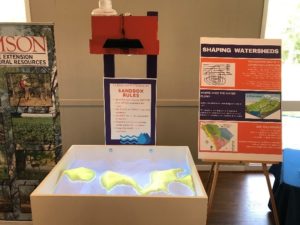
Another big project that I helped build is an Augmented Reality (AR) Sandbox. For those not familiar, this is a sandbox that uses a computer and projector to read the sands’ topography and then projects topographic lines and color onto the sand. This is used to teach individuals how to read topographic maps and visualize what it looks like in reality. We initially created the display as the companion display for the Smithsonian Institute traveling ‘Water/Ways’ exhibit held at Hickory Knob State Park. This exhibit attracted over 2700 visitors to the State Park during Summer 2020. The AR Sandbox is currently being used to teach students at John de la Howe Governor’s School for Agriculture.
For more information on forestry and natural resources programs, please contact Stephen Pohlman by email spohlma@gmail.com or phone 803-384-4151.
Maybe it was the short-supply of meat at the grocery or the increased time at home caused by the pandemic but I saw a huge increase in “homesteaders” in the metropolitan areas that I cover in Spartanburg, York, and Cherokee Counties. It was encouraging to see so many people take an interest in their food supply. These homesteaders are your typical suburbanites, many of whom have never cared for much more than a dog or cat, that utilized their new-found time to raise chickens, hogs, and/or goats. I saw an increase in requests for information on purchasing, raising, as well as harvesting these animals.
Chris LeMaster, Livestock & Forage Agent of Cherokee, Spartanburg, and York Counties
Perhaps the only “normal” thing about this year was the volume of farm visits. Fortunately, I was able to continue making visits by practicing CDC guidelines so I was able to average about 4 farms per week since March. Unfortunately, we could not gather for large workshops so like everything else I moved to a virtual platform. I helped develop and teach many workshop series on forage management, livestock nutrition, and cattle marketing. Early during the pandemic, I had time to get some writing published and I submitted articles of timely information to the local newspaper and my e-newsletter. I attended numerous professional development courses on livestock nutrition and forage production that have directly led to the implementation of my Forage Focus workshops. I have facilitated and taught virtual meetings for local livestock associations. I have maintained forage demo plots and worked with other agents to create video highlights for a virtual plot tour. I’ve spent many days shooting and editing footage of No-Till drill calibration and farm visits. I have worked with local cattlemen to vaccinate and market over 150 calves for video sales and the Mountain Cattle Alliance. In addition, I’ve worked with SC Farm Bureau Young Farmer and Ranchers to secure food donations from local producers to food banks, hosted virtual farm tours, and participated in “virtual lunch” with state leaders. Although COVID has presented many challenges, I’ve been blessed with new opportunities and avenues to help our producers.
My workload during this past year has increased substantially compared with 21 other years of service. I will attempt to share the high points of what I was able to accomplish during this time.
Chart
One of the major projects I worked on this year was to work on a grant that was funded through the SC Peach Council entitled “Evaluate Effectiveness of UV/Sun Protectants Use on Peaches.” This was a major amount of work in and of itself. Bacterial Spot was found in many of our late peach varieties across the entire upstate peach growing region in 2019. We had significant problems in Jersey Queen, Flameprince, BigRed, Ohenry, September Sun and September Sweet. In some cases, entire blocks of peaches could not be sold because of this problem. There were varying degrees of damage even on the same variety on different farms. One of the interesting findings is that on all farms the disease was only found on the portions of the peaches receiving direct sunlight. These were the furthest fruit from the centers of the tree on the outer reaches. This would have been the same fruit to receive the most amount of bactericides and the highest amount of drying conditions from wind. Bacterial problems normally prefer longer amounts of wetness for infection to occur. This has led me to believe that there is another factor that is not currently being evaluated by other researchers. The ultraviolet portion of the sunlight can and does cause damage to plants as well as to people. There is no doubt that the sun and or related heat is causing this damage. What we don’t know is the efficacy of the products sold specifically for this purpose or if the base components of these products mainly Calcium can achieve the same result at a lower cost. I tested two of the commercially available products sold for the sole purpose of preventing sun damage to peach (SunShield ‘organic/OMRI product and Reflections (Miller Chemical Co.). Both are sold and can be bought commercially for sunscald. I tested these products against two readily available powdered generic products that are not directly labeled for being used in this way. Both other two products are legally allowed to be used in the production of peaches. They just aren’t specifically labeled for helping you with sunscalding issues. The reason for testing these two products was to provide a cost saving alternative in that these products will need to be used many times in order to adequately protect the fruit. One of those products is Diamond K gypsum. It is an easily dissolvable form of calcium and the other is just hydrated lime. Hydrated lime was used throughout the entire production of peaches in the 1940’s and can surprisingly still be used and can help with other issues also. There were 4 treatments (Sunshield, Reflections, DiamondK Gypsum, and hydrated lime) tested and a control. I had at least 10 trees per treatment and 50 trees per replication. I had 3 full replications for a total of 150 trees tested. Sprays began at shuck off and continued till harvest. Postharvest attributes were assessed as well as the percentage of peaches found with any bacterial spot as compared to those free of the disease. Also, attention was given to the portion of the fruit where the disease is found and the relative percentage of the fruit that has been damaged. Preliminary results were taken soon after first symptoms of the disease arrived. The results are below.
This information was statistically analyzed by Dr. Guido Schnabel. orange A 3.3303656, yellow A 3.1340126, white B 2.4020437, pink B 2.3990123, blue B 2.3594686. The control and sunshield (orange and yellow) had significantly more disease than the other three treatments. So hydrated lime, reflection, and calcium had some effect (but still lots of disease). This early result gave reason to continue in full force. All treatments were applied every two weeks all the way through the summer as planned. A force of summer interns from Clemson university and Musser Farm workers were critical in the final assessment at the end of August. The fruit and leaf disease portions of this disease had progressed significantly. A virus Prunus Necrotic Ringspot Virus (PNRSV) was found in these trees and it was learned that it could be making the trees more susceptible to the bacterial disease. Further work in this regard is planned by Clemson specialists. We were able to finish all the data collection, but the final analysis and report has not been completed. We are also waiting on leaf and fruit samples to be analyzed by Dr. Juan Carlos Melgar.
Picture 1Early blooms
I was also able to test out a new botanical omri (organically) approved botanical fungicide for use on peach for blossom blight. I was able to perform two tests of this product on farm to see its effectiveness. I was able to test it at Glory Farms in York County, SC on Downy Mildew of several leafy greens and this was under a protective structure. I was also able to test it on Blossom blight of peach at peach farm near Chesnee, SC. Neither test was randomized. I will summarize my findings separately. Glory Farms is an organic farm and had a problem in their spinach greens but upon investigating it was downy mildew and the disease was widely spread throughout multiple greens varieties and species and throughout the entire protected house. The disease was progressing rapidly. There weren’t many options for her organically and I wasn’t sure what I was going to recommend. I remembered that I had the new product you had told me of EcoSwing but I had not considered it because my plans were to use it for peach. After speaking with the company representatives, it was labeled and worth giving it a try even though this was more of a “rescue” kind of situation at that point. On March 6, 2020 I sprayed the product myself on 4 rows of greens. There were 2 rows of spinach 1 ½ rows of Arugula, and ½ row of Mustard. I mixed the product at a rate of 1 fl.oz./gallon of water and sprayed each 40-foot row with 1 gallon of product. In the worst areas on each row I made sure to leave a small 3-foot area of row unsprayed to be able to see the difference between sprayed and unsprayed easily. I had the grower inspect the plants for the next two days after application and there was no foliar damage from applying the product even though I had applied during the hottest part of the day. After 2 weeks, I returned to assess the results. I found that product was able to control this disease. My controls were destroyed with very few plants remaining in those entire blocks, but my treated areas were fully intact albeit the disease was not completely eradicated. I should have had actual stand counts before and after to better show this more accurately, but I only did estimates of % of full stand. Spinach before treatment was estimated at 75% of a stand and 2 weeks later still retained 75% of a stand or possibly slightly higher. The Arugula and the mustard were in similar situations but started with slightly higher stands 85% and finishing with 85%. The untreated controls for spinach started with the 75% but ended up with less than 10% as did the arugula and mustard went from 85% down to less than 10% of a stand 2 weeks after application.
I also tested EcoSwing in the bloom of CaroKing variety peaches. The grower in this case sprayed twice with product during bloom. I evaluated the bloom by taking bloom counts between the control and the treated row. Unfortunately, the disease pressure was very low and, unknown to me at the time, I did not have a true untreated control. I had trees that had EcoSwing being compared to trees that had Bravo applied at the same interval. On each branch I just looked at the number of surviving blooms/fruits versus number total number of flowers present to try and compare. I was not able to find anything that I knew for sure was blossom blight, so this was an attempt to see if there were any differences between the two treatments. There were none. The Bravo treated trees and the EcoSwing trees both had nearly identical numbers of surviving flower/fruit. Cold damage had also hurt this crop as well. It is a little more bud tender than many. Assessment was done on March 20th. Picture 1 shows one of the shoots I would take data on counting number of live flowers/fruits to total number of flowers/fruits per shoot. I still have some product left over that was not used. Hopefully, this coming year I will have more time to plan a small protocol for evaluating it on peach or possibly strawberry. I am thankful I now know more about this product and what it can do.
AgroK Assessment
Control
AKX-835
AKX-244
T1
T2
T3
T1
T2
T3
T1
T2
T3
Low
6
2
5
4
2
4
0
2
3
4
4
4
10
1
2
0
0
1
6
2
4
8
0
5
1
0
0
2
3
4
8
0
10
0
0
0
1
5
2
11
1
4
0
0
0
3
10
3
4
3
2
0
0
1
4
7
4
4
4
0
0
3
1
5
4
4
7
7
0
2
0
0
1
6
5
4
1
1
0
3
0
8
3
4
3
5
0
0
2
1
4
4.6
3.9
6.3
2.4
2.8
0.3
1
0.7
4.166667
3.833333
0.666667
Mid
T1
T2
T3
T1
T2
T3
T1
T2
T3
5
3
3
0
6
2
1
4
2
5
0
2
0
0
1
2
2
2
2
0
1
2
1
1
4
1
1
5
0
1
4
4
2
3
3
0
8
2
1
2
1
2
0
2
0
4
2
2
1
6
3
0
1
1
3
3
0
0
1
3
0
2
0
3
2
1
1
2
0
1
1
1
2
7
3
3
0
6
0
0
3
2
2
2
1
0
2
1
0
4
3.9
2.1
1.6
1.4
2.1
2.2
1.2
1.6
1.4
2.533333
1.9
1.4
Top
T1
T2
T3
T1
T2
T3
T1
T2
T3
6
5
4
0
0
0
3
0
3
5
6
6
0
1
1
2
0
5
4
6
3
2
3
2
4
0
3
7
5
2
4
0
0
9
1
3
7
2
2
4
0
0
4
4
3
2
5
4
0
0
0
2
1
6
2
9
4
0
0
0
3
2
2
2
10
1
1
4
0
2
2
2
4
3
6
0
4
0
4
4
0
4
4
6
3
1
0
1
4
3
4.3
5.5
3.8
1.4
1.3
0.3
3.4
1.8
3
4.533333
1
2.733333
*10 trees were selected per treatment and # of fruit per branch were counted at 3 different height levels.
We found no significant differences between treatments even though there appeared to be a higher fruit load on the AKX-835 treatment. The grower estimated only ½ bu per tree in the AKX-234 and 2 ½ bu per tree in the AKX-835 and the control treatment. The control treatment was badly selected as it was an outside row receiving more sunlight which was exaggerated because the trees were planted in east to west orientation. The control trees also bloomed about 1 week later than the rest of the block of trees. I am glad I did this work with the assistance of the grower. Further examination is planned for next year.
Planted on farm muscadine trial with novel true seedless plants developed from Gardens Alive Nursery and some plants from the breeding program at the University of Georgia, Dr. Patrick Conner’s program on a large muscadine farm near Inman, SC. The purpose of establishing this test site was to expose the significantly sized grower some other options that are available to him. I also plan on doing demonstrations on this site in the future and including other novel varieties that I receive from breeding programs that show promise. This year’s work amounted to planting and multiple visits to prune, tie/train, fertilize and spray if needed to take care of these plants. Many of these plants have reached the top wire and are now developing the cordons. Some fruit data will be available next year. Also, with the help of a master gardener volunteer we were able to take diameter measurements at planting. I will measure them again this winter to get a measure of how much each of them grew this year. Bloom, fruit yield and fruit quality will all be measured next year.
Insect monitoring paid off in assisting all the peach growers in the Chesnee area with critical information on whether their sprays were controlling a fruit worm that had done significant damage in previous years. With the information we were able to provide we were able to save growers and the environment from ineffective sprays. We also helped make recommendations as to rotations of insecticides that would be helpful for controlling this pest.
I remained vigilant this year on assisting growers with there on farm needs related to insect and disease problems as well as weed control problems and the like. I am currently assisting many growers with planting of strawberry plants. We have 1 new grower in the area and many others who have never used the type of plant they are having to use this year directly because of problems with getting strawberry plants due to COVID outbreaks in the strawberry plant growing regions. It was a very different year but a very successful year for many of the farms. Thank you so much for your continued support of Clemson Extension Service!
Jeff Fellers has adapted his programming to the COVID-19 situation. In addition to Spartanburg, Fellers also covers Newberry, Union, Cherokee, York, Chester, and Lancaster counties. Fellers has helped 316 people via phone calls, emails, and site visits, impacting 3,907 acres for forest and pond management. Fellers has produced 50 videos, housed on the Union County Facebook Page, reaching a total of 57,704 people as of the time of this article, with an average of 2,219 people per video. Fellers has also conducted webinars, providing educational outreach to nearly 60 participants (See list below for details).
Heather Nix, Upstate District Water Resource Agent
Heather Nix joined the Clemson Extension team as the Upstate District Water Resource Agent just a few months prior to the pandemic. Although new to the team, Nix hit the ground running and, since March, has presented during 5 webinars (reaching 121 attendees live), hosted 6 Inservice sessions to inform the Clemson CAFLS Water Team on SC’s State Water Planning (reaching 203 attendees live), assisted in the creation of a new statewide program for private well owners, submitted 4 Fact Sheets for publication through HGIC (SC’s Water Resources, SC’s Water Planning, Submitting An Algae Sample for Identification), collaborated on 3 funding proposals, and assisted 121 clients across 10 counties.
Algae covered pond
With a significant background in water resources, Nix has led efforts to build collaborations between Extension and state agencies, local utilities, nonprofits, and businesses. Additionally, Nix has attended over 60 training classes, onboarding sessions, and webinars, including receiving certifications in: SC Adopt-A-Stream chemical/bacteria/macroinvertebrates, Extension’s Master Pond Manager, Extension’s Carolina Yards, PCPO 4-H Training, Penn State Extension’s Pond Management for Rural and Farm Pond Owners, and Penn State Extension’s Keeping Pesticides out of Groundwater.
Matthew Fischer is an agribusiness agent covering the upstate of South Carolina. Mr. Fischer has been working on several topics, mainly in response to the COVID-19 impact on our food supply chain. Mr. Fischer has contributed on two online series. An online cattle market outlook series that directed toward beef producers in traditional marketing strategies. Another series was the result of the impact of COVID-19. South Carolina, like many states, experienced a shift in demand for locally grown food. From this, Mr. Fischer presented several topics on direct marketing meat from the farm. The COVID-19 impact has provided the opportunity for understanding South Carolina consumers and producers to participate in direct meat marketing. Through Clemson Extension we have worked on a processing capacity study for South Carolina. The results of this study will provide the potential market for our producers and consumers moving forward.
Cherokee County 4-H has had a successful fall and winter season as the agent, Laura Haddon, has continued to build relationships with families and schools across the county. Cherokee County 4-H has two community clubs, Cows and Cookies and Bits and Pieces, that have continued to meet virtually throughout the pandemic. Youth in both clubs have contributed to their communities during the holidays by collecting non-perishable food items for the Salvation Army and sending individually packaged snacks to Shining Hope Farms Therapeutic Riding.
Three Cherokee County 4-H members participated in the Beef Project this year. The Beef Project participants were Trey, Edie, and Lydia Haddon. They each spent time feeding and halter breaking a steer and a heifer. They have been able to observe and participate in the whole process of raising beef for American consumers.
Trey Haddon grooming his heifer for a show. Edie Haddon weighing her steer. Lydia Haddon halter breaking and teaching her steer to walk and stand for a show.
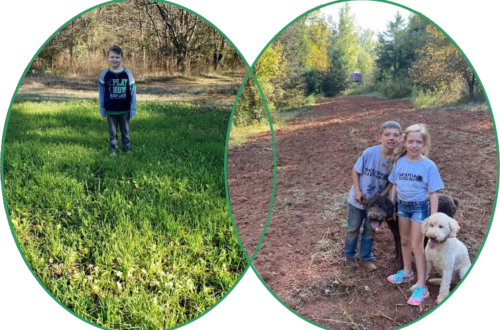
Three more youth completed the South Carolina 4-H Wildlife Food Plot project. Trent Phillips and Martin and Paisley Ramsey prepared the ground by plowing, taking soil samples, and fertilizing according to the recommendations they received from their soil samples. They seeded the ground with a mix provided by Wannamaker Seed and then waited for the animals to come! The three youth recorded their work and wildlife observations in a record book which they submitted online.
Trent Phillips checking on his growing Wildlife Food Plot. Martin and Paisley Ramsey preparing their Wildlife Food Plot.
The partnership between Cherokee County 4-H and the Boys and Girls Club of the Upstate is still going strong. Laura has continued providing STEM activities for close to 300 youth in seven schools around the county. Students in this program have learned about the engineering design process and binary code. Their favorite activity was making “snow” and learning how snow crystals are formed.
Fun with science at Boys and Girls Club. Do you want to build a snowman?
Ninety fifth grade students from three schools in the county have learned about agricultural commodities including cotton, corn, and soybeans.
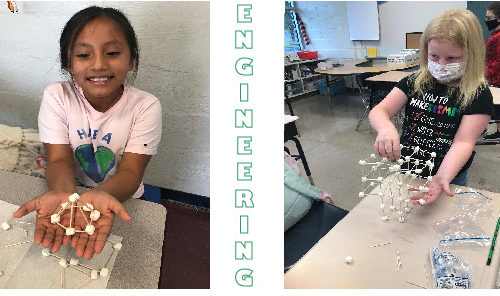
Toothpicks and marshmallows help teach the Engineering Design Process
They have also explored various careers in agriculture and learned about the important impact of agricultural innovations. AgMags about these topics have been provided to these classrooms with funding from the Cherokee County Farm Bureau. Along with a copy of the magazine for each of their students, participating teachers have been provided with the materials and directions to make individual pizzas, DNA sequence bracelets, and bioplastic to accompany each of the AgMag lessons.
While most of our programs are still occurring virtually, plans are in the works for in-person day camps this summer! Proposed camps include Junior Naturalist/4-H2O Camp hosted at our Duke Energy Outdoor Classroom, Cooking Like a Chef Camp, and Babysitting Basics, just to name a few!
If you would like to find out more about Cherokee County 4-H please contact Laura Haddon at lhaddon@clemson.edu or by phone at (864) 649-8252.
Amy Mallette, Cherokee County Cooperative Extension Administrative Assistant
As the administrative assistant, Amy Mallette has been the Cherokee County Extension Office’s voice and face for nearly six years. The transition to remote work was seamless, as many of her duties are performed online and through cloud software. Cherokee County was fortunate to have already updated our phone answering system to include staff’s personal cellphones, allowing us to be in constant contact with our clients. Although walk-ins were limited, all other office operations such as assisting clients over the phone, processing samples, or finance reconciliation were still full-steam ahead. The shift to virtual meetings opened the door to many professional development opportunities. Amy virtually attended no less than 20 workshops to assist the people of Cherokee County better. During one workshop, she learned how to accept debit and credit transactions safely. Our office is now equipped with a Clover machine and can now receive payment over the phone with debit or credit cards. The addition of the collection box in the Administrative Building entrance has made it much easier to submit samples through our office.
As always, if you have any questions, comments, or concerns, you can reach Amy by phone (864)-489-3141 ext 0 during business hours, 8:30 am to 5:00 pm, Monday through Friday, or email: rmallet@clemson.edu.
Cherokee County 4-H was off to a running start at the beginning of 2020. Laura Haddon started on January 6th as the first full-time 4-H agent our county has had in several years. Then…COVID! All clubs and school enrichment activities came to a screeching halt in March as 4-H agents across the state stepped back and came up with new, virtual ways to “make the best better”.
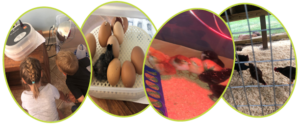
The Wilkins family from Blacksburg participated in the Embryology Summer Camp Kit
Individual 4-H projects were the perfect solution for many families with children home from school during the spring and summer months. Cherokee County youth participated in state and regional 4-H projects including the Small Garden Project, Tomato Project, Laying Flock/Pullet Project, and Steer Project. The Midlands 4-H Agents created 4-H@Home and 4-H agents across the state contributed daily lessons that were sent to children in Cherokee County and around the world! In lieu of our traditional summer day camps, Spartanburg and Cherokee agents, Carol Hamilton and Laura Haddon, pooled their efforts to create Summer Camp Kits that included STEM, Healthy Lifestyles, and art activities. One of the favorite camp kits was the Embryology Kit which allowed families to borrow an incubator from 4-H as well as provided them with up to 10 chicken eggs and daily email updates. Participants were able to watch as the eggs developed from embryos to chicks in a 21 day period. Chelsea Peeler, whose children participated in the camp, said, “This was an experience I wouldn’t have been able to give my kids without the 4-H program, and I’m so thankful we found them. We will continue to participate in 4-H events whenever possible.”
As schools reopened this fall, Cherokee County 4-H has been able to continue its partnership with the Boys and Girls Clubs of the Upstate. We have grown from five schools last year to seven schools this year! Laura is already busy providing STEM lessons to the almost 300 students who attend this after school program.
Boys & Girls Club youth learned about the Engineering Design Process
In addition to the Boys and Girls Clubs, Laura has reached out to fifth grade teachers across the school district, and with the help of Cherokee County Farm Bureau, has provided five classrooms (90 students) AgMags about different agriculture and science topics. Along with the AgMags, the teachers receive instructions and materials to complete activities that connect the students to agriculture in their daily lives and reinforce the science standards being taught in the classroom.
As we look hopefully ahead to more “normal” days, be sure to like Cherokee County 4-H’s Facebook page to stay up to date on all the club meetings, projects, and opportunities offered. Feel free to contact Laura by phone, (864) 649-8252, or by email, lhaddon@clemson.edu, if you would like to enroll your children or grandchildren in a 4-H club or project, volunteer to be a 4-H leader, or have any questions related to 4-H!