Clemson Extension Upstate District

Trials for Tribulations in Commercial Production

Andy Rollins, CUCES Upstate Commercial Fruit & Vegetable Agent

Although, I officially work in 5 counties, Spartanburg, Greenville, York, Union, and Cherokee, this year, I have assisted growers across multiple states with various research projects:

  • On-farm research trial of sun-protectant materials on peaches:  This study focused on bacterial canker and discovering which factors affect the location of the disease initiation.  SC Peach Council provided grants for this study.
  • Bacterial spot survey across South Carolina:  Dr. Hehe Wang established a bacterial spot survey across the entire state.  I assisted a commercial farm with a establishing a weather station and taking leaf and fruit disease ratings.
  • Bloom and fruit thinning product trial: Dr. Juan Carlos Melgar and I repeated this trial with different equipment during various times of the day to discover the discrepancies on two distinct varieties.  This project will be repeated next year.
  • Nematode survey: Dr. Churamani Kanal, one of his students, and I conducted a nematode survey on a few farms in the upstate.  Our goal is to continue collecting data until we have completed surveys for all Upstate growers.
  • Herbicide trials: Wayne Mitchem of NCSU, Chris Holmberg, and I launched a two separate herbicide trials. Of the two cases, one grower has decided to forgo his standard herbicide in favor of the newer based on the results.

    Southen Belle Peach
    Southern Belle Peach


In addition to conducting trials this year, I also helped organize a commercial strawberry program from another state, held an online zoom meeting for small fruit producers, and held my commercial peach production meeting.  I assisted and advertised many others’ online programs for growers.  At these meetings, we shared research from the past year and any information pertinent to the industry.

The Upstate Peach meeting is scheduled for Thursday, January 20th 2022.  The Upstate Strawberry Production meeting will be the 3rd or 4th week of February and the Upstate Commercial Vegetable meeting will be the 3rd or 4th week of March.

Lastly, the most important part of my job is to address growers specifically on farm problems.  Much of this was and is handled in person on farms.  I made every effort to abide by the safety rules set before me.  I am so thankful for my job and the ability to serve upstate producers.  Thank you all for your support of Clemson Extension Service.

When Should I Cut My Fescue Hay?

Christopher LeMaster

Area Livestock and Forage Agent

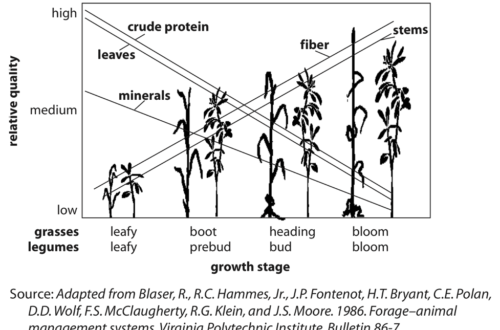
Making hay is probably the most tradition steeped practice on the farm. Our fondest (and most miserable) farm memories are usually centered around the making or feeding of hay. Those of us still making hay have a passion for quality and are eternally optimistic for the next hay season. So, what makes quality hay? Is it free of weeds, proper moisture, free of foreign materials, fertilized, limed? Many studies repeatedly state the single, most important factor affecting hay quality is… plant maturity at harvest. While a high-quality bale of hay includes all the aforementioned factors, the maturity at which you harvest has the biggest influence. Forage experts agree that harvesting in the late boot to early head stage maximizes quality and quantity. Figure 1 is a forage agronomist’s classic example of optimum harvest stage. It illustrates the relationship of relative quality (Y-axis) and growth stage (X-axis) for both grasses and legumes. In the vegetative stages (leafy and boot stages for grass), the plant contains higher protein, more minerals, and higher leaf: stem ratio (increased digestibility). As the grass matures into the reproductive stage (heading and bloom stages), the plant contains more structural components (fiber, lignin) to grow the stem. This decreases digestibility and consequently animal performance.


As a plant matures its quality decreases.
Figure 1. Effect of plant maturity on forage intake and digestibility.


early harvested hay has better quality and increased animal performance.
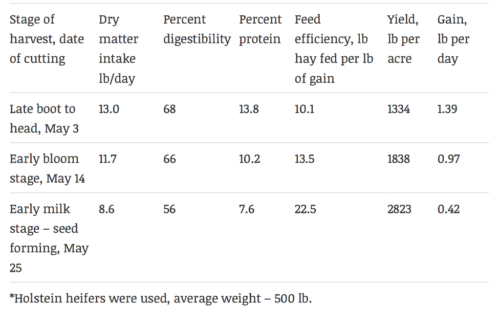
Table 1. Effect of stage of harvest of fescue hay on forage quality and animal performance.

A study from Tennessee looked at the effect of 3 different maturity stages of fescue on forage quality and animal performance. Hay was cut at late boot/early heading, early heading, and early milk/seed formation roughly 11 days apart from each stage. Obliviously Tennessee is a slightly different climate than SC so pay attention to the maturity stage rather than the dates. As expected in Table 1., forage maturity decreased intake, digestibility, and protein. Notice the biggest decrease occurred between the mid-maturity and late-maturity stages. Feed efficiency (lb of hay fed per lb of gain) is cut in half when comparing early-cut to late-cut; meaning you would have to feed twice as much late-cut hay to have similar gains. Okay, I realize the yield (lb per acre) is doubled for late cut and late-cut hay is usually much easier to cure and bale. However, the ultimate measure of hay quality for livestock producers is animal performance. Early-cut hay had 3x gains (lbs per day) compared to late cut. This more efficient hay could mean that you spend less time baling, storing, and feeding hay. Over-mature hay is poorly digestible and largely unpalatable resulting in animals refusing the hay until they are starved. Our state diagnostic lab has seen many cases of cattle starving to death with a full rumen of hay. Often this is the hay that “will beat a snowball.” I’ll leave you with two more reasons to cut earlier: 1) Higher temperatures reduce forage quality 2) Late-cut fescue invites warm-season weeds. As a plant is stressed by higher temperature, it produces more lignin (highly indigestible). The earlier we cut, the greater the chance the fescue will regrow a weed-shading canopy. Often by late May and June, the weather is too hot and dry for the fescue to successfully compete with Johnsongrass or foxtail. This issue is commonly compounded with a short mowing height (less than 4”).

It costs the same to cut early (on-time) as it does to cut late but the return is much greater for the early hay. I realize as a hay seller, we sell pounds of hay. We live in a heavily saturated hay market region, as a marketer you must distinguish yourself by quality. Our consumers are becoming “hay experts” via Google and Facebook, which makes consumer/producer relationships more challenging but also more rewarding as these consumers will pay more for hay that tests well. As a livestock producer, this simple management decision can put more pounds on your stock without greatly influencing your inputs. Each hay crop is different, so use maturity stages rather than the calendar to determine when to cut. No doubt that weather will wreck the best laid plans but start early so you can finish on time. As with anything we do on the farm, it takes more than one step/decision to achieve success so call me if you need help with the other factors of quality hay such as weeds, fertility, and species selection.

Smartphones, More Than Just a Communication Device for Forest Landowners

Smartphones, More Than Just a Communication Device for Forest Landowners

By Jeff Fellers

Click here for pdf printable version- Smartphones, more than just a communication device for forest landowners

Though the first cell phone was released in the early 1990s, most of us probably did not go out and buy one right away. The majority of us probably did not get a smartphone until the early 2000s. It was not until Apple launched the first iPhone in 2007 that the smartphone world was set on fire. Since that time, the capabilities of smartphones have increased drastically. They are now often used as tools with many applications (apps) that help forest landowners better manage their forests.  

There are numerous devices available to forest landowners to access technology. Smartphones, computers, GPS units, and tablets, just to name a few. With the evolution of smartphones and the apps associated with them, many forest landowners no longer need computers, GPS units, or tablets to access the new technology. Now, some forest landowners do not want to fool with new technology or smartphones. That is ok. Utilizing new technology often provides a great opportunity to get younger generations involved in property management.

This article will look at how technology can be used and some of the apps available that may interest forest landowners. Some apps are free, and others may be purchased. Keep in mind; it is impossible to list all the applications that are available for forest management. It can often be very beneficial to talk with other landowners and see what apps they use and like.  

Mapping – Mapping can provide a birds-eye view of a landowner’s property. It can be used to delineate timber stands, wetlands, food plots, calculate area, or just view aerial photographs. Many of the apps available have the option to reference the smartphone’s GPS and automatically locate your position. Below are some apps and webpages that may be of interest.

Google Earth – Available for free on both mobile devices and computers. Projects can be edited on the computer and then viewed on a smartphone. It also has a time slider that allows a landowner to look at aerial photographs from different years. This is a great tool for landowners. The user interface is probably one of the easiest to use. Google Earth can be downloaded at https://www.google.com/earth/. The app is available for both Android and Apple devices.

Avenza Maps – A free program with options to purchase different maps. The app gives the option of using the program offline when cellular service is lacking. This is one big difference from some of the other mapping programs. This program is a little harder to use than Google Earth but may give you a few more functions. For more information on Avenza maps, visit https://www.avenzamaps.com/. The app is available for both Android and Apple devices.

My Land Plan – A web-based program that gives the landowner the ability to map properties and store records for individual features. As a landowner, you will be able to map your property, set goals, and then customize your information based on your management activities. This program is not as mobile-friendly and is accessed through a web browser. For more information on My Land Plan, visit https://mylandplan.org/.  

Area Calculation – This is important to help determine stand acreage or acreage in general. There are numerous apps available that work great. Many can measure distance and area. A simple search of “area calculation” on your smartphone’s app store will bring up a variety of area calculation apps that should work fine.  

Parcels – Having access to land parcel data can help a forest landowner learn who owns adjacent properties and see an estimate of property lines. Keep in mind that this data may not be survey grade or 100% accurate, but it gives you a good idea of where property boundaries are located.

Websites – In South Carolina, most counties have a GIS database where you can access parcel data for the county. Most of these county sites will provide free data. An example of the Newberry County GIS site can be found at the link below.

https://map.newberrycounty.net/parcel/ 

LandGlide – An app that allows access to parcel data. It is available for Apple and Android devices with a fee. The app provides online and offline access to data. This is beneficial when cell phone reception is poor. The app can still be used if data is previously downloaded. For more information on LandGlide, visit https://www.landglide.com/. 

Tree Identification – This is another tool that landowners may find useful when managing their property. Many of the apps available allow the user to take a photo of the tree characteristics and then the app will show suggestions for the identification of the tree. While it may not always be 100% correct, these apps are pretty good. Most of the time, they can lead you in the right direction in identifying the tree species.

vTree – An app developed by Virginia Tech. This app uses your location to narrow down the trees commonly found in your area. Instead of using a picture, this app asks you a series of questions to narrow down the identification options. It is available for Apple and Android devices. For more information on the vTree app, visit https://dendro.cnre.vt.edu/dendrology/vtree.htm.

LeafSnap – Allows the user to take a picture of any plant. It has a claimed accuracy rate of 95%. This is a free app available for Apple and Android devices. For more information on LeafSnap, visit https://plantidentifier.info/.  

Technology has made many more resources accessible to forest landowners by using a smartphone. This article lists only a few. Most of these apps are easy to find and install on a smartphone. The user interfaces are typically easy to navigate as well. Don’t be afraid of new technology. Try it…you might actually like it.

Clemson University Cooperative Extension Service offers its programs to people of all ages, regardless of race, color, gender, religion, national origin, disability, political beliefs, sexual orientation, gender identity, marital or family status and is an equal opportunity employer.

Build Me Up Buttercup

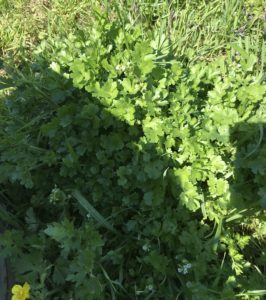
I can’t help but hum that old song by The Foundations as I drive around pastures this spring and see the many yellow flowers of Buttercup. While this is a pretty plant, it contains a toxin that can cause excessive salivation, reddening of oral mucous membranes, diarrhea, and, in rare cases, death. Fortunately, this plant is bitter, and livestock usually do not seek it unless forced to by lack of grazing (or curiosity). However, several of the pastures I’ve been in these past two weeks contain plenty of buttercup plants that were grazed short. Often this plant is found in overgrazed areas, so the best defense against this plant is a healthy perennial forage and good grazing management. However, we often must use a broadleaf herbicide to control this plant. Typically, two pints per acre of 2,4 D will control this plant, especially before it’s in bloom or in early-bloom. Control is difficult by the time you have a pasture full of yellow blooms so scout early and often. You may want to use a higher rate or different herbicide if there are other weeds present. Always follow the label and feel free to seek advice from your agent. If you’re fighting Buttercup yearly, please reach out to me about developing a grazing plan that will provide better canopy cover to help prevent this weed from emerging.

buttercup plant
Buttercup (early-bloom)


Buttercup plant
Buttercup (pre-bloom)

Sources:

Everest, J.W., Powe, T.A., Freeman, J.D. Poisonous Plants of the Southeastern United States. University of Florida.

Guide to Poisonous Plants. Fort Collins (Colorado). Colorado State University, James L. Voss Veterinary Teaching Hospital. 2019. [2021 Apr].https://csuvth.colostate.edu/poisonous_plants/Plants/Details/88

South Carolina Pest Management Handbook for Field Crops. Clemson (South Carolina). Clemson University, Cooperative Extension. 2021 [2021 Apr]. https://www.clemson.edu/extension/agronomy/pestmanagement21/2021pmhgrassforageweedcontrol.pdf

COMMERICAL PESTICIDE APPLICATOR EXAM PREP COURSE NOW ON-DEMAND!

Clemson Cooperative Extension logo

ONLINE & SELF-PACED 

man on sprayer applying chemicals

VIA 
CLEMSON ONLINE
(Clemson Canvas)

TRAINING IS FOR CORE EXAM

 AND CATEOGORY 3 – TURF AND ORNAMENTAL

COST: $100 per person

CLICK HERE TO REGISTER

COURSE INFORMATION:

This prep course is designed to help serve as a guide through the manuals to better help you prepare to take the commercial pesticide applicator exams. The course takes the participant through the exam study material and provides practice exams.SCCLP logo
This course is designed to help you better study the material, NOT a substitute for studying the material. You will need Core: Applying Pesticides Correctly, and Category 3: Turf and Ornamental Pest Management. CLICK HERE TO ORDER BOOKS

The exam itself MUST be scheduled with Clemson Department of Pesticide Regulation (DPR). Email dprexams@clemson.edu to schedule an exam.

For questions regarding the course please email ajeffe3@clemson.edu or call 864-594-0422

Other DPR contact information: 

Commercial/Business Licensing  dprca@clemson.edu
Insurance Certificates dprInsurance@clemson.edu
Non-Commercial Licensing dprnca@clemson.edu
Pesticide Dealer Licensing dprpd@clemson.edu
Private Licensing dprpa@clemson.edu
Recertification Credits dprrecert@clemson.edu
Exam Registration  dprexams@clemson.edu

Increased Workload during COVID-19 2020 for Commercial Fruits and Vegetables Agent

crops in fieldI was also able to test out a new botanical omri (organically) approved botanical fungicide for use on peach for blossom blight.  I was able to perform two tests of this product on farm to see its effectiveness. I was able to test it at Glory Farms in York Co. SC on Downy Mildew of several leafy greens and this was under a protective structure. I was also able to test it on Blossom blight of peach at peach farm near Chesnee SC. Neither test was randomized. I will summarize my findings separately.  Glory Farms is an organic farm and had a problem in their spinach greens but upon investigating it was downy mildew and the disease was widely spread throughout multiple greens varieties and species and throughout the entire protected house. The disease was progressing rapidly. There weren’t many options for her organically and I wasn’t sure what I was going to recommend.  I remembered that I had the new product you had told me of EcoSwing but I had not considered it because my plans were to use it for peach.  After speaking with the company representatives, it was labeled and worth giving it a try even though this was more of a “rescue” kind of situation at that point.  On March 6, 2020 I sprayed the product myself on 4 rows of greens.  There were 2 rows of spinach 1 ½ rows of Arugula, and ½ row of Mustard. I mixed the product at a rate of 1 fl.oz./gallon of water and sprayed each 40 foot row with 1 gallon of product. In the worst areas on each row I made sure to leave a small 3 foot area of row unsprayed to be able to see the difference between sprayed and unsprayed easily. I had the grower inspect the plants for the next two days after application and there was no foliar damage from applying the product even though I had applied during the hottest part of the day. After 2 weeks, I returned to assess the results. I found that product was able to control this disease. My controls were completely destroyed with very few plants remaining in those entire blocks but my treated areas were fully intact albeit the disease wasn’t completely eradicated. I should have had actual stand counts before and after to better show this more accurately, but I only did estimates of % of full stand.  Spinach before treatment was estimated at 75% of a stand and 2 weeks later still retained 75% of a stand or possibly slightly higher. The Arugula and the mustard were in similar situations but started with slightly higher stands 85% and finishing with 85%. The untreated controls for spinach started with the 75% but ended up with less than 10% as did the arugula and mustard went from 85% down to less than 10% of a stand 2 weeks after application.
I also tested EcoSwing in the bloom of CaroKing variety peaches. The grower in this case sprayed twice with product during bloom.  I evaluated the bloom by taking bloom counts between the control and the treated row.  Unfortunately, the disease pressure was very low and, unknown to me at the time, I did not have a true untreated control. I had trees that had EcoSwing being compared to trees that had Bravo applied at the same interval. On each branch I just looked at the number of surviving blooms/fruit versus number total number of flowers present to try and compare. I wasn’t able to find anything that I knew for sure was blossom blight so this was an attempt to see if there were any differences between the two treatments. There were none.  The Bravo treated trees and the EcoSwing trees both had nearly identical numbers of surviving flower/fruit. Cold damage had also hurt this crop as well. It is a little more bud tender than many. Assessment was done on March 20th. Picture below shows one of the shoots I would take data on counting number of live flowers/fruit to total number of flowers/fruit per shoot.  I still have some product left over that was not used. Hopefully, this coming year I will have more time to plan a small protocol for evaluating it on peach or possibly strawberry.  I am thankful I now know more about this product and what it is capable of doing.

I tested two products (AKX‐835 / AKX‐244) for cold freeze protection claims as compared to a control early this spring.  Agro-K is a fertilizer company and have two proprietary products they allowed me to test for frost freeze protection.  They were applied according to there protocol with temperature recorders in each treatment and at different heights within the trees.  Treatments were not replicated but were randomized within a block of ‘Flavorich’ peach trees at a farm near Cooley Springs, SC.  Multiple applications were made of the products approximately 24 hours before each of the freeze events as directed from early bloom through end of bloom.  Fertilizers were sprayed thoroughly into the trees at approximately a 200 gal/acre total volume with the appropriate product at the suggested rate.  Bloom began shortly before February 26, 2020 when recorders were placed in the trees and first application made.  Our first freeze event in the bloom occurred on February 27th (27F low), 28th (25.5F low), 29th (28F low), March 1st (21.2F low).  Second application was made on March 6th and we had freezing temperatures on March 7th (24.8F low), 8th (29F low), and 9th (29.8F low).  These products never claimed to give this degree of protection in fact after talking with company representatives they didn’t expect the products to have worked at all.  I waited until after fruit had fully pollinated and fruit had grown to golf ball size but had not been thinned.  Dr. Guido Schnabel and I did random branch fruit counts on each of the treatments and the control.We found no significant differences between treatments even though there appeared to be a higher fruit load on the AKX-835 treatment.  The grower estimated only ½ bu per tree in the AKX-234 and 2 ½ bu per tree in the AKX-835 and the control treatment.  The control treatment was badly selected as it was an outside row receiving more sunlight which was exaggerated because the trees were planted in east to west orientation.  The control trees also bloomed about 1 week later than the rest of the block of trees.  I am glad I did this work with the assistance of the grower.  Further examination is planned for next year.

Planted onfarm muscadine trial with novel true seedless plants developed from Gardens Alive Nursery and also some plants from the breeding program at the University of Georgia, Dr. Patrick Conners program on a large muscadine farm near Inman, SC.  The purpose of establishing this test site was to expose the significantly sized grower some other options that are available to him.  I also plan on doing demonstrations on this site in the future and including other novel varieties that I receive from breeding programs that show promise.  This years work amounted to planting and multiple visits to prune, tie/train, fertilize and spray if needed to take care of these plants.  Many of these plants have reached the top wire and are now developing the cordons.  Some fruit data will be available next year.  Also with the help of a master gardener volunteer we were able to take diameter measurements at planting.  I will measure them again this winter to get a measure of how much each of them grew this year.  Bloom, fruit yield and fruit quality will all be measured next year.

Insect monitoring paid off in assisting all of the peach growers in the Chesnee area with critical information on whether or not their sprays were controlling a fruit worm that had done significant damage in previous years.  With the information we were able to provide we were able to save growers and the environment from ineffective sprays.  We also helped make recommendations as to rotations of insecticides that would be helpful for controlling this pest.

I remained vigilant this year on assisting growers with there on farm needs related to insect and disease problems as well as weed control problems and the like.   I am currently assisting many growers with planting of strawberry plants.  We have 1 new grower in the area and many others who have never used the type of plant they are having to use this year directly because of problems with getting strawberry plants due to COVID outbreaks in the strawberry plant growing regions.  It was a very different year but a very successful year for many of the farms.  Thank you so much for your continued support of Clemson Extension Service!

Livestock Agent Answers the Call as Consumers Look to Locally Sourced Food

Chris LeMaster Standing next to equipmentMaybe it was the short-supply of meat at the grocery or the increased time at home caused by the pandemic but I saw a huge increase in “homesteaders” in the metropolitan areas that I cover in Spartanburg, York, and Cherokee Counties. It was encouraging to see so many people take an interest in their food supply. These homesteaders are your typical suburbanites many of which have never cared for much more than a dog or cat that utilized their new-found time to raise chickens, hogs, and/or goats. I saw an increase in requests for information on purchasing, raising, as well as harvesting these animals. Perhaps the only “normal” thing about this year was the volume of farm visits. Fortunately, I was able to continue making visits by practicing CDC guidelines so I was able to average about 4 farms per week since March. Unfortunately, we could not gather for large workshops so like everything else I moved to a virtual platform. I helped develop and teach many workshop series on forage management, livestock nutrition, and cattle marketing. Early during the pandemic, I had time to get some writing published (link below) and I submitted articles of timely information to the local newspaper and my e-newsletter. I attended numerous professional development courses on livestock nutrition and forage production that have directly led to the implementation of my Forage Focus workshops. I have facilitated and taught virtual meetings for local livestock associations. I have maintained forage demo plots and worked with other agents to create video highlights for a virtual plot tour. I’ve spent many days shooting and editing footage of No-Till drill calibration and farm visits. I have worked with local cattlemen to vaccinate and market over 150 calves for video sales and the Mountain Cattle Alliance. In addition, I’ve worked with SC Farm Bureau Young Farmer and Ranchers to secure food donations from local producers to food banks, hosted virtual farm tours, and participated in “virtual lunch” with state leaders. Although COVID has presented many challenges, I’ve been blessed with new opportunities and avenues to help our producers.

https://lgpress.clemson.edu/publication/mud-management-for-south-carolina-livestock-farmers/

Clemson EFNEP Spartanburg County moves Nutrition Education Classes to the virtual field.

photo of Evelyn SantanaSouth Carolina, as the rest of the world, since March-2020, is facing unprecedented circumstances due to the world pandemic for COVID-19. The Clemson EFNEP statewide family as every South Carolinian, learned to live a new lifestyle. We acquired new hygiene routines, social distancing routines, etc. Clemson EFNEP canceled all in person classes statewide and stopped teaching in the schools as these, also closed their doors to the public.
Our beloved children, adult learners’ lives, and their safety, became our first priority. Life as we had always known, was changed overnight and the new lifestyle presented us with new challenges, this did not stop the EFNEP team to caring for our consumers and found innovative ways to serve the Spartanburg Co. community.

We came up with methods and systems all new to us to thrive in our passion for serving our consumers Evelyn Santana, the appointed EFNEP Nutrition Educator for Spartanburg Co. steadily worked with our partners throughout the county to do what we do best, teaching nutrition lessons and keeping Spartanburg residents, a little healthier.  As of today, we can say that the EFNEP Nutrition Educator for Spartanburg Co Extension Office has been working hard to teach youth and adults, taking advantage of the extra time parents and children had to spend at their homes. The Eating Smart Being Active Curriculum is taught to adults, in both English and Spanish, these are a series of lessons, 100% free of cost for low-income families caring for children ages 18 and under.
If you or someone you know would like to take advantage of these classes, do not hesitate to contact us. Evelyn can be reached at the Spartanburg County Office’s telephone number (864) 491-0421 or at easanta@clemson.edu for virtual classes

Food Safety Awareness During COVID

Food Safety Agent Rebecca BaxleyThe Food Systems and Safety team has been hard at work delivering virtual programs on home food preservation, produce safety, human and pet food manufacturing, and food safety for food entrepreneurs. Additionally, individual conversations with clients have addressed questions on ServSafe® certifications, and in each of the areas previously mentioned.  Highlights of the programs delivered by the Upstate Food Systems and Safety Agent, Rebecca Baxley since the beginning of April include:

  • · Introduction to Home Canning virtual webinar.  42 participants logged in live, 40 viewed the recording.
  • · Food Preservation for SC Educators webinar.  SC School and Community Garden summer workshop series.  142 attendees.
  • · Preventive Controls for Animal Food Manufacturing webinar.  Team member.  12 participants representing 9 individual firms.
  • · Learn to Can Blueberry Jam video for TD Market Educational Series, Greenville SC.  319 views.
  • · Jams and Jellies virtual workshop, team member.  Live canning in real time via zoom.  5 participants.
  • · Estimated over 100 individual interactions with stakeholders through phone call and email

As we move into the fall, there is no time to slow down.  A few things Rebecca is working on to be introduced in the coming months are below:
Coming Soon…
A new Food Systems and Safety blog is under development.  Look for a link to our new blog that will serve as a hub for information and allow stakeholders to interact with agents.
Home Food Preservation Roundtable on November 7, 2020.  In this virtual hour-long discussion, we will feature a recipe (Apple Wedges in Red Hot Cinnamon Syrup) and a canning method (Atmospheric Steam Canner).  Registration link is here:  https://clemson.zoom.us/meeting/register/tJ0kd-muqTsrEt3jxoziLY9HlVjoosQasdZL
Home Food Preservation and Food Safety educational cards are under development for point of purchase distribution.  Look for these cards with preservation tips, recipes, and food safety information at farmer’s markets, produce stands and farm stores beginning in the Spring of 2021.

4 – H Goes Virtual During COVID-19

The year of virtual 4-H programming started in March when our summer camps, school visits and fairs were canceled. Luckily 4-H teaches creative thinking and problem solving. Here we are in October having reached more youth during the pandemic than we had in the summer of 2019. In May we launched the Upstate Fishing Project from Spartanburg and Union County with 58 participants from around the state. These 4-H members fished all summer and recorded every catch, while making important observations about their environment and weather conditions. We also launched the Spartanburg County Tomato Project where youth were given 2 tomato plants

to grow at home and complete a record book on their experience. In early June Spartanburg Launched its first ever Summer Camp Kits where families could order one of four kits with 5-8 activities each to do at home in leu of traditional day camps, we had 95 participants in the first round. We offered Pinterest, Science Fun with Kitchen Chemistry, Cloverbud and Embryology options. This was so popular we decided to offer it again in July with new Pinterest, Nature, Cloverbud and Embryology options. We were still getting calls and emails requesting the embryology project, so we ended up offering it two more times having a total of 65 families incubate and hatch chickens at home. Many of these families were first time 4-H participants and have decided to join 4-H for the 2020-2021 year because of their experiences this summer. In August we hosted a virtual cooking camp with 28 youth participants learning to cook at home.
In a typical year September is the launch of a new 4-H year and that includes school visits and lots of after school programming. However, due to covid-19 restrictions we were not able to launch all the in-person clubs that we would normally. Again, we had to get creative and we started offering virtual 4-H clubs. We have clubs that focus on specific project areas and meet anywhere

from once a week to once a month. These clubs include a cooking, sewing, robotics and horse club. We were able to resume our partnership with the Upstate Boys & Girls Clubs and are offering 4-H activities to 3rd-5th graders at two sites and hoping to start with the other schools soon. This fall we will continue to operate virtually for 4-H club meetings, but we have plans for fall and winter break kits available to 4-H families.  4-H is available to all youth ages 5-18. We also have plenty of volunteer opportunities for caring adults.