The Clemson Cooperative Extension Service exists to serve the resident of the state. Our purpose is to help residents meet the challenges through educational experiences that meet the needs of our ever-changing society. Extension Advisory Councils in each of South Carolina’s 46 counties share responsibility with Extension staff in defining needs, establishing goals, and making appropriate recommendations for Extension programming. The Advisory Council is a representative group of citizens who volunteer their time, talent, and knowledge to help strengthen the service of the county Extension program and improve the life of county residents. The partnership between Extension staff and Advisory Councils allows for timely response to identified community needs with valid, quality programming.
 Kirsten Robertson
My name is Kirsten Robertson, and I am the Manager/Engineer for the Greenville County Soil and Water Conservation District. This means that I assist citizens with erosion, drainage, sinkhole, and flooding advice and help them understand their regulatory responsibilities. The work includes maintaining nine dams in the county that were built by the federal government in the 70’s and 80’s. I also work with farmers teaching conservation and soil health principles. I teach the Soils class in the Greenville Tech Sustainable Ag program and have a farm with chickens and sheep. My passion is soil health, and I created and ran a 20K+ member Facebook group called the reGenerative Grazing Group. Patricia Whitener, 4-H Agent and County Coordinator, invited me to participate.
 Michael Weeks
I have worked at Roper Mountain Science Center since 2006. I headed up the Living History Farm and Education programs before becoming Director in 2014. I grew up in Ohio, graduated from Kent State University, and worked in the nonprofit, living history farm world for seven years in Ohio and Pennsylvania before moving to Greenville in 2006. I am passionate about education, local food systems, homesteading, history, sustainability, and my faith and family. My interests include gardening, homesteading in general, college football, hiking, traveling, church community, and the Star Wars and Marvel media universes. Most important to me right now is spending time with my four kids as they grow up and engaging with what their interests are. I was invited to participate by Cory Tanner and Danny Howard. I greatly appreciate the opportunity to support Clemson Extension and advocate for the great programs you all do.
 Scott Parks
Scott Park is a Greenville County resident and currently leads the Upstate Forever Land Conservation Program. This nationally accredited land trust currently helps protect more than 25,000 acres of farm, forest, and natural areas in the ten-county Upstate South Carolina region. Overall, Upstate Forever is a nonprofit conservation organization that protects critical lands, waters, and the unique character of Upstate South Carolina. Outside of Upstate Forever, Scott is interested in exploring new trails with his family and friends, preparing meals from local farm products, and highlighting people that source local ingredients as a personal Instagram hobby. George Dickert, District Extension Director, and Cory Tanner, Horticulture Program Team Leader, invited Scott to the Advisory Council.
 Brandon Cook
I am the Health Care for the Homeless and Medical Respite Program Director at New Horizon Family Health Services, Inc. New Horizon is a Federally Qualified Health Center serving the Greenville and surrounding communities providing quality, affordable, patient-centered care for the communities we serve. The Health Care for the Homeless program ensures that people experiencing homelessness can access primary care and help anyone experiencing homelessness across all 13 counties of the Upstate. My role is to manage the program, support staff, and support the mission and vision of New Horizon Family Health Services, Inc while building strong partnerships and leveraging resources for people experiencing homelessness in the Upstate. My passion is to ensure that everyone can access healthcare in this country rich in resources and opportunities. I believe healthcare is a human right, and I also think housing is a human right, meaning that no one should have to go without either, especially in the day and age in which we live. My interests are fishing, playing guitar (I received my undergrad degree from the University of South Carolina School of Music studying classical guitar), whittling, and learning new things. Shana Madden, Health Extension agent, invited me.
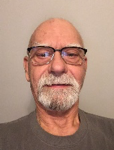 Gary Cutter
I’m Gary Cutter. I grew up in Indiana on a small farm and was a ten-year 4-H member. I graduated from Purdue University with B.S. in Ag Education and M.S. in Agronomy. I earned a Ph.D. from the University of Wisconsin in Plant Breeding and Genetics. I am presently actively involved with the Greater Greenville Master Gardeners Association, having served on the Executive Committee for the past five years as Treasurer, 1st VP, President, Past President, and now as 2nd V.P. in charge of membership and communications (315 members). I was in the research department as a corn breeding manager and production research manager during my career. My passions and values center around my family and church. My wife, Karen, and I have been married for nearly 49 years, and 3 of our five children live nearby, along with 8 of our ten grandchildren. We are also active in our church serving in the marriage ministry and leading a small group. I am not a golfer, hunter, fisherman, or boat enthusiast, but a gardener and spend lots of time outdoors and enjoy sharing my experiences and expertise with others in that area. Jordan Franklin, Horticulture agent, invited me to participate
 George Fisher
George’s expertise is in consulting engineering. He is passionate about water and protecting our resources. He received his M.S. in Environmental Systems Engineering, Clemson University, a B.S. in Civil Engineering from, University of Kansas, and his B.S. in Business Administration from, University of Kansas. George has over 30 years in Water and wastewater systems, Management of Consulting Engineering, and helping communities like Greenville with economic development strategies. George served on Greenville City Council for four years, volunteers with Rotary International as the Veterans Support Chairman, and serves on many boards, including Renewable Water Resource, Appalachian Council of Governors, Greenville Symphony Board, and Southern Connector. He enjoys travel and nature photography, is the proud father of a son and daughter and boasts four grandchildren. Heather Nix, a water resource agent, invited George to join.
Other Advisory Members: Polly Powell, Sue Grubbs, Susan Walrabenstein, Ken Southerlin, Rushawnda Oden, Shirley Thompson, Butch Kirven, Lia Sanders

 I was also able to test out a new botanical omri (organically) approved botanical fungicide for use on peach for blossom blight. I was able to perform two tests of this product on farm to see its effectiveness. I was able to test it at Glory Farms in York Co. SC on Downy Mildew of several leafy greens and this was under a protective structure. I was also able to test it on Blossom blight of peach at peach farm near Chesnee SC. Neither test was randomized. I will summarize my findings separately. Glory Farms is an organic farm and had a problem in their spinach greens but upon investigating it was downy mildew and the disease was widely spread throughout multiple greens varieties and species and throughout the entire protected house. The disease was progressing rapidly. There weren’t many options for her organically and I wasn’t sure what I was going to recommend. I remembered that I had the new product you had told me of EcoSwing but I had not considered it because my plans were to use it for peach. After speaking with the company representatives, it was labeled and worth giving it a try even though this was more of a “rescue” kind of situation at that point. On March 6, 2020 I sprayed the product myself on 4 rows of greens. There were 2 rows of spinach 1 ½ rows of Arugula, and ½ row of Mustard. I mixed the product at a rate of 1 fl.oz./gallon of water and sprayed each 40 foot row with 1 gallon of product. In the worst areas on each row I made sure to leave a small 3 foot area of row unsprayed to be able to see the difference between sprayed and unsprayed easily. I had the grower inspect the plants for the next two days after application and there was no foliar damage from applying the product even though I had applied during the hottest part of the day. After 2 weeks, I returned to assess the results. I found that product was able to control this disease. My controls were completely destroyed with very few plants remaining in those entire blocks but my treated areas were fully intact albeit the disease wasn’t completely eradicated. I should have had actual stand counts before and after to better show this more accurately, but I only did estimates of % of full stand. Spinach before treatment was estimated at 75% of a stand and 2 weeks later still retained 75% of a stand or possibly slightly higher. The Arugula and the mustard were in similar situations but started with slightly higher stands 85% and finishing with 85%. The untreated controls for spinach started with the 75% but ended up with less than 10% as did the arugula and mustard went from 85% down to less than 10% of a stand 2 weeks after application.
 The grower in this case sprayed twice with product during bloom. I evaluated the bloom by taking bloom counts between the control and the treated row. Unfortunately, the disease pressure was very low and, unknown to me at the time, I did not have a true untreated control. I had trees that had EcoSwing being compared to trees that had Bravo applied at the same interval. On each branch I just looked at the number of surviving blooms/fruit versus number total number of flowers present to try and compare. I wasn’t able to find anything that I knew for sure was blossom blight so this was an attempt to see if there were any differences between the two treatments. There were none. The Bravo treated trees and the EcoSwing trees both had nearly identical numbers of surviving flower/fruit. Cold damage had also hurt this crop as well. It is a little more bud tender than many. Assessment was done on March 20th. Picture below shows one of the shoots I would take data on counting number of live flowers/fruit to total number of flowers/fruit per shoot. I still have some product left over that was not used. Hopefully, this coming year I will have more time to plan a small protocol for evaluating it on peach or possibly strawberry. I am thankful I now know more about this product and what it is capable of doing.
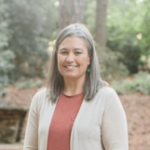 The Food Systems and Safety team has been hard at work delivering virtual programs on home food preservation, produce safety, human and pet food manufacturing, and food safety for food entrepreneurs. Additionally, individual conversations with clients have addressed questions on ServSafe® certifications, and in each of the areas previously mentioned. Highlights of the programs delivered by the Upstate Food Systems and Safety Agent, Rebecca Baxley since the beginning of April include: