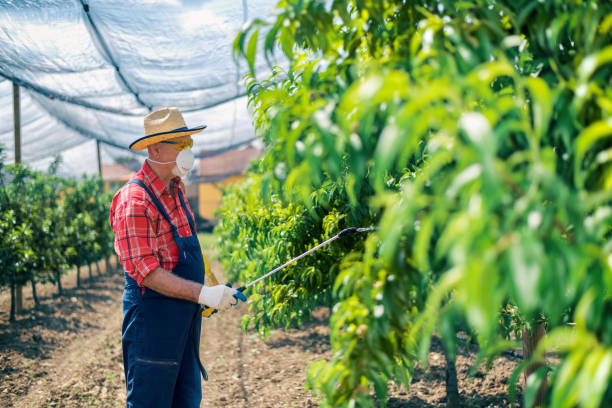
Pesticide Safety
Pesticides play an important role in modern agriculture by helping control weeds, insects, and diseases. However, improper handling can pose serious risks to human health, livestock, crops, and the environment. Practicing safe pesticide use protects applicators, consumers, and natural resources. Ensure you have the proper training before ever handling any pesticide.
Common Risks of Pesticide Exposure
- Skin and eye irritation
- Respiratory problems from inhalation
- Long-term health effects from repeated exposure
- Contamination of water sources and soil
- Harm to beneficial insects like pollinators
Personal Protective Equipment (PPE)
Always wear the proper PPE when mixing, loading, or applying pesticides:
- Long-sleeve shirt and long pants
- Chemical-resistant gloves
- Safety goggles or a face shield
- Respirator (if required by label)
- Rubber boots
Remember: The pesticide label is the law—follow PPE requirements exactly.
Read the Label First!
Every pesticide label provides critical information:
- Proper application rates
- Target pests and approved crops
- Safety precautions
- First aid instructions
- Re-entry intervals (REI)
Never use a pesticide in a way that is inconsistent with its label.
Safe Application Practices
- Avoid spraying on windy days to reduce drift
- Keep a safe distance from people, animals, and water sources
- Calibrate equipment to ensure accurate application
- Never eat, drink, or smoke while handling pesticides
After Application Safety
- Wash your hands and exposed skin immediately
- Change and launder clothing separately
- Store pesticides in original containers only
- Keep chemicals locked away from children and unauthorized users
Protecting Pollinators & the Environment
- Apply pesticides early morning or late evening when pollinators are less active
- Avoid spraying flowering plants
- Prevent runoff into streams, ponds, and wells
- Use integrated pest management (IPM) strategies when possible
Emergency Preparedness
In case of exposure:
- Remove contaminated clothing
- Rinse the affected area with clean water
- Follow first aid instructions on the label
- Seek medical attention if symptoms persist
Keep emergency numbers and poison control contacts readily available.
Best Practices for Students & Workers
- Always receive proper training before handling pesticides
- Never mix chemicals without supervision (for students)
- Report spills or unsafe conditions immediately
- Stay informed on updated regulations and safety procedures