Clemson Agricultural Safety

Cold Weather Safety – December 2025

Cold Weather Safety

As temperatures drop, winter creates many unique challenges for the farming community. Cold stress, icy surfaces, equipment failure, and power outages can interrupt routine tasks on the farm and turn them into dangerous situations. With early preparation and practicing safe procedures, accidents and injuries can be prevented. 
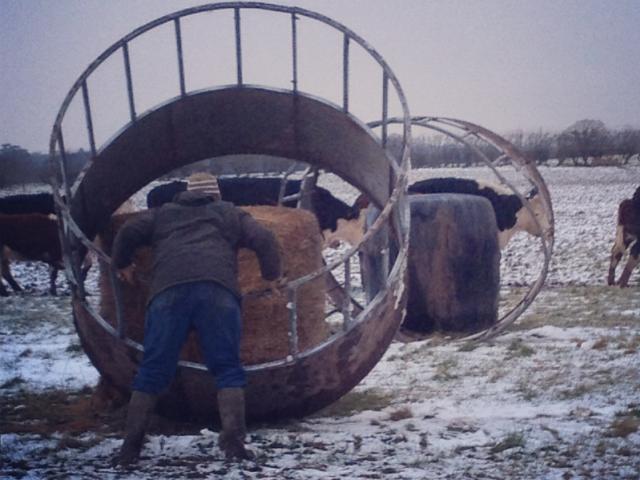
Protecting People from Cold Stress

Winter weather affects the body faster than most realize. Frostbite and hypothermia can develop quickly—especially in windy, wet, or low-temperature conditions.

Warning signs to watch for:

  • Pale or numb skin
  • Tingling or waxy appearance
  • Shivering, confusion, clumsiness
  • Slow pulse or slurred speech

Safety tips:
✅ Dress in layers with insulated gloves and boots
✅ Take warming breaks every 30–60 minutes
✅ Keep walkways salted or sanded
✅ Never run engines or heaters in enclosed barns or shops due to carbon monoxide risk

Winter Equipment and Machinery Safety

Cold temperatures affect how engines, hydraulics, and electrical systems perform.

Common winter equipment hazards include:

  • Diesel fuel gelling
  • Slippery steps and platforms
  • Battery failure in low temps
  • Frozen hoses and brittle belts
  • Reduced traction for tractors, UTVs, and trucks

Best practices:
✅ Check batteries, fuel additives, tire pressure, and lighting
✅ Allow machinery warm-up time
✅ Reduce driving speeds on snow or ice
✅ Use chains, ballast weights, or traction aids
✅ Store fuel properly and inspect block heater cords

Livestock Winter Care Essentials

Animals experience cold stress too—and their needs change significantly in winter.

Important considerations:

  • Increased feed requirements (1–2% more per 10°F drop)
  • Access to liquid, not icy, water
  • Draft-free shelters and windbreaks
  • Extra bedding for insulation
  • Icy pens can cause slips, injuries, and leg strains

Water safety tip:
Always use GFCI outlets with heated buckets or tank heaters.

Farm Property and Infrastructure Preparedness

Winter can damage buildings and systems that farms rely on.

Watch for:

  • Roof strain from snow load
  • Cracked plumbing and frozen hydrants
  • Power outages affecting ventilation, heat, or watering systems

Prevention checks:
✅ Insulate pipes and exposed water lines
✅ Inspect barns and rafters
✅ Maintain generators safely outdoors
✅ Keep emergency lighting and communication tools ready

Be Ready for Emergencies

A winter emergency can escalate quickly if help is far away.

Every farm should have:

  • First-aid kits with thermal blankets
  • Vehicle emergency kits
  • Tow straps, flashlights, and radios
  • A check-in and communication plan
  • Posted emergency contacts

Call for medical help immediately if:

  • Body temperature drops below 95°F
  • A person becomes disoriented or stops shivering
  • Frostbite turns black or blistered
  • Carbon monoxide symptoms appear

Ag Injury News Report – December 2025

Ag Injury News Report

9/23/2025: Paramedics called to Lewiston farm after boy’s hand gets caught in corn harvester

9/20/2025: Five injured in hayride crash near Elkton

9/18/2025: Man Killed in Centre County Farming Accident

9/14/2025: Tractor driver injured in two-vehicle crash Sunday near McLouth

9/12/2025: Victim of tractor accident identified as Chris Snyder, ‘cherished husband, father, friend’

9/9/2025: Bottineau County man killed in crash with farm equipment

9/8/2025: Lancaster man dies after being caught in moving parts of farm machinery

Cold Weather Safety Quiz – December 2025

Questions

  1. How often should you take warming breaks when working in the cold?
  2. For every 10-degree drop in temperature, how much should you increase feed for livestock?
  3. If your body temperature drops below 95°F, what should you do?
  4. True or False: You should never run engines or heaters in enclosed barns or shops due to carbon monoxide risks.
  5. True or False: You should always allow for time for equipment to warm up before using it. 

Answers

  1. Every 30-60 minutes
  2. 1-2% more feed for every 10 degrees dropped
  3. Call for medical help immediately
  4. True
  5. True

Grain Bin Safety – November 2025

Grain Bin Safety

Grain entrapments and engulfments can happen in a matter of seconds. It is extremely important to exercise all safety precautions before entering a grain bin. Children should never enter a grain bin or other grain storage system, even under adult supervision. Grain bins, while they might look like a fun place to play, are extremely dangerous and pose a large risk to everyone. 

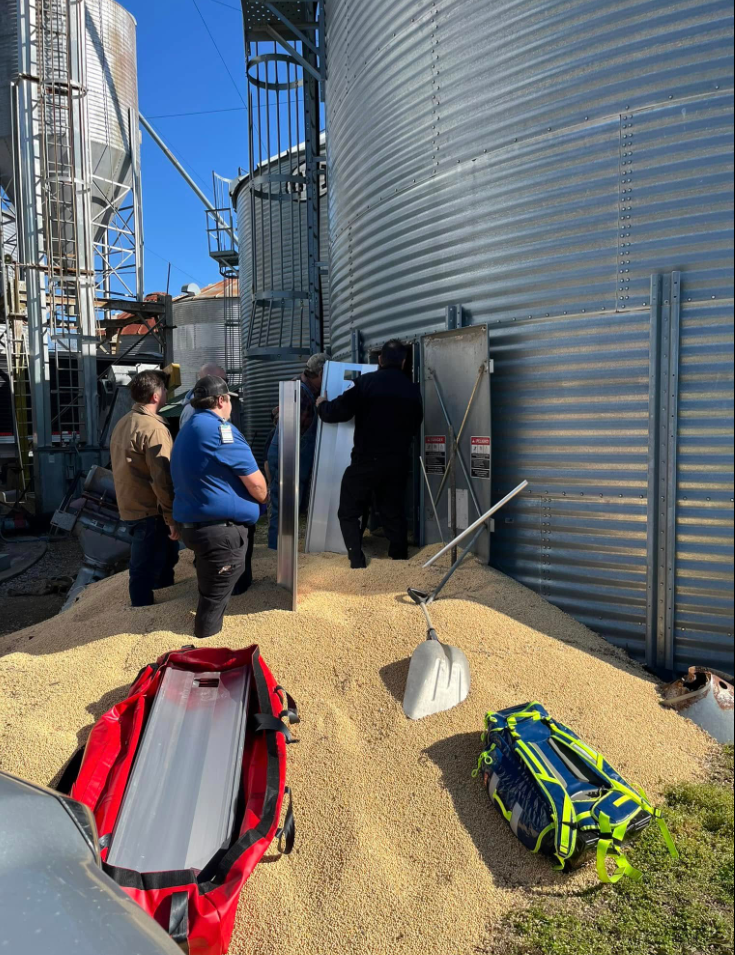
Grain bin entrapment rescue of farmer in Dillon County, SC in January 2025

Entrapment vs. Engulfment

  • Entrapment: When a person is stuck in grain or other bulk media past their knees, but part of their body is still above the grain or other bulk media.
  • Engulfment: When a person is completely submerged in grain or other bulk media.

Causes of Entrapment and Engulfment

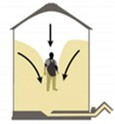
  • Flowing Grain
    • Flowing grain acts like quick sand and can quickly entrap a person.
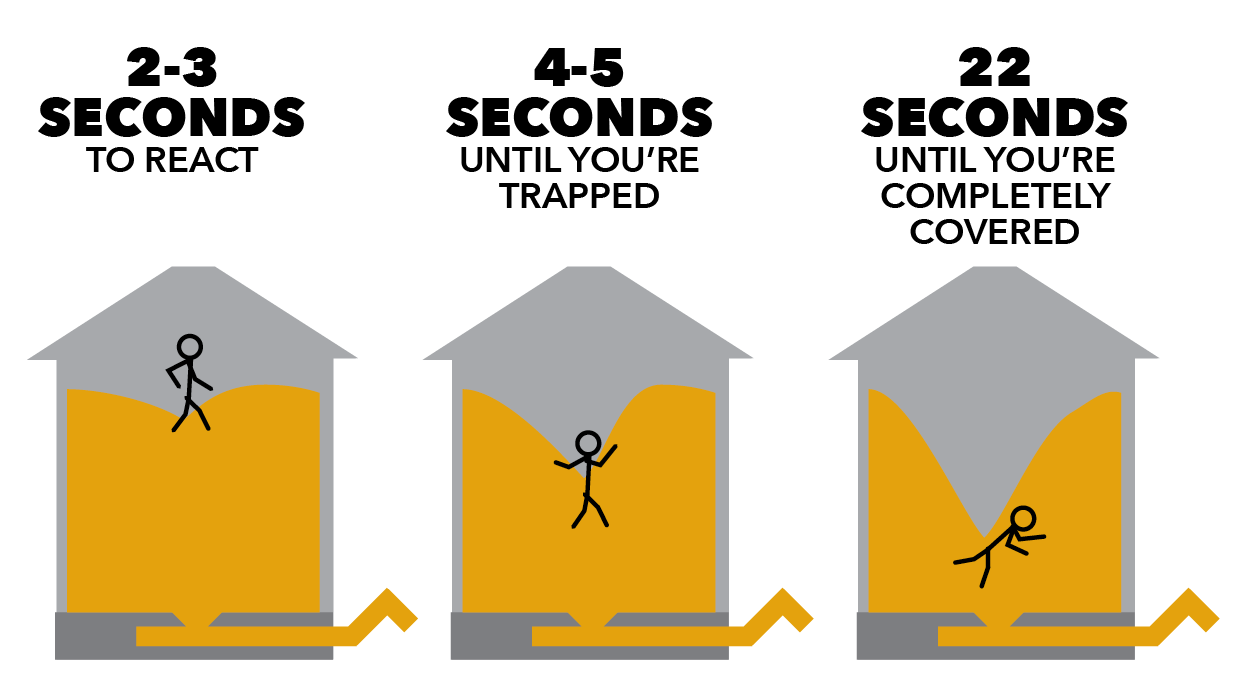
    • Timeline
      • 2-3 seconds to react
      • 4-5 seconds until you are entrapped
      • 22 seconds until you are engulfed (completely submerged)
  • Flowing grain entrapments often occur one of two ways.
    • 1: A farmer or worker enters into a bin without locking out/tagging out, and another person does not know they are in there and turn on the auger to unload.
    • 2: A farmer or worker is actively unloading the bin and enters while the auger is running.
  • Grain Bridge Collapse
    • A crust layer forms on the top of the grain due to high moisture content of the grain.
    • Grain bridge collapse entrapments often occur one of two ways.
      • 1: Grain is removed from the bin, creating a cavity under the crust. A farmer or worker enters the bin, not knowing there is a cavity, and the crust cannot support their weight. They subsequently fall through the crust into the cavity.
      • 2: A farmer or worker is actively unloading grain and enters the bin to break up the crust so the grain flows out properly. When they break the crust, they fall into the flowing grain and become entrapped. This is the most common way that entrapments occur.
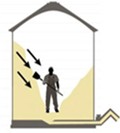
  • Grain Wall Collapse
    • A wall of grain forms on the side of the bin due to high moisture content of the grain.
    • During bin clean out, a farmer or worker must enter into the bin and break the wall down.
    • Ideally, you would start at the top and work your way down, however this does not always happen.
    • Grain is removed from the bottom of the wall, and the wall collapses on the farmer or worker.
    • Entanglement concerns arise here, as there is often a sweep auger that is running while the farmer or worker is in the bin removing the grain wall.

Avoiding Entrapment and Engulfment

  • Target Zero Entry: avoid entering a grain bin at all costs! You can’t become entrapped or engulfed if you never enter a bin.
  • Lock out/Tag out: Completely shut off power to all equipment inside the grain bin. Using a lock out/tag out kit ensures that power cannot be restored to the equipment until the person entering the bin has exited.
  • Never Go in Alone: If you must enter a bin, bring two other people with you. The first person should be looking into the bin and keep eyes on you at all times. The second person should be on the ground acting as a communicator in the event that an entrapment or engulfment does occur.
  • Harness and Lifeline: If you must enter a bin, ensure you have on all the proper PPE, including a harness and lifeline. In the event of an entrapment, the harness and lifeline can keep you from sinking completely under the grain.

Emergency and Rescue Response

  1. Call 911 Immediately – request a grain bin rescue team. Never attempt to rescue an entrapped vicitm on your own!
  2. Do NOT turn on augers or remove grain manually from the bottom.
  3. Shut down all equipment and secure the area.
  4. If possible, stop further grain flow to prevent deeper entrapment.
  5. Provide air to the victim (e.g., air hose or ventilation pipe).
  6. Trained rescuers will use rescue tubes or grain cofferdams to isolate and remove grain safely.
  7. Monitor victim’s breathing and consciousness.

Grain Bin Safety Quiz – November 2025

Questions

  1. What are the three ways you can become entrapped or engulfed in grain or other bulk media?
  2. How long does it take for you to become completely submerged in flowing grain?
  3. How many people should be involved in a bin entry?
  4. True or False: You should never attempt to rescue an entrapped or engulfed victim for grain.
  5. True or False: Before entering a grain bin, you should lock out/tag out all equipment.

Answers

  1. Flowing grain, grain bridge collapse, and grain wall collapse
  2. 22 seconds
  3. 3 people
  4. True
  5. True

Harvest Season Safety – October 2025

Harvest season is one of the busiest and most dangerous times of year on the farm. Long hours, heavy equipment, and the pressure and stress to quickly harvest your crops drastically increase the risk of agricultural incidents occurring around the farm. Remember to review safety material before you begin harvest season to keep yourself and others working on the farm safe. While this takes extra time, this loss in time outweighs the loss in time if an incident occurs. 

Equipment Safety

  • Combines and Tractors
    • Always shut off the equipment before unclogging or servicing the equipment. PTOs and headers can easily be engaged by accident and you should never be near them while they are in operation!
    • Always be on the lookout for entanglement hazards around belts, pulleys, and augers. Often, these are moving at rapid speeds and will not stop turning just because you or your clothing is caught in them!
    • While guards and shields can often get in the way during servicing, make sure they are all in place before operating the equipment. These guards and shields are there to keep you out of dangerous areas!
    • When mounting and dismounting equipment, always have 3 points of contact. Slips and falls from equipment are some of the most common ways people on the farm get hurt, and they are very avoidable if you use the proper processes.
  • Grain Carts and Wagons
    • You should never allow additional riders to ride along unless there is a designated seat for them. Young children oftentimes will want to ride along, if there is not a designated seat, it is extremely easy for them to fall off of the equipment.
    • Always check hitch pins and safety chains before moving.
    • Be mindful that every piece of equipment has blindspots. Check your surroundings when unloading and pulling into high traffic areas.

Grain Handling Safety

  • You should never enter a grain bin unless it is absolutely necessary. If you must enter a bin, follow the steps below.
    • Always use proper lockout/tagout procedures. This ensures that augers and other mechanical equipment can not be turned on while you are in the bin. During flowing grain situations, it only takes about 22 seconds to become completely submerged in grain!
    • Use a harness and lifeline. This can help save your life if grain begins to flow unexpectly.
    • Always have two other people with you if you must enter a bin. One person should be on the top of the bin, looking in on you, and the second person should be on the ground in the event that an entrapment or engulfment occurs.

Fatigue and Stress Managment

  • Long hours on the farm can reduce your alertness. Make sure you are getting adequate sleep to rest and recharge before returning to work on the farm.
  • If possible, rotate tasks between people. After completing a task for many hours, we tend to get complacent. Once we get complacent, we often forget about the safety concerns, and cut corners. Most incidents on the farm occur because of complacency.
  • When you are tired, your decision making ability is impaired. It is important to not make important and life saving decisions while you are fatigued.

Roadway Safety

  • Always make sure you have your slow-moving vehicle (SMV) sign on equipment that is traveling less than 25 mph. This alters others on the roadway that you are traveling at a slow speed.
  • Always engage your flashers before operating equipment on roadways. This makes you more visible to approaching vehicles.
  • If possible, travel on roadways during daylight hours and during less busy times on the roadways. This will make you more visible to drives and reduce the number of drivers you encounter on roadways.
  • Use escort vehicles when possible. This can help manage how close other verhicles on the road can get near you and limit some passing by impatient drivers.

Youth and Extra Workers

  • Ensure that everyone is trained before they operate equipment or assist with tasks during harvest season.
  • Never let untrained youth operate heavy equipment. Ensure that they are the right size for the tasks you assign them. Youth have less strength than adults and are often shorter. Make sure the task fits their build.
  • Always provide clear instructions and supervision!

Harvest Season Safety Quiz – October 2025

Questions

  1. Before unclogging or servicing equipment, what should you do first?
  2. How long does it take for a person to become engulfed by flowing grain?
  3. A SMV sign denotes that you are traveling slower than what speed?
  4. True or False: Fatigue can reduce your alertness.
  5. True or False: When mounting and dismounting equipment, you should use three points of contact.

Answers

  1. Turn off the equipment
  2. About 22 seconds
  3. 25 mph
  4. True
  5. True

Ag Injury News Report – October 2025

Ag Injury News Report

8/26/2025: 1 injured, airlifted after tractor overturned along Wayne County roadway

8/25/2025: Fatal Collision Near Jensen: Man Dies After Attempting to Pass Farm Vehicle in No-Passing

Zone

8/21/2025: 6 Men Are Killed in an Accident at a Colorado Dairy Farm

8/20/2025: Man who died in grain bin accident identified

8/19/2025: Tragic Loss: South Dakota Cattle Producer Troy B. Thomas Dies in Equipment Accident

8/13/2025: Immokalee farmworker dies a week after collapsing in the Florida heat

8/7/2025: 6-year-old killed in farm accident while cleaning barn, police say

Disaster Clean-Up Safety – September 2025

Disaster Clean-Up Safety

Every year, South Carolina experiences a number of natural disasters, including hurricanes, tropical storms, tornadoes, earthquakes, and winter storms. It is extremely important to take the correct safety precautions before beginning your cleanup process. Always work in teams using the buddy system before you ever begin the clean-up process. Accidents can happen in a hurry and if you are alone, it could be hours before someone knows that you are hurt or missing. 

General Clean-Up Safety Practices

  • Always assess the situation first! Do a walk through to identify any hazards before you begin working, and never enter an unstable structure.
  • Make sure to have the proper PPE. Always wear boots or other closed-toe shoes, gloves, eye protection, helmets, and N95 dust masks when needed.
  • Disasters can cause physical and mental strain. Remember to take breaks, stay well hydrated, and recognize mental fatigue when cleaning up after a disaster.

Electrical Hazards and Concerns

  • Downed power lines may be hidden by debris or water. You should treat all lines as live and stay back at least 30 ft from them.
  • Never operate equipment near downed lines!
  • Always use a GFCI when using extension cords in wet areas.
  • If you are in your car or other equipment and come in contact with a downed power line, stay in the vehicle or piece of equipment. Call the utility company immediately.
    • If you must leave the vehicle/equipment, jump from it without touch the vehicle/equipment and the ground at the same time.

Structural and Debris Hazards

  • Barns, grain bins, and sheds may be partially collapsed or unstable after a storm. Approach structures with caution and never enter them before inspecting the structural integrity.
  • Be cautious of entrapment risks in loose piles or debris, sand, grain, or any other bulk media.

Chainsaw and Equipment Safety

  • Only trained individuals should operate chainsaws and heavy equipment!
  • Make sure you have the correct PPE. Always wear chaps, a helmet with face shield, and ear protection when using a chainsaw.
  • Always clear footing before you begin cutting in the event you need to quickly move out of the way.
  • You should never cut above shoulder height.
  • Be extremely mindful of carbon monoxide when running equipment in enclosed spaces.

Flood and Water Hazards

  • Never drive vehicles or equipment through floodwaters, they may be moving quickly or be very deep.
  • Beware of weakened dams and irrigation canals.
  • Always check is center pivots are electrified before approaching.

Livestock and Animal Safety

  • Frightened or injured animals may behave unpredictably.
  • Approach slowly and calmly; never corner livestock.
  • Use panels, chutes, or ropes for moving animals instead of force.
  • Report missing or stray animals to local authorities or extension services.
  • Be alert for disease risks—dead animals must be disposed of properly according to regulations.

Disaster Clean-Up Safety Quiz – September 2025

Questions

  1. How far should you stay away from downed power lines?
  2. What PPE should you wear while operating a chainsaw?
  3. Before approaching a center pivot after a storm, what should you do?
  4. True or False: You need to always assess the damage and hazards before cleaning up after a disaster.
  5. True or False: Frightened or injured animals may behave unpredictably.

Answers

  1. 30 feet
  2. Chaps, helmet with face shield, and ear protection
  3. Check to make sure it isn’t electrified
  4. True
  5. True