Felicia C. Cunningham, 4-H Youth Development Agent, Jasper County
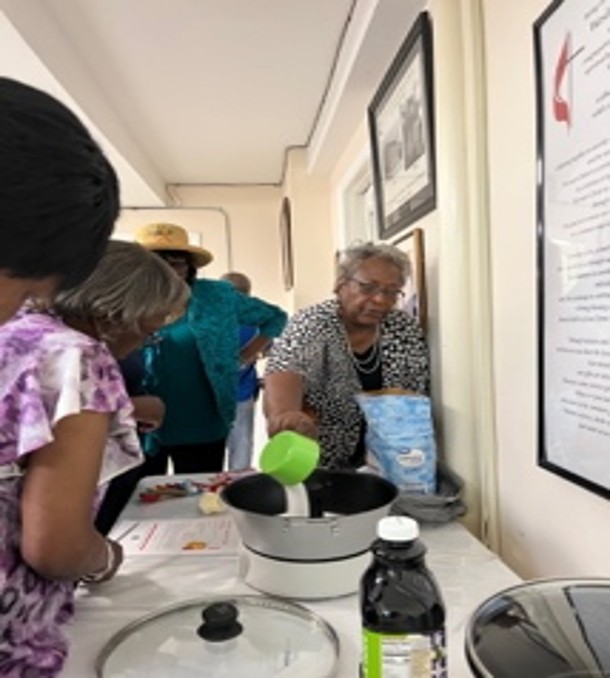
Beaufort County Family Community Leaders (FCL) participated in a workshop on June 12, 2026, focused on making Apple and Grape jelly. Jellies are usually made by cooking fruit juice with sugar. Jelly should be clear or translucent and firm enough to hold its shape when turned out of the container.
The half-pint jars were placed in a stock pot filled with water and boiled for 7 minutes to sterilize. The four ingredients were then placed in a jelly maker and cooked for 25 minutes. We quickly poured the hot jelly into hot jars, leaving ¼ headspace. Wipe rims. Center lid on jar. Screw the band down until resistance is met, then tighten to fingertip-tight. Finally, the jars are placed in a water bath canner, completely covered with water and processed for 10 minutes. After 10 minutes, we waited another 5 minutes, then removed the jars, cooled them, and stored them.

Preventing Spoilage of Jellies
Even though sugar helps preserve jellies and jams, molds can grow on the surface of these products. Research now indicates that the mold people usually scrape off the surface of jellies may not be as harmless as it seems. Mycotoxins have been found in some jars of jelly having surface mold growth. Mycotoxins are known to cause cancer in animals; their effects on humans are still being researched. Because of possible mold contamination, paraffin or wax seals are no longer recommended for any sweet spread, including jellies.
