Janet Steele, Area Forestry & Natural Resources Agent
The extra daylight hours during the summer are great for doing yard projects, such as mowing the grass and working in the garden. One landscape component that is often not considered until there is a problem is our yard trees. Trees can provide multiple benefits around our home, including providing shade, which can reduce energy costs, creating habitat for backyard wildlife, and being aesthetically pleasing. Even mature trees can become stressed in the hot summer months, especially during a dry spell. However, being proactive with basic tree care can reduce summer stress.
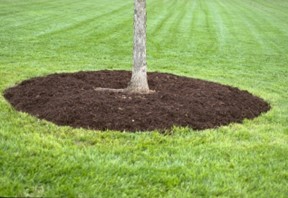
One of the first steps is to mulch the trees in your grassed areas. Mulching serves several purposes. It is used to retain soil moisture and moderate soil temperature, protect trees from damage by lawn care equipment, reduce weed growth, reduce soil compaction by limiting traffic across the root zone, and condition the soil as it degrades. Properly mulched trees should have the mulch spread 3 to 4 inches deep around them in a donut shape, with the mulch not touching the stem and extending to the tree’s dripline or at least 4 to 5 feet from the stem. Creating a volcano of mulch around a tree can be a death sentence. Too much mulch reduces soil oxygen, promotes root rot and stem-girdling roots, and can cause damage from diseases and insect damage.

The second step to summer-proofing yard trees is to provide adequate water. Young trees will need more watering than well-established, mature trees. Watering thoroughly two to three times per week promotes better root growth and establishment than daily light watering. General guidelines are to apply 2 to 3 gallons per one inch of stem diameter in each watering. The best way to water is to use a soaker hose laid in concentric circles over the root zone and an application time of about 1 to 2 hours. Since water pressure, hose size, and soaker hose volumes can vary, dig down about 6 inches after the first few waterings to ensure the soil is moist. You can also test soil moisture using a long rebar, or rod pushed into the ground. If it penetrates the soil easily and has some residual soil stuck to it when pulled out, then soil moisture should be adequate. Mature trees may only need watering once or twice a month during dry weather.
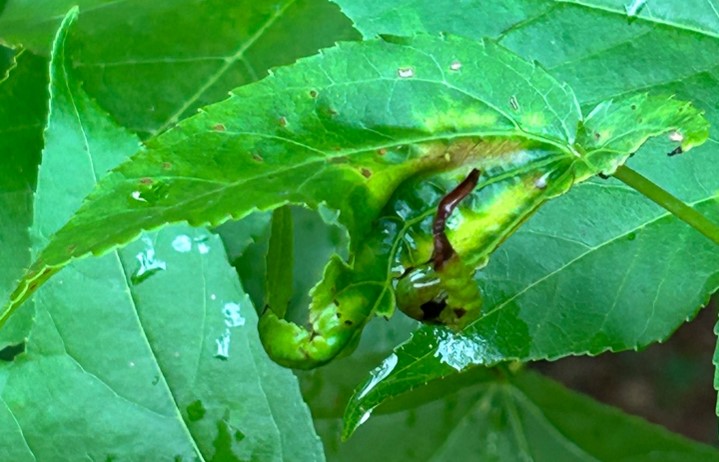
The final step in summer-proofing yard trees is to apply lawn chemicals carefully. Many do-it-yourself weed control herbicides contain active ingredients that can injure or kill yard trees when misapplied or overapplied. Drift, when applications are made on windy days, is often a factor in the impact of these chemicals on the leaves of woody vegetation. Some formulations include chemicals like dicamba, which are absorbed through the root system when application rates are too high or more than the recommended applications are made during a season. A best practice is not to make any weed-control applications within the dripline of yard trees. Chlorotic, misshapen, and curling leaves are typical of the over-application of lawn weed treatment, including dicamba.
Clemson University Cooperative Extension Service offers its programs to people of all ages, regardless of race, color, gender, religion, national origin, disability, political beliefs, sexual orientation, gender identity, marital or family status and is an equal opportunity employer.
