Marion Barnes, Senior County Extension Agent
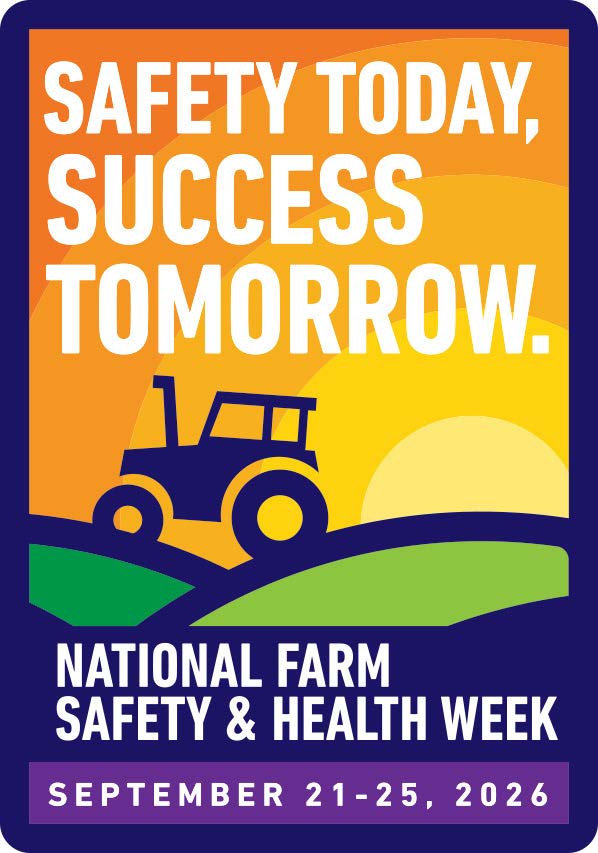
Agriculture continues to be one of the most dangerous industries in the U.S., with some of the highest worker fatality rates. The third week in September has been recognized as National Farm Safety and Health Week since 1944, serving as an annual reminder tothe public and the agricultural community of the dangers of living and working on a farm. The 2026 National Farm Safety and Health Week theme is Safety Today, Success Tomorrow. National Farm Safety and Health Week, September 21-25, is an excellent time to check your equipment, review safety practices and have a conversation with family members and workers about the importance of farm safety.
Most farmers don’t think about farm safety until a serious agricultural-related injury or fatality happens on the farm or in the community. This year’s theme, Safety Today, Success Tomorrow, underscores the importance of implementing safe farming practices to protect the health, safety and well-being of farmers, family members and farmworkers. National Farm Safety and Health Week is observed each fall during harvest season, which is often one of the busiest and most dangerous times of the year for farmers. During harvest season, farmers contend with unexpected weather events, equipment breakdowns and numerous other challenges while harvesting and storing their crops.
Farming and ranching are as much a rural lifestyle as an occupation; the entire family, including children, is often exposed to many hazards associated with the agricultural workplace. Agriculture often presents unique safety challenges due to long workdays, changing weather conditions, unpredictable livestock and working in proximity to large and powerful machinery. Preventing injuries and fostering a safe work environment should be a top priority for every farm.
Recognizing hazards is a key component of being safe today and successful tomorrow on the farm. Being aware of your surroundings, or situational awareness, will help you react appropriately when hazardous situations arise.
After years of working around machinery and livestock, many farmers become complacent or overconfident. They tend to overlook or ignore hazards and warning signs and do not always follow proper safety procedures. Familiarity with routine tasks often leads to lapses in attention. After a while with no consequences, humans tend not to pay attention to risks. Before starting a task, take a moment to assess the situation and analyze the risk. There is no room for complacency with farm safety.
Fatigue is often cited as a leading cause of farm injuries and has serious negative impacts on physical and mental health. Working long hours during planting and harvest season without proper rest can impair judgment, coordination and alertness. Fatigue slows reaction time. Adults who get less than 7.5 hours of sleep per night are twice as likely to be injured. Ensure you get the proper amount of rest each night and maintain a healthy diet. Take frequent breaks during the day, especially during planting and harvest seasons when stress levels may be higher. Tired eyes and hurried minds miss hidden dangers in the field and around the farmstead.
We all do it. Time constraints, being in a rush or being pressured to get the job done cause farmers and workers to bypass, overlook or ignore safe work procedures. Taking shortcuts often leads to unsafe acts and practices that result in injuries and fatalities on the farm. Safety should always take priority over speed. Take a moment to think about the potential risks. Develop a “Stop and Think” approach rather than a rush-in and “Get the Job Done” attitude.
Farming requires a high level of situational awareness. Human error caused by distractions and loss of focus is a leading cause of agricultural-related injuries. When an equipment operator’s focus shifts even for a split second, there can be catastrophic consequences. Avoid distractions and maintain focus by taking regular breaks. Limit multitasking and focus on the job at hand. Put mobile devices away while operating equipment and working near machinery.
Agriculture continues to be one of the most dangerous industries in the U.S., with some of the highest worker injury and fatality rates. Every day, rain or shine, farmers and ranchers provide the food, fiber and fuel this country and the world requires. As America celebrates its 250th birthday, we should never take for granted the importance of the American farmer and rancher and the role they play in our lives. For more information on farm safety, contact your local Clemson Extension office.
