Ellen Sturup Comeau, Water Resources Agent, Beaufort County
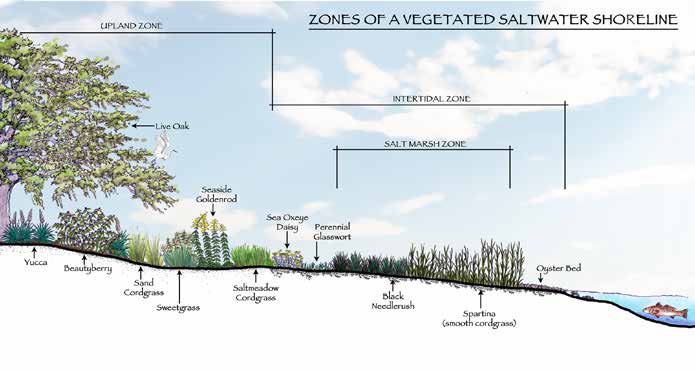
Lowcountry Coastal South Carolina is constantly changing. Rain patterns are shifting, flooding is becoming more frequent, and people are moving from all over to live here. With this comes questions like, “I just got some property, what can I plant by the shoreline to make it look better?” “My tree is dying, what can I plant to replace it?” and “I’ve noticed that my shoreline is eroding, what can I do?” are becoming more frequent. Planting along the shoreline can seem daunting, but it is a worthwhile experience that can enhance the aesthetics of your home and potentially improve the health of the salt marsh.
The first thing you need to know about planting along saltwater shorelines is the site conditions. If a plant is to thrive near the salt marsh, it needs to be of a species that can withstand sandy, slightly acidic soils, is salt-tolerant, and grows well with the amount of sunlight your shoreline normally receives. Shorelines without tree cover typically receive 6+ hours of light (full-sun conditions) while shorelines with tree cover may receive 3-6 hours of light (part-sun conditions) or less than 2 hours of light (full-shade conditions). Not all plants can withstand these conditions, and even those that can may not tolerate those conditions equally well. For example, both Sand Cordgrass (Spartina bakeri) and Black Needlerush (Juncus roemerianus) are considered salt-tolerant. However, while both plants can tolerate the salty spray and air that comes from the marsh, only Black Needlerush can be inundated with saltwater during King Tides and survive.
This concept of matching plants to existing site conditions is known by gardeners as the “right plant, right place” rule. By following this rule, you can better ensure that the time, money, and effort you spend beautifying your yard is well spent. An easy way to follow this rule is to consider using native plants. Native plants are species that have grown for centuries along our marshes and come in many attractive, colorful forms. They can also support wildlife and pollinators, and typically do not require supplemental irrigation, fertilizers, or pesticides. You can find a searchable database of native plants on the South Carolina Native Plant Society’s (SCNPS) website at https://scnps.org/plants/. SCNPS also has a native plant nursery list at https://scnps.org/sc-native-plant-nurseries/, where you can find local vendors who sell native plants.
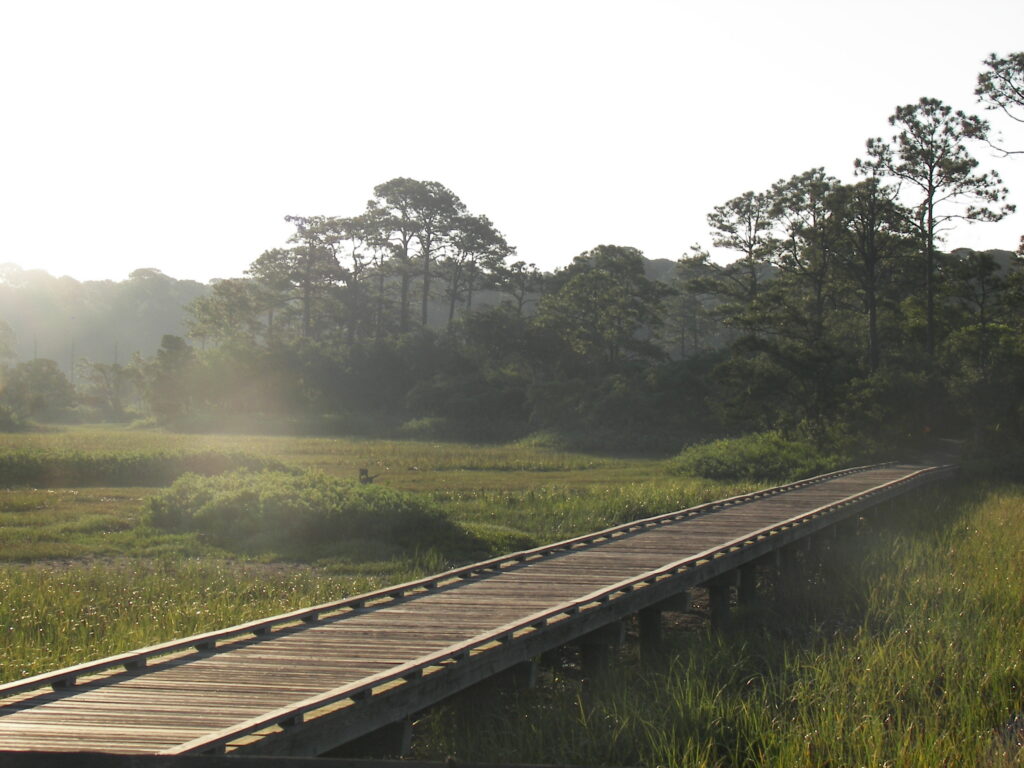
Planting native plants along shorelines also benefits the salt marsh. Their thick, fibrous roots can help reduce shoreline erosion, thereby reducing excess sediment and the murky water and potential pollutants it could bring into the water. Should the plantings be deeper than 2ft, these plants can also slow down stormwater runoff, helping other pollutants like bacteria from pet waste, excess nutrients from fertilizers, and harmful pesticides from entering the waterways and harming the wildlife, the view, and the overall health of the marsh. However, it should be noted that state laws and local ordinances govern activities (including planting and pruning) in areas next to the salt marsh.
The South Carolina Department of Environmental Services Bureau of Coastal Management (SC DES BCM) is responsible for maintaining the health of our salt marshes, which are considered critical habitat. One way they do this is by designating the boundary of this critical habitat, known as the Critical Line. It is unlawful to do anything beyond the line. You can find the critical line on your property by looking at the survey plats, but a quick rule of thumb is that the Critical Line is where the water rises to during a King Tide. You always want to plant above the Critical Line, also known as the upland zone. You will also want to check with your local government’s planning, codes, or stormwater department to see if there are any other ordinances regarding this area (commonly referred to as a buffer zone) that you should be aware of before planting. For more information, check out HGIC Factsheet: Life Along the Salt Marsh: Protecting Tidal Creeks with Vegetative Buffers.
