Roxane Cummings, Rural Health & Nutrition Agent
The holidays are a time for enjoying the dishes we look forward to all year. While casseroles and desserts usually take center stage, holiday meals are a wonderful opportunity to bring more fruits, vegetables, whole grains, and other nourishing foods to the table.
Adding whole foods doesn’t mean saying goodbye to your favorite casserole, family recipe, or slice of pie. Think of it as an invitation to add color, flavor, and variety to your celebration—while keeping the traditions you love.
Whole Foods versus Processed Foods: What’s the Difference?
Whole foods are foods close to their natural state. They usually contain only one ingredient and have no food label. Examples include fresh apples, sweet potatoes, carrots, eggs, and unsalted nuts. Whole foods provide nutrients such as fiber, vitamins, minerals, protein, and healthy fats, depending on the food.
Minimally processed foods resemble whole foods but have been changed for convenience, safety, or storage. Examples include washed and cut vegetables, canned or frozen fruit without added sugar, plain yogurt, and dried beans. Minimally processed foods contain little or no added ingredients and can make nourishing meals easier and more affordable.
Ultra-processed foods look very different from their original form and often contain added sugars, high sodium, saturated fats, preservatives, and artificial ingredients. Examples include many packaged snack cakes, sugary drinks, and some ready-to-eat meals. These foods have long ingredient lists and include unfamiliar additives. Ultra-processed foods offer little or no nutritional value.
Simple Additions for your Holiday Menu
You don’t have to remake every recipe. Choose one or two ideas that sound appealing:
- Start with a colorful appetizer. Serve sliced vegetables with hummus, fruit with a yogurt dip, or unsalted nuts alongside your usual favorites.
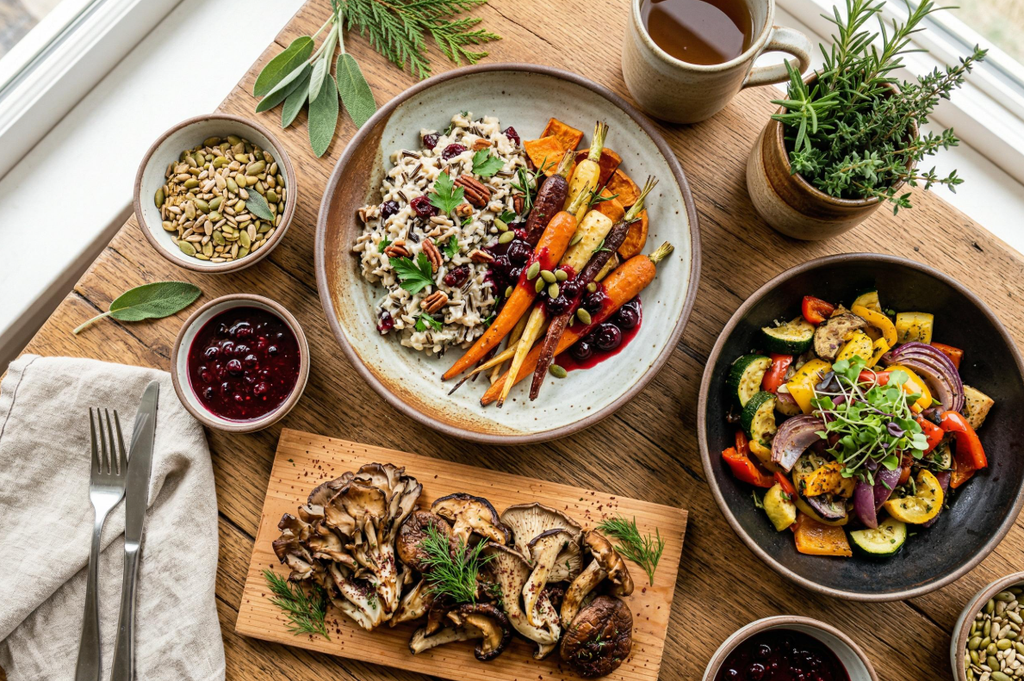
- Add a vegetable side. Roast carrots, beets, Brussels sprouts, or green beans with olive oil and herbs. Frozen vegetables work well, too.
- Use whole grains. Try a wild rice dish with mushrooms and cranberries or add whole-grain rolls.
- Make fruit part of dessert. Offer baked apples, a fruit salad, or pears alongside the holiday cookies and pies.
- Use convenient staples. Frozen vegetables, canned beans, and unsweetened canned fruit can save time. Look for lower-sodium beans and vegetables, or fruit packed in water or its own juice.
A holiday meal is about more than nutrition. It can be a way to connect with loved ones, honor traditions, and enjoy foods that bring back memories. Your grandmother’s stuffing or a favorite holiday cookie can have a place at the table alongside a colorful salad or a homegrown vegetable side.
This season, focus on what you can add rather than what you should take away. A few whole or minimally processed foods can bring fresh flavors and nourishing variety to a meal that still feels like a celebration.
