Jessica Hardiman, Food System and Safety Agent
Fall is a great time to enjoy mashed and pureed vegetables –potatoes, pumpkin, winter squash, sweet potatoes, refried beans, and more! However, if you are planning to can these foods to enjoy at a later date in the year, great care needs to be taken in order to safely process these foods.
Dense purees or mashes should not be canned. The product’s density prevents heat from reaching the entirety of the jar. You risk having a cold spot in the center of the jar that was not reached by heat penetration. Clostridium botulinum may still be present in this cold spot, and consumers are at significant risk for botulism.
Although these products are unsafe to can as mashes or purees, it is possible to can these foods in cube shapes and then mash or puree when ready to eat. You can also safely freeze these foods while still maintaining high-quality products. See the recipe below for how to can squash. The same recipe can be applied to pumpkin.
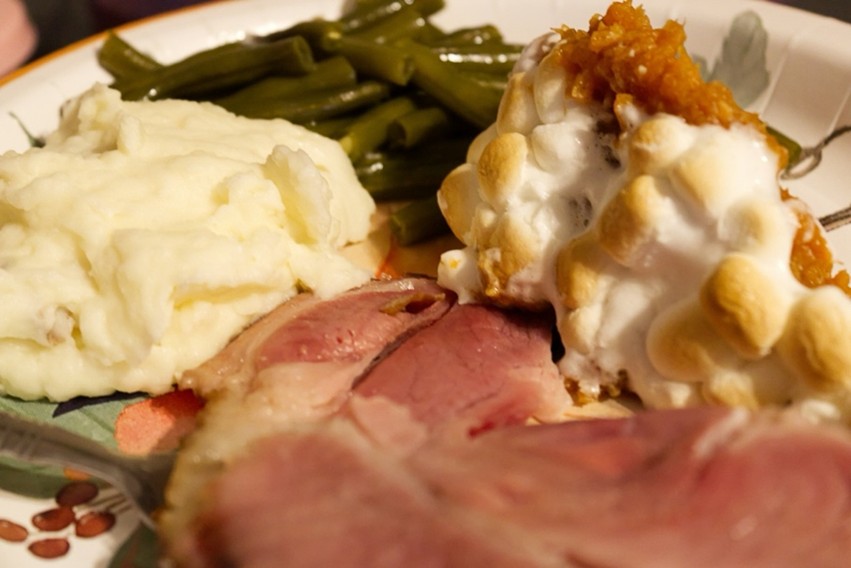
Thanksgiving Dinner, Source: Creative Unsplash
Canned Squash
Instructions:
- Hot pack: wash squash and remove seeds. Cut into 1-inch slices and peel. Cut flesh into 1-inch cubes. Add to a pot of boiling water and boil for 2 minutes. CAUTION: Do not mash or puree.
- Pack hot cubes into jars, leaving 1-inch headspace. Fill jar to 1 inch from the top with boiling hot cooking liquid. Remove air bubbles. Wipe jar rims. Adjust lids and process.
- Process in a dial gauge pressure canner at 11 lbs pressure or in a weighted gauge pressure canner at 10 lbs pressure.
- Pints: 55 minutes
- Quarts: 90 minutes
Source: Reynolds, Susan and Paulette Williams. So Easy to Preserve, 6th Edition. Reviewed and reprinted by Elizabeth Andress and Judy Harrison. Cooperative Extension Service. The University of Georgia.
