Christiana Huss, Urban Horticulture Agent and Master Gardener Coordinator
Many ornamental shrubs found in our landscape are invasive plants. Common examples include privet (Ligustrum spp.) and silverthorn (Elaeagnus spp.). These are popular choices because they are attractive, evergreen, and fast-growing making them great privacy shrubs. They are often sold in garden stores, grow in a wide range of conditions, and are easy to maintain. Unfortunately, the same easy-to-grow features that make these shrubs popular come with a cost to our local environment. Privet and silverthorn are both considered aggressive invasive species. The seeds of these shrubs are spread easily by birds and are now commonly seen in dense thickets in natural areas and roadsides outcompeting native plants. Unfortunately, these shrubs provide little value to wildlife compared to native plants. Privet (Ligustrum spp.)
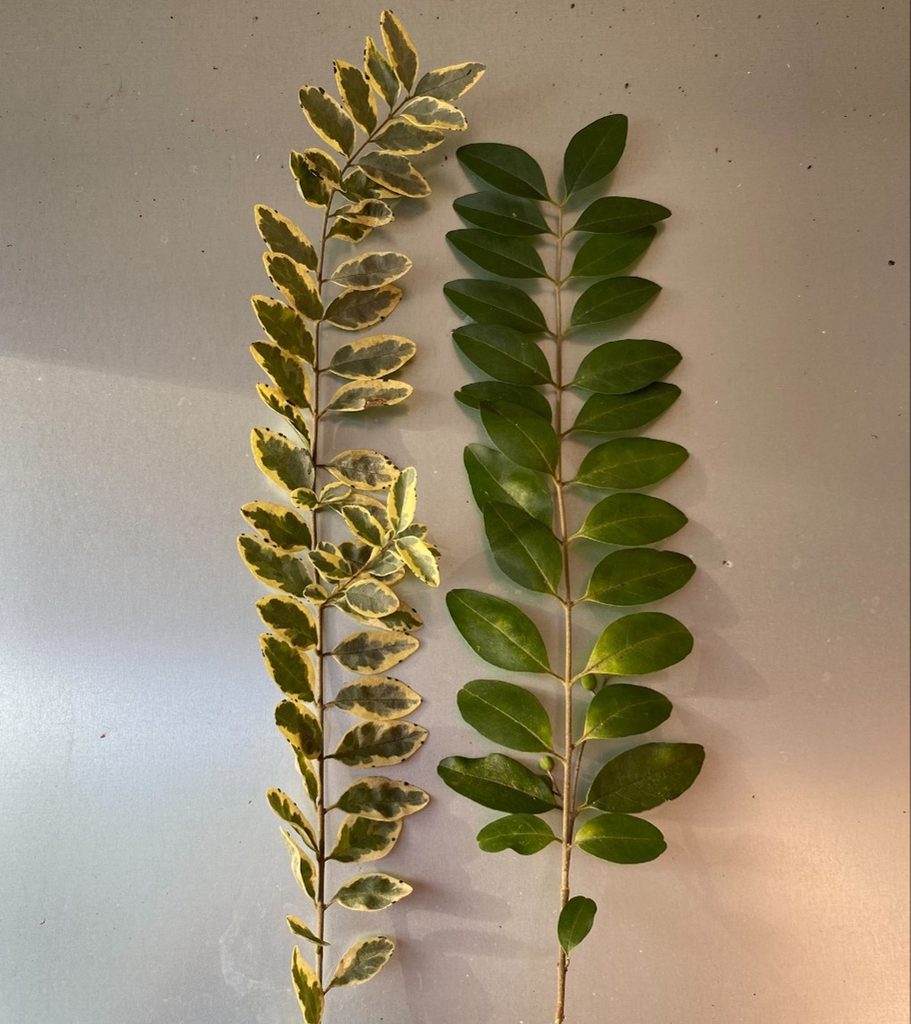
Several varieties of privet are commonly sold in garden centers including Chinese, wax-leaf, glossy, golden, and variegated. They can be identified by their smooth, opposite, evergreen leaves, grey speckled bark, and white clustered flowers.
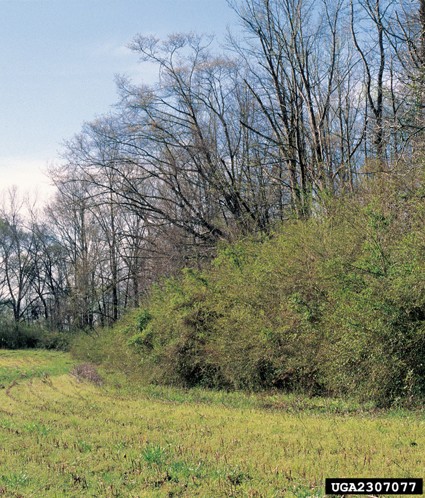
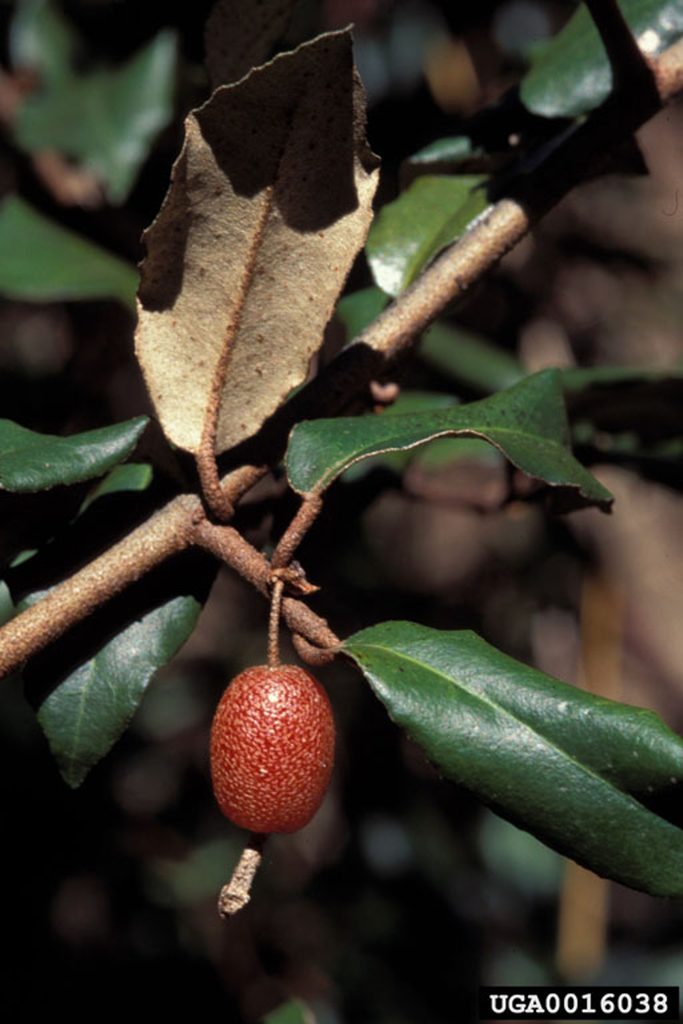
Invasive silverthorn species include autumn olive, silverberry, thorny olive, and Russian olive. They can be identified by their thick scaley leaves with silver undersides and copper speckles. They bare red speckled fruit in the fall.
Both privet and silverthorn have varieties that are advertised as sterile and seedless. Although this reduces their invasiveness, sometimes these varieties will revert to their natural form and produce berries with seeds. One way to mitigate this without removing the bush is to prune away flowers and berries before they are eaten and distributed by birds.
Native shrubs are recommended to replace invasives because they support a wider variety of insects, songbirds, and mammals. Recommended species that fill a similar garden niche as privet and silverthorn include:
Yaupon holly (Ilex vomitoriaI)
Yaupon holly is an adaptable evergreen shrub available in dwarf, weeping, and straight varieties. The flowers of yaupon holly feed specialist bees and other pollinators and the red fruit feed songbirds and mammals throughout the winter. Yaupon tolerates salty soil, deer, drought, and flood. It can be grown in most soil textures, pH, and sunlight conditions making it adapted for most home gardens.
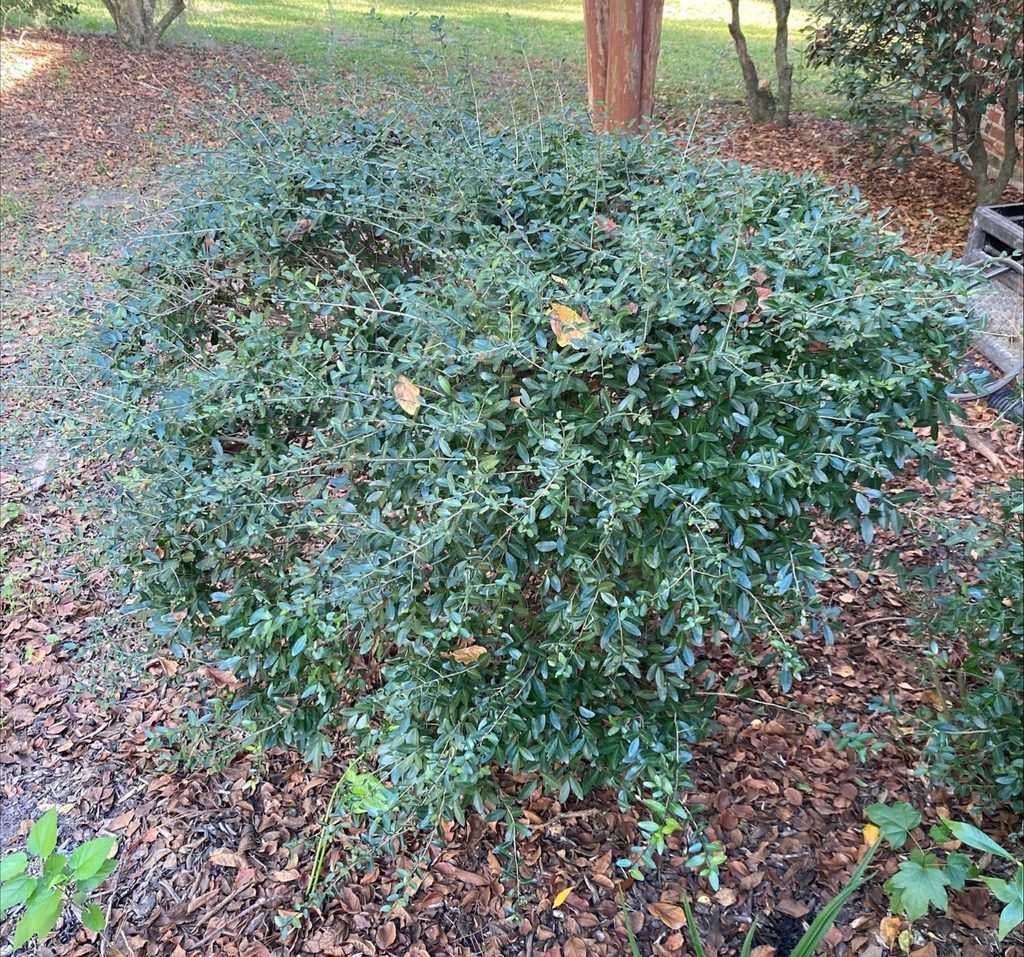
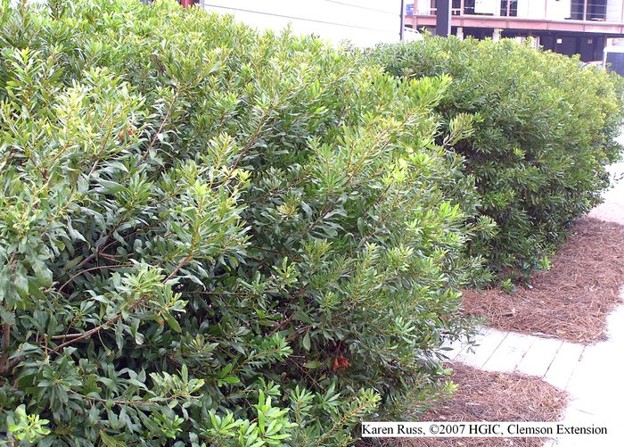
Wax-myrtle is fast growing evergreen shrub that can get up to 25ft tall making it an excellent privacy barrier. It has small dusty blue berry that are eaten by many songbirds. Wax-myrtle do well in urban and seaside environments, are adaptable to most soil and sun conditions, and are deer, drought, and flood tolerant.
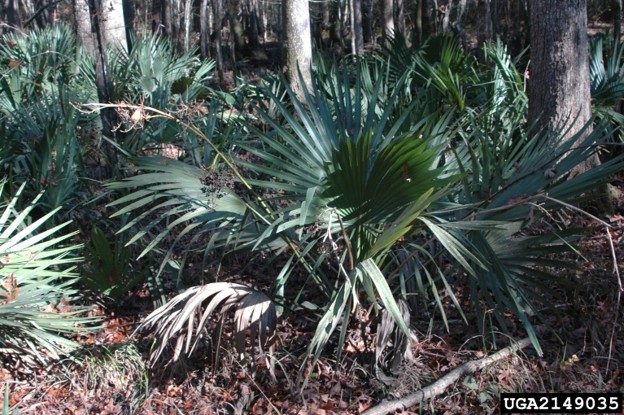
For something with a different look and a Lowcountry feel, consider a dwarf palmetto. This native palm has unique fan-shaped leaves, gets about 3-6ft tall, and can grow well in poorly drained wet soils. Although it isn’t a traditional privacy hedge, it’s a great choice for difficult to landscape spaces.
There is a wide variety of native plants to choose from. The most important thing to consider when landscaping is to choose the right plant for the right place. For additional options, use the SC Native Plant Society plant directory to learn more about native plants for your space.
