Ellen Sturup Comeau, Water Resources Agent

Algae are naturally occurring microorganisms in ponds and form the base of a healthy aquatic ecosystem. These organisms support fish and other aquatic life by providing the base of the pond’s food chain as well as oxygen in the water. However, when excess nutrients in the water combine with warm, sunny weather, algae can grow rapidly and densely. This is referred to as an “algal bloom”. Algal blooms can lead to water quality concerns, including noxious odors, murky or discolored water, and even lower oxygen levels as parts of the bloom die off. Algal blooms need to be managed to preserve pond health.
The most effective way to manage algal blooms is to prevent them from occurring in the first place. We cannot control the weather, but we can control how many nutrients end up in the pond that could feed an algae bloom. Simple algal bloom prevention practices that you can incorporate include:
- Not using fertilizer within 30 feet of the water’s edge. Many fertilizers take time to be fully absorbed by plants. Any fertilizer that plants don’t absorb can be moved via stormwater runoff from your yard into the pond, where it will help grow algae instead of grass.
- Keep woody vegetation trimmed around the pond’s edge. Bushes and trees can drop branches and leaves into the pond, adding extra nutrients to the water. This is the reason why it is not recommended to install these plants around ponds. If there are existing trees and shrubs around your pond, trim the branches so that they do not hang over the water’s edge.
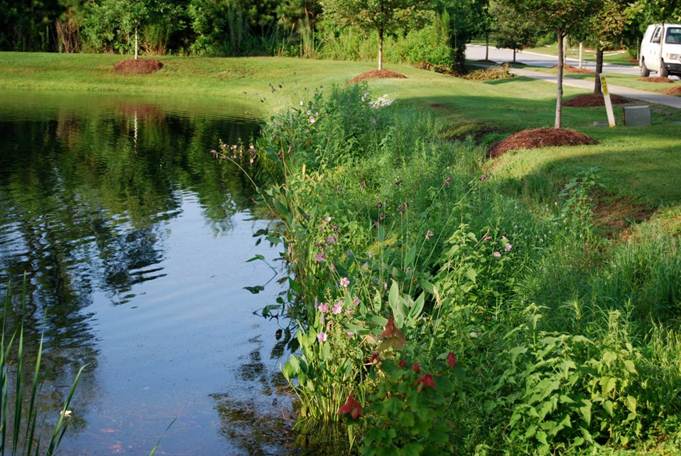
- Encourage a native plant buffer around the edge of the pond. Planting a vegetated buffer or establishing a low-mow meadow around the water’s edge can help reduce excess nutrients from runoff and bank erosion. Native plants around the water’s edge act as sponges, slowing down and absorbing nutrients before they reach the pond. Find out more about this practice with the “Shorescaping Freshwater Shorelines” Factsheet on Clemson’s HGIC (https://hgic.clemson.edu/factsheet/shorescaping-freshwater-shorelines/).

- Installing floating wetlands. Similar to native plant buffers, floating wetlands harness the power of plants to absorb excess nutrients. However, this practice allows native plants to absorb those nutrients directly from the water column while also providing habitat for birds, turtles, and fish. Find out more about this practice with the “Floating Wetlands: Container Gardens for Your Pond” Factsheet on Clemson’s HGIC (https://hgic.clemson.edu/factsheet/floating-wetlands-container-gardens-for-your-pond/).
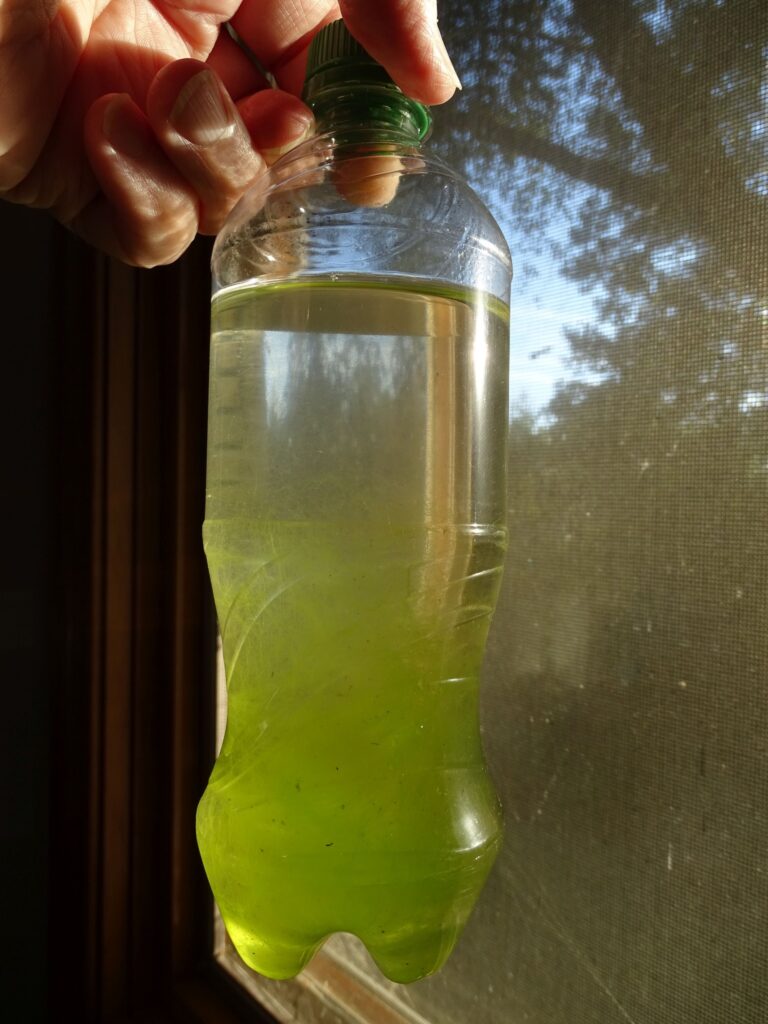
Preventive measures will help reduce the likelihood and the duration of algal blooms. However, if an algal bloom covers over 20% of the pond’s surface, it is time to consider control methods. Before selecting a control method, it’s essential to know the specific type of algae causing the bloom. Each type of algae responds differently to standard control methods. Several plant species are also commonly mistaken for algae and won’t react to algae control methods at all. Refer to the Clemson HGIC Factsheet “Submitting an Algae Sample for Identification” (https://hgic.clemson.edu/factsheet/submitting-an-algae-sample-for-identification/) for instructions on how to submit an algae sample for ID.
Control methods include mechanical removal, pond dyes, adding fish species that will consume problem algae (biological control), or using pesticides (chemical control). For more information on preventing and controlling algal blooms, check out the “Aquatic Weed Control Overview” Factsheet on Clemson’s HGIC (https://hgic.clemson.edu/factsheet/aquatic-weed-control-overview/) or contact your local Water Resources Agent.
